
Home→About→Our People

Our people

Filter staff:
A woman with straight, long red hair, fair skin, and blue eyes, smiling gently and looking directly at the camera against a plain light background—reminiscent of Dr Esther-Miriam Wagner's approachable presence.

Dr Esther-Miriam Wagner

Fellow, PDRA Convenor

Dr Esther-Miriam Wagner

Fellow, PDRA Convenor
Executive Director, Woolf Institute

Dr Esther-Miriam Wagner is the Executive Director of the Woolf Institute and Fellow of St Edmund's College, Cambridge. Miriam joined the Woolf Institute in 2013 having been Research Associate at the Cambridge University Library and was appointed Director of Research in 2017. She is an Affiliate Lecturer at the Faculty of Asian and Middle Eastern Studies, and teaches on the MPhil in Middle Eastern Studies: Muslim-Jewish Relations at the University of Cambridge.

She completed her doctorate at the University of Cambridge on Judaeo-Arabic in the Cairo Genizah and has written and edited numerous books and articles on sociolinguistics, historical linguistics of Judaeo-Arabic and Yiddish, scribal practice, and Jewish-Muslim relations in Egypt and Muslim Spain as reflected in the Genizah sources. These include Scribes as Agents of Language Change (2013), Merchants of Innovations. The Languages of Traders (2016) and A Handbook and Reader of Ottoman Arabic (2021). Her work has been featured on TV and Radio programmes, such as on BBC3 The Essay, in History Magazine and in documentaries on the Cairo Genizah.

In recent years, Miriam has become a popular speaker, invited to deliver academic keynote lectures and lectures to the wider public, including at the Hay on Wye Festival. She chairs Woolf Institute panels and webinars, including the Institute's How to talk about … series, which among other topics, has considered Religious rights and Freedom of Speech and Humour and Religion.

Miriam is also the Vice-President of the Society for the Medieval Mediterranean, and the Editor-in-chief of the prestigious journal Al-Masāq.

Dr Diana Wood, a smiling older woman with short blonde hair and glasses, wears a dark blazer over a patterned blouse. She is facing the camera against a plain white background.

Dr Diana Wood

Emerita Fellow

Dr Diana Wood

Emerita Fellow
Emerita Clinical Dean in the University of Cambridge School of Clinical Medicine

Dr Diana Wood MA MD FRCP FHEA was the Vice-Master of St Edmund's College, from 1 September 2020 to 30 September 2022.

Dr Wood is Emerita Clinical Dean at the University of Cambridge School of Clinical Medicine. She studied medicine at the University of Birmingham, qualifying in 1980.  Having followed postgraduate training and research posts in Birmingham, she became a Lecturer in Clinical Medicine at St Mary’s Hospital Medical School, London and later was appointed as Senior Lecturer, and then Reader, in Medicine and Honorary Consultant Physician at Barts and the London School of Medicine, University of London.  She moved to Cambridge in 2003 having been appointed as the University’s first full-time Director of Medical Education and Clinical Dean, a post which she held until the end of 2020.  She was an honorary consultant physician in the Department of Endocrinology at Addenbrookes Hospital, Cambridge University Hospitals NHS Foundation Trust from 2003 - 2020.

Diana was elected to the Fellowship at St Edmund’s College in October 2003.  Having retired from the substantive Clinical Dean role, she maintains an active involvement in the University’s student mental health and wellbeing programme and is a past Non-Executive Director and current University–appointed Governor of the Cambridge and Peterborough Foundation Trust.  She has served on numerous committees relating to undergraduate and postgraduate medical education locally, nationally, and internationally, with special interests in clinical education, clinical communication skills, and the development of professional skills, resilience, and wellbeing in medical students and junior doctors.

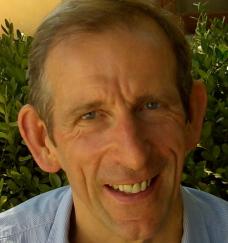
Dr Richard Jennings, a middle-aged man with short grey hair, wears a grey suit jacket, light blue shirt, and striped tie, smiling at the camera against a plain background.

Dr Richard Jennings

Emeritus Fellow

Dr Richard Jennings

Emeritus Fellow
Former Deputy Director of Cambridge Enterprise

Dr Richard Jennings BSc DPhil is the Former Deputy Director of Cambridge Enterprise Ltd. the University’s wholly owned technology transfer company and a board member of both Cambridge Enterprise and Cambridge University Technical Services (CUTS). He is also a non-executive director of Ifm Education and Consultancy Services Ltd, the Institute for Manufacturing's knowledge transfer company.

Formerly, Richard was Head of Chemical Research at Napp Research Centre on the Cambridge Science Park. He joined the University as Assistant Director for Industrial Cooperation of the Wolfson Cambridge Industrial Unit, with responsibility for biomedical projects, in 1988. In 1994, he became Director and also joined the board of the University's technology transfer company, now called Cambridge Enterprise. Richard was appointed Director of Research Policy in 2000 and joined Cambridge Enterprise in 2005 to establish its consultancy business.

Richard has a very extensive track record of establishing mutually beneficial university-industry collaborations and commercialising University-derived intellectual property through consultancy, licensing and over a hundred spin-off companies.

He has a D. Phil in Chemistry from the University of Sussex, a DIC from Imperial College and is a non-executive director of Granta Design Ltd., a spin-off from the Engineering Department.

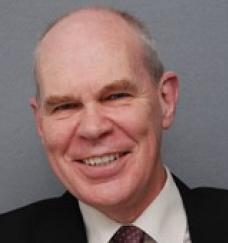
Dr Michael Robson, a middle-aged man with light brown hair and blue eyes, smiles at the camera. He is outdoors, framed by green leafy bushes and wearing a light blue collared shirt.

Dr Michael Robson

Emeritus Fellow

Dr Michael Robson

Emeritus Fellow
Emeritus Fellow and former Dean of Chapel, Admissions Tutor and Praelector

Michael J.P.Robson, BA, Ph.D. (Cantab), Fellow, Dean of Chapel (1992-2011 as a member of the Friars Minor Conventual), Admissions Tutor for Undergraduates (1996-2002 and 2011-13), Tutor (2007-13), Director of Studies in Theology and Religious Studies (1996-2013) and Praelector (from 2003-15).  He has been an Emeritus Fellow since 2013.  He read Theology at the University of Kent in Canterbury (1974-77) and obtained a Ph.D. in the Faculty of Divinity as a member of Sidney Sussex College, Cambridge (1983-85). He was a lector at the Franciscan Study Centre, Canterbury, and an honorary lecturer at the University of Kent (1986-92). He obtained a dispensation from the priesthood and religious life in 2020. He was appointed socio esterno o aggregato of the Istituto storico dei Cappuccini, Rome, on 29 December 1988 and a fellow of the Royal Historical Society from September 1999. He has assessed book proposals submitted to Cambridge University Press, Brill and Oxford University Press. He has supervised undergraduates, marked M.Phil. questions and examined dissertations and Ph.Ds in Cambridge and elsewhere. He was elected as an honorary visiting fellow in the Borthwick Institute of Historical Research, University of York, for 1999-2000.

Membership of historical & theological societies  2018, 14 April:

1988, 29 December: Appointed socio esterno o aggregato of the Istituto storico  dei Cappuccini in Rome on the recommendation of Revd.Dr. Servus Gieben, OFM. Cap.

1992, 1 October: elected a Fellow (Class A) of St Edmund’s College, Cambridge, until 30 September 2013 and thereafter as an Emeritus Fellow.

1999, September: elected a Fellow of the Royal Historical Society, resigned 2011.

1999/2000: Honorary Visiting Fellow in the Borthwick Institute of Historical Research at the University of York.

2004, 29 November: appointed as Associate Editor of Franciscan Studies, St Bonaventure’s University, New York.

2009, March: appointed as a member of the Conseil International of Revue d’histoire ecclésiatique, Leuven, for five years.

2011, October: appointed a member of the Comitato scientifico of Il Santo: rivista francescana di storia dottrina arte, Padua

2012, November: appointed a member of the Comitato scientifico of Frate Francesco, rivista di cultura francescana, Rome

2012, October: appointed to the scientific committee of Studii Franciscane: Revista Institutului Teologic Romano-Catolic Franciscan Roman, Romania.

2013, 1 October: elected emeritus Fellow of St Edmund’s College.

2017, 15 December: co-opted as a Socio ordinario of Società Internazionale di Studi Francescani in Assisi.

2018, 6 February: nominated for the editorial board of Archivum Franciscanum Historicum, Rome.

Unpublished doctoral thesis

Saint Anselm’s Influence upon Saint Bonaventure’s Theology of Redemption, Dissertation for a Ph.D., Cambridge University, approved 15 November 1988.  Unpublished thesis, BLDSC number: D60255.

Monographs

St Francis of Assisi: The Legend and the Life, Geoffrey Chapman, Cassell (London, 1997).  ISBN 0225667363, Paperback published in 1999, ISBN 0-225-66736-3. Reprinted by Continuum in 2002, ISBN 0826465080.

The Franciscans in the Medieval Custody of York, Borthwick Institute of Historical Research, University of York, Borthwick Papers, 93 (York, 1997), pp. 1-40, ISSN 0524-0913.  An Ebook.

The Franciscans in the Middle Ages (Monastic Orders, general editor, Janet Burton), Boydell and Brewer (Woodbridge, 2006), pp. i-xiv, 1-239, ISBN 1-84383-221-6.  Paperback printed in 2009, ISBN 9781 843835158. An eBook from November 2011.

The Greyfriars of England (1224-1539): collected papers, Centro Studi Antoniani, 49 (Padua, 2012), pp. vii-xiv, 1-400.  ISBN 978-88-85155-90-9.  An Ebook from 2012.

A Biographical Register of the Franciscans in the custody of York, c.1229-1539, The Yorkshire Archaeological and Historical Society, Record Series, 156 (Woodbridge, 2019), pp. ii-xviii, 1-307.   ISBN 978-0-9932383-9-0. An e-book.

Edited volumes

The Cambridge Companion to Francis of Assisi, ed.M.J.P.Robson, Cambridge Companions to Religion, Cambridge University Press, (Cambridge, 2012), ISBN 978-0-521-76043-0, Paperback 9780521760430. An eBook. A Portugese translation by Alessandra Siedschlag, Francisco de Assis História e herança, Editora Santuário, Aparecida, São Paulo, Brazil, 2015, ISBN 978-85-369-0409-2.

The English province of the Franciscans (1224-c.1350), ed.M.J.P.Robson, The Medieval Franciscans, 14, Brill (Leiden, 2017), pp. i-xxx, 1-416. ISBN 978-90-04-33161-7, An E-book.

Co-edited volumes

Canterbury Studies in Franciscan History, I, ed.M.J.P.Robson and J.Röhrkasten, (Canterbury, 2008), ISBN 978-0-9549272-1-9.

Franciscan Organisation in the Mendicant Context: Formal and informal structures of the friars’ lives and ministry in the Middle Ages, ed.M.J.P.Robson and J.Röhrkasten, Vita Regularis, 44 (Münster, 2010), pp.i-xxiii, 1-414, ISBN 9783643108203.

Insanity and Divinity: Philosophical and Psychoanalytic Studies in Psychosis and Spirituality, ed.J.Gale, M.J.P.Robson and G.Rapsomatioti, Routledge, Studies in Psychosis and Spirituality (London, 2013).  ISBN 978-0-415-60861-9

The Franciscan Order in the Medieval English Province and Beyond, ed.M.J.P.Robson and P.N.R.Zutshi, Church, Faith and Culture in the Medieval West (Amsterdam University Press, 2018).  ISBN 978-94-6298-647-3.

Testimony, Narrative and Image: Studies in Medieval and Franciscan History, Hagiography and Art in memory of Rosalind B.Brooke, eds.M.F.Cusato and M.J.P.Robson, The Medieval Franciscans, 20, Brill (Leiden, 2022), ISBN  978-90-04-50375-5

The Revd Dr Geoffrey Cook, an older man with white hair and glasses, wearing a dark suit, striped shirt, and tie, poses for a professional headshot against a plain light background.

Rev Dr Geoffrey Cook

Life Fellow

Rev Dr Geoffrey Cook

Life Fellow
Affiliated Lecturer, Department of Physiology, Development and Neuroscience and former Vice-Master

Rev Dr Geoffrey Cook MSc PhD CBiol FRSB CChem FRSC was elected to the Fellowship at the end of 1978. After a period as Secretary to the Fellows Council he was elected Vice-Master, an office he held for twenty five years. During this period he was responsible for petitioning the Earl Marshall for the grant of Arms for the College, as well as serving on the group of fellows charged with drafting Statutes that enabled the College to successfully petition the Privy Council for a Royal Charter. In 1986 he became Chairman of the College's newly established Development Committee and was responsible for coordinating and the delivery of the extensions to the Norfolk Building, the construction of the College Tower, the Library Building and the three residential buildings on the College's site. Retiring from the Governing Body in 2007 he was elected to a Life Fellowship.

Dr Cook read Chemistry at the University of Nottingham coming to Cambridge in 1959 to undertake his doctoral research in the Department of the then Regius Professor of Physic. From 1963-65 he was a Research Associate, Department of Biochemistry, University of Southern California School of Medicine, Los Angeles. He returned to Cambridge as a Member of the External Scientific Staff of the Medical Research Council, initially at the Strangeways Research Laboratory, moving in 1976 to the Department of Pharmacology, where the University granted him an Associate Lectureship. In 1977 he was a Canadian Commonwealth Research Fellow, Biological Sciences Centre, University of Alberta, Edmonton. In 1986 he transferred his MRC appointment to the Department of Anatomy, now part of the Department of Physiology, Development & Neuroscience, where as an Affiliated Lecturer he is undertaking research in developmental neurobiology.

In 1978 Geoffrey Cook was ordained as the first permanent deacon in the newly erected Diocese of East Anglia. He has chaired the Diocesan Commission for Dialogue and Unity since 1984 and was a Member of the Committee for Christian Unity of the RC Bishops' Conference of England & Wales 1984-92. He served as a Member of the Governing Council of the Cambridge Theological Federation 2008-14 and is currently the RC Member, Methodist-Anglican Panel for Unity in Mission. Chairman of the Cambridgeshire Ecumenical Council 1990-92 he has Chaired Shared Churches (Ely) Limited, a company established by the mainstream churches in the County to build and own church centres in the newly developing townships, from 2003-to date. He is a Member of the Society of Ordained Scientists and a Member of the Advisory Board, Faraday Institute for Science and Religion, a Governor of Ipswich School, Suffolk and Chair of Governors, St Bede's Inter-Church School, Cambridge.

Dr Philip Gardner, a middle-aged man with light skin, short grey hair, and wearing a dark suit, white shirt, and patterned tie, smiles warmly in front of a plain grey background.

Dr Philip Gardner

Life Fellow

Dr Philip Gardner

Life Fellow
Senior Lecturer in the Faculty of Education

Dr Philip Gardner was elected to the Fellowship of St Edmund’s in 1993.  Following a ten-year teaching career in West Country comprehensive schools, he was appointed to a Lectureship at the Faculty of Education in 1990 and latterly to a Senior Lectureship, specialising in the History of Education. He took his first and second degrees at the University of East Anglia, followed by a doctorate at the University of Sussex. His early research work focused on currents of informal working-class education in the nineteenth century and was the foundation for his prize-winning first book, The Lost Elementary Schools of Victorian England. His subsequent research interests, on which he has written extensively, include the history of the teaching profession, education and the British Empire in the early twentieth century, oral history, history and memory, and hermeneutical aspects of historical methodology. He was elected a Fellow of the Royal Historical Society in 2010.

Within College Philip has undertaken a number of roles over the years, successively serving as Tutor, Director of Studies in History, Director of Studies in Education and, from 2008 to 2015, Secretary of the Governing Body. Between 1994 and 2018 he also served as College Archivist and latterly Fellow Archivist.

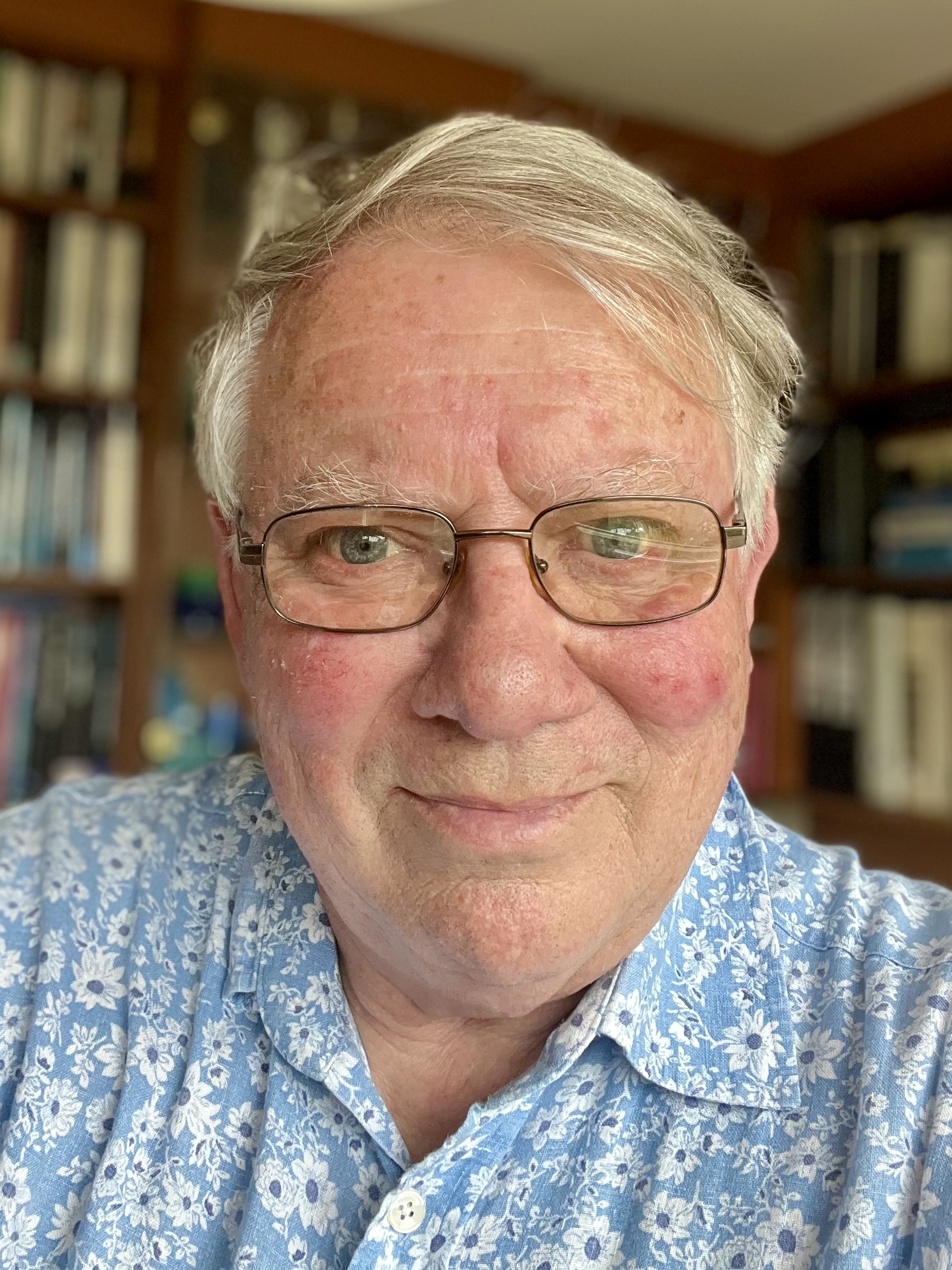
Dr Simon Mitton, an older man with grey hair and glasses, wearing a blue and white floral shirt, smiles at the camera. Bookshelves filled with books are visible in the background.

Dr Simon Mitton

Life Fellow

Dr Simon Mitton

Life Fellow

I was elected a Life Fellow at St Edmund’s in 2014, following 40 years of continuous service as a financial officer of the College. My current area of academic research is the history and philosophy of science, the history of cosmology since 1915. I am a Fellow of the Royal Historical Society.

Simon Mitton read physics at the University of Oxford (Trinity College). Then he headed to Churchill College for doctorate in physics at the Cavendish Laboratory in Martin Ryle’s radio astronomy group. From 1972–1978 he was a staff member of the Institute of Astronomy, initially as a postdoc with Fred Hoyle, followed by appointment as the departmental administrator 1974–1978. Cambridge University Press then engaged him initially as senior editor with responsibility for commissioning in the physical sciences. In 1984 he was appointed to the executive board of directors at the Press, with global responsibility for its academic book publishing programmes in the sciences. His major achievements in that context included winning the publishing contract for a succession of Reports from the Intergovernmental Panel on Climate Change in Geneva; overseeing a major expansion of the publishing programme in earth and planetary science; and persuading his friend and colleague Stephen Hawking to remove two dozen equations from the typescript of his popular bestseller, A Brief History of Science.
Following retirement from the Press in 2001, Simon started a third career based at St Edmund’s College for his research programme on the history of astronomy and cosmology in the twentieth century, with an emphasis on biographical presentations of the lives in science of major pioneers. He has published dozens of peer reviewed papers, reviews, books and monographs on the key pioneers: Fred Hoyle, Thomas Gold, George Gamow, and Georges Lemaître; The latter resided at St Edmund’s House (1923–1924) while working alongside Sir Arthur Eddington on Einstein’s general theory of relativity. Simon Mitton’s current project is a full biography of Lemaître, who is now noted as one the founders of the Big Bang theory of the origin of the universe.

Throughout fifty years of academic fellowship at St Edmund’s, Simon Mitton has worked tirelessly as a vigorous outreach promoter of astronomy, astrophysics and cosmology. He has worked in several media: as consultant and columnist for New Scientist (1970s); running educational courses for the public at Madingley Hall and evening classes sponsored by the University throughout the east of England (1970s, 1980s); as an astronomy lecturer on cruise liners, jointly with Dr Jacqueline Mitton, (2006-2017); giving presentations to university astronomical societies; script writer (with Jacqueline Mitton) for a 26-part tv series Destination Space; Editor-in-Chief for The Cambridge Encyclopedia of Astronomy (1977, Jonathan Cape London; ten foreign language co-editions); and co-author Young Oxford Book of Astronomy (1995). Simon is a strong supporter of the Catholic Chapel at St Edmund’s College, and its vibrant community of students, staff, academic visitors and members of the public. He enjoys popping into the College for congenial conversations with students and senior members alike on astronomy, the history of astronomy and the universe.

Personal Website

Publications

  • O'Raifeartaigh, C; O'Keeffe, M; (...); Mitton, Simon, One hundred years of the cosmological constant: from "superfluous stunt" to dark energy, 2018, Physics in Perspective 20 (4) , Pp.318-341.
  • Simon Mitton, Georges Lemaître and the Foundations of Big Bang Cosmology, 2020, The Antiquarian Astronomer 14 2–19
  • Simon Mitton, A Short History of Panspermia from Antiquity Through the Mid-1970s, 2022, Astrobioiogy 22 1379–1391
  • Simon Mitton, From Crust to Core, A Chronicle of Deep Carbon Science, 2021, Cambridge University Press
  • Jacqueline Mitton and Simon Mitton, Vera Rubin a Life, 2021, Harvard University Press

Awards & Recognitions 

  • 1980. The International Astronomical Union designated minor planet 4027 as "Minor Planet Mitton" in recognition of Simon and Jacqueline Mitton's contributions to popularizing astronomy through their book writing and lecturing.


Norfolk Building and Chapel

Dr Colin Bundy

Honorary Fellow

Dr Colin Bundy

Honorary Fellow
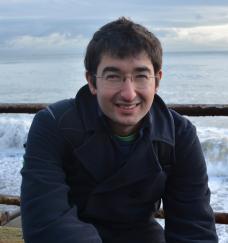
Dr Salim Al-Gailani, with short brown hair, glasses, and a navy coat, smiles at the camera whilst sitting outdoors in front of a metal railing, with waves and a cloudy sky in the background.

Dr Salim Al-Gailani

Friend of St Edmund's
Dr Salim Al-Gailani

Friend of St Edmund's

Salim Al-Gailani is an Assistant Professor at the Department of History and Philosophy of Science (HPS), University of Cambridge, where he lectures and supervises in the history of medicine. After completing his PhD on the history of antenatal care in Britain, he joined the Wellcome Trust-funded ‘Generation to Reproduction’ Strategic Award at Cambridge as a Research Associate. He has also held a fellowship at the John Rylands Research Institute at the University of Manchester. Broadly interested in the histories of modern medicine, biomedical sciences and public health, his research has focused in particular on transformations in the experience and management of pregnancy and childbirth since the late nineteenth century.

His writing has also explored the visual and material and cultures of science and medicine, including toy chemistry sets, anatomical images and educational films. He is currently working on a book that examines the history of folic acid as a technology of pregnancy, with its implications beyond reproduction for the globalization of biomedical knowledge, the management of risk and the role of consumer activism in shaping public health policy.

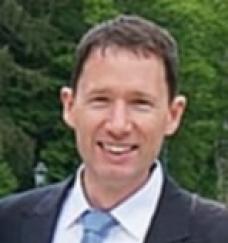
Dr Arnaud Comment, a man in a suit and blue tie, smiles outdoors with green trees in the background.

Dr Arnaud Comment

Friend of St Edmund's
Dr Arnaud Comment

Friend of St Edmund's
Senior Scientist, General Electric Healthcare, Cancer Research UK Cambridge Institute

After having studied physics at EPFL, Switzerland, Arnaud Comment joined the group of Prof. Charles P. Slichter at the University of Illinois, Champaign-Urbana, for a PhD in the field of solid-state nuclear magnetic resonance (NMR). He then spent the following one and half years working in condensed matter physics at the Grenoble High Magnetic Field Laboratory (CNRS/Max Planck Institute). In 2005, he launched a dynamic nuclear polarization (DNP) project at EPFL. He designed and implemented a DNP setup that he coupled to a preclinical MRI scanner for performing in vivo hyperpolarized NMR and MRI. He then joined the Faculty of Biology and Medicine of the University of Lausanne to lead the developments of biomedical applications of hyperpolarized MRI in Lausanne. In 2011, he was awarded a professorship grant from the Swiss National Science Foundation and became assistant professor at EPFL. In 2015, he joined General Electric Healthcare as senior scientist to further develop  the clinical applications of hyperpolarized 13C imaging. Since 2016, he has also been working on a project supported by an ERC Consolidator grant hosted by the University of Cambridge at the Cancer Research UK Cambridge Institute (CRUKCI).

The overall aim of his current research is to break new grounds in metabolic and molecular imaging and to lead novel methods and technologies towards clinical applications. His expertise in instrumentation along with his background in physics provides him with unique opportunities to translate discoveries from basic science research into medical applications. He is committed to a multidisciplinary approach which combines physics, engineering, chemistry, biology and medicine in order to develop hyperpolarized 13C MRI and new imaging methods based on secondary-ion mass-spectroscopy (SIMS) as technologies to answer key questions relating to mammalian metabolism both in healthy and diseased tissues.

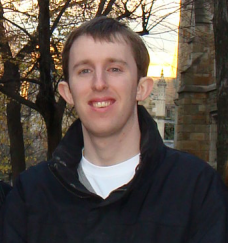
A young man with short brown hair is smiling outdoors in front of trees and a stone building, wearing a black jacket over a white shirt—resembling Dr Chris Heath in a relaxed moment.

Dr Chris Heath

Bye-Fellow, Director of Studies

Dr Chris Heath

Bye-Fellow, Director of Studies
Following training in experimental psychology and behavioural neuroscience as a post-doctoral research associate in the Department of Psychology, University of Cambridge, Dr Chris Heath was recruited as a Lecturer in Health Sciences in the School of Life, Health and Chemical Sciences at The Open University (OU).

At the OU he leads the Translational Neuroscience Research Group, a major objective of which is to utilise touchscreen-based assessment techniques to evaluate a wide variety of psychological constructs across laboratory models and both non-clinical and clinical populations. Recent work has focused on the development of touchscreen-based assessments for motivation, cost-benefit decision making and emotional state regulation and their application to both disease-related and non-disease related areas.

At Cambridge, Dr Heath has been the Director of Studies in the Psychological and Behavioural Sciences (PBS) Tripos at St Edmund’s College and has supervised and given lectures on various PBS courses.

Dr John F Mueller, a man with short brown hair and a beard, wearing a suit, striped shirt, and patterned tie, stands outdoors in front of a blurred building with large windows.

Dr John F Mueller

Bye-Fellow

Dr John F Mueller

Bye-Fellow
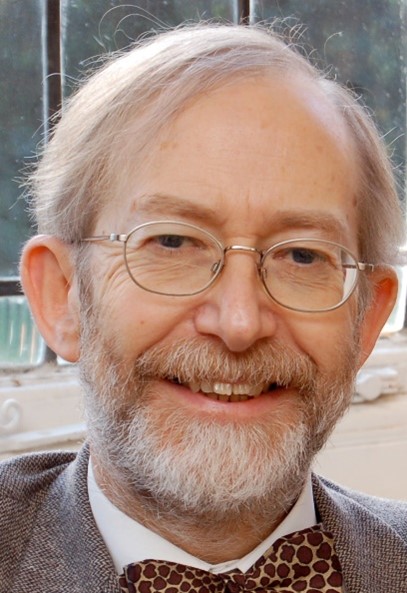
John has an eclectic portfolio career, combining history, heraldry and philanthropy.

As a historian, John specialises in modern German history. His book The Kaiser, Hitler and the Jewish Department Store is due to be published in May 2022 by Bloomsbury. Regius Professor Sir Richard Evans was the supervisor for the PhD on which some of the volume is based. John and his research featured in two television documentaries: a highly-rated German public television documentary and a three-part documentary on the TESCO founder Sir Jack Cohen on Channel 5.

John has worked as a professional fundraiser for the University of Cambridge, including St Edmund’s, and has volunteered for several charitable organisations, such as the Order of St John and organisations of the Church of England.  John is a trustee of the largest independent sheltered housing scheme in London and continues working as a freelance fundraiser.

His heraldic work includes designing new coats of arms, identifying historic ones and hand-producing heraldic stationery, porcelain and other everyday items. John’s clients include royalty, aristocracy and clergy from all over the world.

Revd Dr Rodney Holder, an older man with fair hair and a beard, smiles at the camera. He is wearing glasses, a grey jacket, a white shirt, and a patterned bow tie whilst seated near a window with metal framing.

Revd Dr Rodney Holder

Fellow Commoner

Revd Dr Rodney Holder

Fellow Commoner
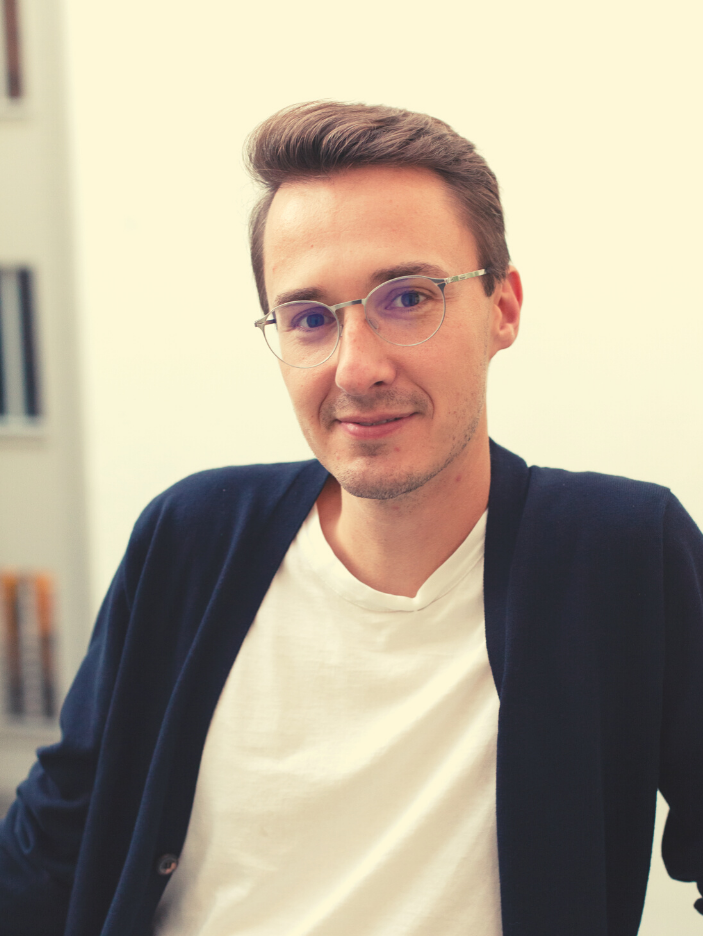
My interests lie in the relationship between science and theology. Topics include: (i) the fine-tunings of natural law necessary for the universe to evolve life; (ii) Karl Barth’s rejection of natural theology; and (iii) ‘ramified natural theology’, i.e. the defence of specifically Christian claims.

The Revd Dr Rodney Holder read mathematics at Trinity College, Cambridge (MA, MMath), and spent two years teaching mathematics at The Manchester Grammar School. In 1974 he returned to academia to research for a D.Phil. in astrophysics at Christ Church, Oxford, following this with a two-year post-doctoral fellowship in the Department of Astrophysics in Oxford. His research was on accretion of intergalactic gas by the galaxy. Dr Holder then spent fourteen years with EDS (formerly Scicon) as an operational research consultant to UK Ministry of Defence clients. This involved mathematical modelling and decision analysis applied to defence procurement, and led to several published papers. His first book on science and religion (Nothing But Atoms and Molecules? Probing the Limits of Science) was published in 1993. In 1994 Dr Holder returned to Oxford, taking a first class degree in theology, and a Diploma in Ministry. Following ordination in the Church of England, Dr Holder served in parish ministry in South Warwickshire, Heidelberg, and Buckinghamshire. During this time he published several papers and his second book, God, the Multiverse, and Everything: Modern Cosmology and the Argument from Design.

Dr Holder was Course Director of The Faraday Institute for Science and Religion, Cambridge, from its inception in January 2006 until 31 January 2013. He has remained active academically since then. His research focus has largely been in three areas: (i) utilizing Bayesian confirmation theory to assess the metaphysical significance of the fine-tunings of natural law necessary for the universe to be capable of evolving life; (ii) challenging Karl Barth’s rejection of natural theology through dialogue with major theologians who have succeeded him; and (iii) describing and utilizing ‘ramified natural theology’, which adopts the same Bayesian approach used to argue for the existence of God in natural theology, to defend specifically Christian claims about God’s acting in history in the person of Jesus Christ. Dr Holder has supervised undergraduates and postgraduate diploma students for ten colleges, including St Edmund’s, for the ‘Theology and Science’ paper in Part IIB of the Cambridge Theological and Religious Studies Tripos, 2007-2016. He has (2019 – 2025) taught overseas students on a Faraday Institute enrichment course and has given many lectures at Faraday Institute courses and more widely, here and overseas. Dr Holder’s further books include The Heavens Declare: Natural Theology and the Legacy of Karl Barth; Ramified Natural Theology in Science and Religion; and, co-edited with Simon Mitton, Georges Lemaître: Life, Science and Legacy. He was Reviews Editor of Science and Christian Belief and on the national committee of Christians in Science from 2006-2017. He is a Fellow of the International Society for Science and Religion, a member of the Society of Ordained Scientists and of the Science and Religion Forum, and a trustee of The Faraday Institute.

Academic Profile

Publications 

  • Rodney D. Holder, Ramified Natural Theology in Science and Religion: Moving on from Natural Theology, 2021, Abingdon, Oxon, and New York, NY: Routledge.
  • Rodney D. Holder, God, the Multiverse, and Everything: Modern Cosmology and the Argument from Design, 2016 [2004], Abingdon, Oxon, and New York, NY: Routledge.
  • R. D. Holder, The Heavens Declare: Natural Theology and the Legacy of Karl Barth, 2012, West Conshohocken: Templeton Press.
  • Rodney Holder, ‘Georges Lemaître and Fred Hoyle: Contrasting Characters in Science and Religion’, in Rodney Holder and Simon Mitton (eds), Georges Lemaître: Life, Science and Legacy, 2012, Heidelberg: Royal Astronomical Society-Springer, 39-53.
  • R. D. Holder, ‘Hume on Miracles’, 1998, British Journal for the Philosophy of Science, 49, 49-65.

Awards & Recognitions

  • Fellow of the Institute of Mathematics and Its Applications
  • Fellow of the Royal Astronomical Society
  • Fellow of the International Society for Science and Religion
  • Templeton Foundation Prize for Exemplary Papers in Humility Theology (1998)


Dr Johannes Lenhard, a young man with short brown hair and glasses, wearing a white T-shirt and dark cardigan, sits and smiles softly at the camera. A blurred bookcase is visible in the background.

Dr Johannes Lenhard

Bye-Fellow

Dr Johannes Lenhard

Bye-Fellow
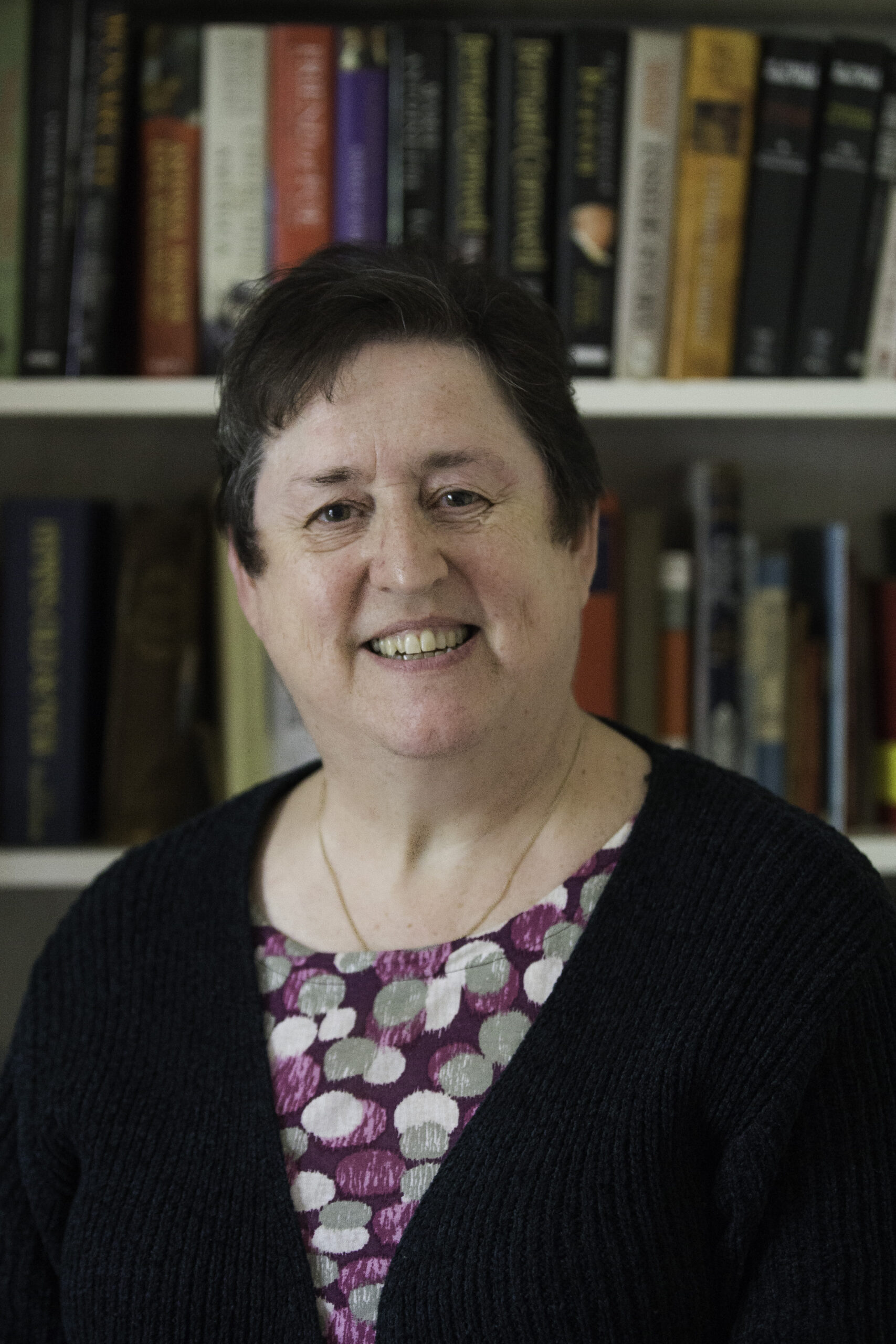
Research Affiliate and Co-Director of VentureESG

Dr Johannes Lenhard is affiliate lecturer and researcher at the University of Cambridge. He is research affiliate at the Minderoo Center for Technology and Democracy and the co-director of VentureESG. He has recently published a monograph on people experiencing homelessness in Paris (Making Better Lives), a co-authored book on diversity and inclusion in venture capital and tech (Better Venture) and his forthcoming book on the ‘Ethics of venture capital investors’ is under contract with Columbia University Press. He writes regular for a variety of journalistic outlets and runs the non-profit CHIRN (Cambridge Homelessness Impact Research Network).

A smiling woman with short dark hair, identified as Sister Gemma Simmonds, wears a dark jumper over a purple and white patterned top and stands before a bookcase filled with various books.

Sr Dr Gemma Simmonds CJ

Bye-Fellow

Sr Dr Gemma Simmonds CJ

Bye-Fellow
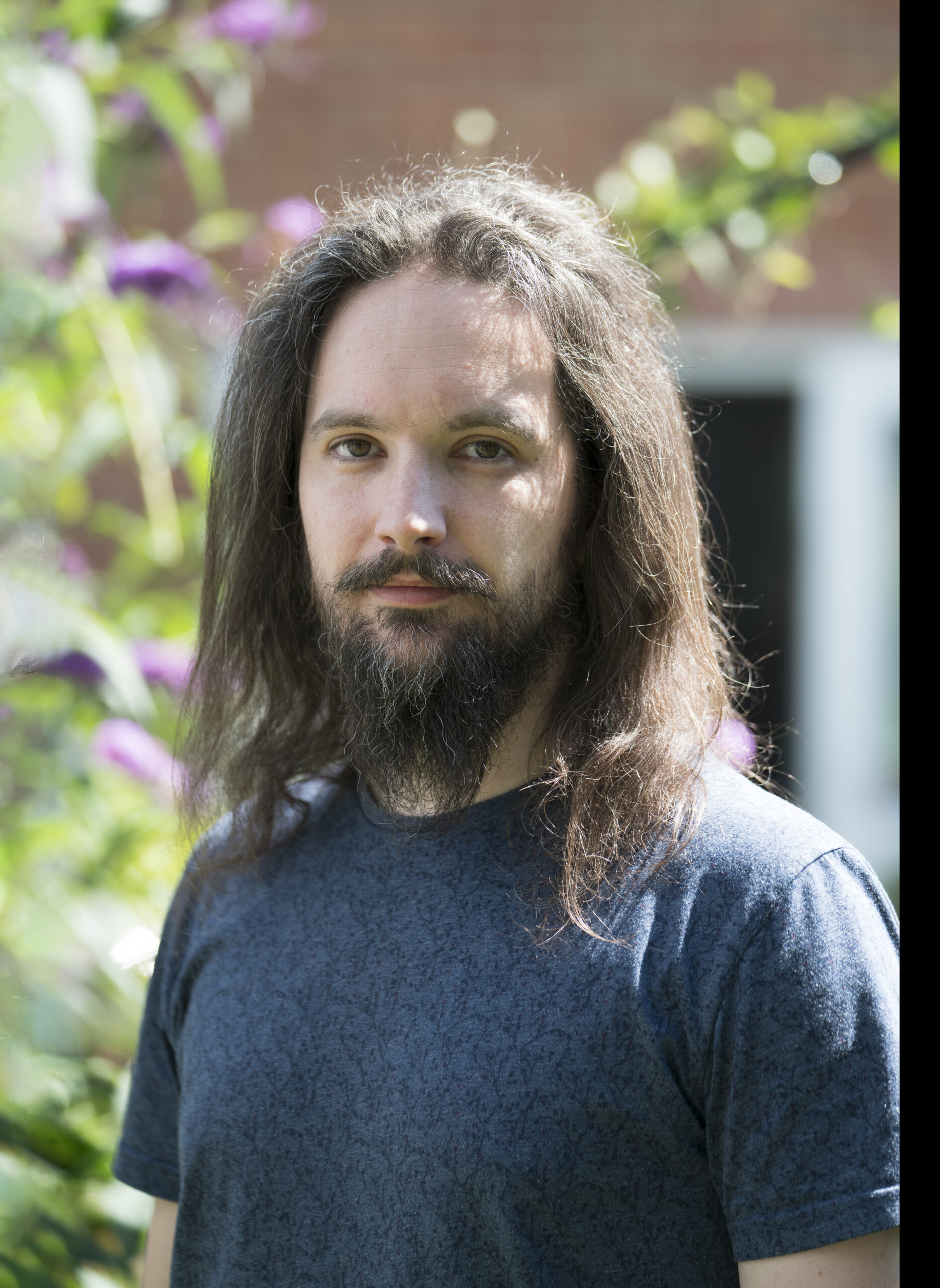
Gemma Simmonds is a sister of the Congregation of Jesus.  She is a senior research fellow at the Margaret Beaufort Institute of Theology in Cambridge, UK, where she is director of the Religious Life Institute, teaching Christian spirituality and pastoral theology. An international speaker and lecturer, she is an honorary fellow of Durham University, past president of the Catholic Theological Association of Great Britain and chair of trustees of the ecumenical Community of St. Anselm based at Lambeth Palace, London.  Gemma is an ecumenical canon of the Church in Wales and lectured in theology at Heythrop College, University of London from 2005 until its closure in 2018, specialising in Christian spirituality.  She has trained candidates for religious life and ordination in the Catholic and Anglican churches and been a spiritual director and retreat giver for over 30 years.

Gemma has been a missionary in Brazil, a chaplain in the Universities of Cambridge and London and a chaplaincy volunteer in Holloway Prison for 25 years.  She is a regular broadcaster on religious matters on the BBC, Radio Maria England and other radio and television networks.

Recent publications include:

Conspiracy Theories and Ignatian Discernment’ in Martin Dojčár ed., How Do We Discern Conspiracy Theories? (Trnava University Press, 2023)

Contributions on ‘What it Means to be Human’ and ‘Living a Religious Life’ in Peter Vardy ed., The Philosophers’ Daughters, (London, Darton, Longman and Todd, 2023)

‘Religieus Leven: de Toekomst Onderscheiden’ in Henk Witte and Arnold Smeets eds., Religieus leven met toekomst, (Berne Media, Tilburg University, 2023)

Dancing at the Still Point: Retreat Practices for Busy Lives (London, SPCK, July 2021)

Religious Life: Discerning the Future (with María Calderón-Muñoz), Joint Project Report for the Religious Life Institute and Centre for Catholic Studies, Durham University, 2020

‘Reflections on Mary and Mission’ in Susan Lucas ed., God’s Church in the World: the Gift of Catholic Mission, (London, Canterbury Press, 2020)

‘Mystical Ecclesiology’ in Mark McIntosh and Edward Howells, ed., The Oxford Handbook of Mystical Theology, (Oxford, OUP, 2020)

‘Perfectae Caritatis’ in Richard Gaillardetz, ed., The Cambridge Companion to the Second Vatican Council, (Cambridge, CUP, 2020)

‘Mary Ward: a Hidden Life in Painting’ in Kathryn Kerby-Fulton and Kate Bugyis eds., Women Leaders and Intellectuals of the Medieval World, (University of Notre Dame Press, 2020)

‘Women at the Grassroots’ Level of Church Leadership’, in Gunter Prüller-Jagenteufel et al., (eds.), Towards Just Gender Relations: Rethinking the Role of Women in Church and Society, Religion and Transformation in Contemporary European Society, vol. 13, (Vienna University Press, 2019), 29-36

‘Hearing the Call: a Theology of Vocation’ in Kevin J. Alban, ed., A Festschrift for Wilfrid McGreal, (Rome, Edizioni Carmelitane, 2019)

The Way of Ignatius: a Prayer Journey through Lent, (London, SPCK, 2018)

Dr Christopher Williamson, a man with long brown hair and a beard, stands outdoors looking at the camera. He is wearing a blue T-shirt, with greenery and flowers visible in the blurred background.

Dr Christopher Williamson

Bye-Fellow

Dr Christopher Williamson

Bye-Fellow

Chris is a Research Associate in the Centre for Photonic Devices and Sensors specialising in liquid crystal displays and scalable manufacturing processes. He completed his PhD in electronic engineering at St. Edmund’s College.

He has developed an electrically switchable window capable of reflecting heat, controlling privacy, and displaying images while using no continuous power. To commercialise this innovation, he cofounded Flexypix in 2016 and was awarded an Enterprise Fellowship from the Royal Academy of Engineering to pursue this venture.

His wider interests include playing the guitar, photography, and motorcycles.

Sister Maria Cimperman, RSCJ, with short brown hair, wears a teal blazer with black trim, a cross necklace, and a brooch, smiling warmly against a plain light background.

Sister Dr Maria Cimperman RSCJ

Senior Research Associate

Sister Dr Maria Cimperman RSCJ

Senior Research Associate
Dr. Maria Cimperman is a member of the Religious of the Sacred Heart of Jesus (RSCJ). Her Master of Divinity is from the University of Notre Dame, Licentiate in Sacred Theology from Weston Jesuit School of Theology and PhD in Theological Ethics from Boston College. A faculty member at Catholic Theological Union (Chicago, USA), she recently received promotion to full Professor of Theological Ethics and Consecrated Life.

Dr Cimperman is the author of three books: When God’s People Have HIV/AIDS: An Approach to Ethics;  Social Analysis for the 21st Century: How Faith Becomes Action;  and Religious Life For Our World: Creating Communities of Hope. She also co-edited Engaging Our Diversity: Interculturality and Consecrated Life Today. She presents nationally and internationally.

In addition to theological ethics, Maria’s passion is theology of consecrated life. Dr. Cimperman served for 8 years as the founding Director of the Center for the Study of Consecrated Life at CTU. During 2021-2022, Maria was one of two women religious theologians [with Dr Gemma Simmonds, CJ] and two men religious theologians serving on the UISG-USG [International Union of Superiors General and Union of Superiors General] Synod Synthesis Commission which read and together prepared a synthesis of the responses from religious around the globe for the two Unions.   She serves on the Editorial Board of Review for Religious and the Board of Directors of CARA (Center for Applied Research in the Apostolate).  This Fall she will continue at CTU while beginning a position at UISG in Rome coordinating their global Synodality Initiative.


The Revd Dr Greg Peters, a smiling man with glasses and a beard, wearing a light blue button-up shirt, stands outdoors with green trees and blurred people in the background.

Rev Dr Greg Peters

Research Associate

Rev Dr Greg Peters

Research Associate
My research is on the history and theology of Christian monasticism, mainly how monastic theology is a unique theological methodology. I also research the history of monasticism and spirituality in the Anglican tradition. I actively contribute to academic, professional, and ecclesial communities.

Rev Dr Peters is Professor of Medieval and Spiritual Theology in the Torrey Honors College at Biola University, USA. He is also the Servants of Christ Research Professor of Monastic Studies and Ascetical Theology at Nashotah House Theological Seminary, USA. He is the author of "Reforming the Monastery: Protestant Theologies of the Religious Life," "The Monkhood of All Believers: The Monastic Foundation of Christian Spirituality," and "Peter of Damascus: Byzantine Monk and Spiritual Theologian," among other works. He serves on the Executive Committee of the Society of Anglican Theologians, the Executive Board of the American Benedictine Academy and is a board member of Anglican House Publishers. Professor Peters’ interest in Christian monasticism led him to pursue a Dottorato in Studi Monastici from the Pontificio Ateneo di Sant’Anselmo in Rome, the first non-monastic to earn the degree.

Though an expert on Christian monasticism, Professor Peters has also been involved in researching and writing on Anglicanism, including Edward Pusey’s support of the re-establishment of monasticism in the nineteenth-century Church of England and Anglican spirituality. To that end he has published "Anglican Spirituality: An Introduction" and several articles on Anglican monasticism. His interest in Anglicanism grew out of his appointment as Vicar of the Anglican Church of the Epiphany, La Mirada, USA.

Professor Peters is a Consulting Editor for the Journal of Spiritual Formation and Soul Care, is on the Editorial Board of Magistra: A Journal of Women’s Spirituality in History and is a regular reviewer for the American Benedictine Review. In addition to his appointment at St Edmund’s College, he is a Visiting Scholar at Wycliffe Hall, University of Oxford.

Academic Profile

Publications

  • Greg Peters, Anglican Spirituality, 2024, Cascade Books
  • Greg Peters, The Monkhood of All Believers: The Monastic Foundation of Christian Spirituality, 2018, Baker Academic
  • Greg Peters, Peter of Damascus: Byzantine Monk and Spiritual Theologian, 2011, Pontifical Institute of Mediaeval Studies
  • Greg Peters, “The ‘Reanimation Principle’ of Edward Bouverie Pusey: The Re-Establishment of Monasticism in the Church of England,” 2025, Anglican and Episcopal History


Rev Dr Roger Abbott, a middle-aged man with glasses and a grey moustache, sits in front of a bookcase filled with books. He wears a light blue shirt and looks directly at the camera.

Rev Dr Roger Abbott

Senior Research Associate

Rev Dr Roger Abbott

Senior Research Associate

My research interests focus on the science-faith interface of natural hazards and disasters and theodicies. I also have research interest in the field of trauma studies, theologies of trauma and pastoral care of trauma.

The Rev. Dr. Abbott has an passionate academic and practical interest in the causation natural hazard related disasters, in the human responses to them, recovery from them and mitigation of them from the perspective of the science-faith intersection. From 2012-2021 he has carried out projects in Haiti following the devastating 2010 earthquake, exploring how survivors’ religious beliefs influenced their response to and recovery from that catastrophic event. From 2015 to 2019 he worked on projects in New Orleans, the Philippines, and in Somerset, exploring the influence of faith beliefs on survivors’ relationships with God, with their communities, and with the natural environment. Since 2020 to date he has been conducting a project around the impacts of fear, anger, trust and hope on Christians during the pandemic. He is also currently researching faith a resilience in a joint project between The Faraday Institute and the National Preparedness Commission. Following over thirty years of church pastoral ministry, Roger gained his Ph.D. in a practical theology of disaster response, from the University of Wales, Trinity & St. David. He has taught Master’s modules on the pastoral response to trauma, has run a consultancy on pastoral care of trauma, and has been an active responder to traumatic incidents in the UK since 1989. He is a member of the British and Irish Association for Practical Theologians, The Society for the Study of Theology, and The Society for the Study of Christian Ethics.

Publications

  • Abbott Roger et al What Good is God? Crises, faith, and resilience. 2020 Oxford: Monarch
  • Abbott, Roger Philip et al Narratives of Faith from the Haitian Earthquake. 2019 Abingdon: Routledge
  • Abbott, Roger Philip “‘I Will Show You My Faith by My Works’ 2019 Religions 10, 213
  • Abbott, Roger Philip. Sit On Our Hands, or Stand On Our Feet? 2013 . Eugene: Or.: Wipf & Stock
  • Abbott, Roger Philip. 2012. “Trauma, Compassion, and Community.” Practical Theology. 5.1: 31-46
Dr Ruth Bancewicz Headshot

Dr Ruth Bancewicz

Senior Research Associate

Dr Ruth Bancewicz

Senior Research Associate

I am the Church Engagement Director at the Faraday Institute, where my remit is to equip and encourage UK churches to include engagement with science as part of their regular ministry and mission.

Ruth studied Genetics at Aberdeen and Edinburgh Universities, and (more recently) Theology, Ministry and Mission at Ridley Hall, Cambr. After graduating she was Development Officer for Christians in Science, at the same time as doing Postdoctoral Research at Edinburgh University. Ruth joined the Faraday Institute when it was founded in 2006, to develop resources for churches. She was appointed as the Faraday Church Engagement Director in 2018, remains a member of Christians in Science, and is an elected Fellow of their US counterpart, the American Scientific Affiliation. Her current theology studies are with Highland Theological College.

Academic Profile

Publications

  • R Bancewicz, The Works of the Lord: 52 biblical reflections on science, technology and creation, 2025, BRF
  • R Bancewicz, ‘Engaging the Church and Wider Christian Community in Science-Faith Dialogue’ in Global Perspectives on Science and Christianity, M Brownnutt & KR Fox (eds.), 2024, Langham Publishing
  • R Bancewicz, Wonders of the Living World: Curiosity, awe and the meaning of life, 2021, Lion Hudson
  • R Bancewicz, God in the Lab: How science enhances faith, 2015, Monarch
  • R Bancewicz, Test of FAITH: Spiritual Journeys with Scientists, 2009, Paternoster

Follow us

Stay up to date with our rich college life here at St Edmund's through our social media channels.