
Home→About→Our People

Our people

Filter staff:
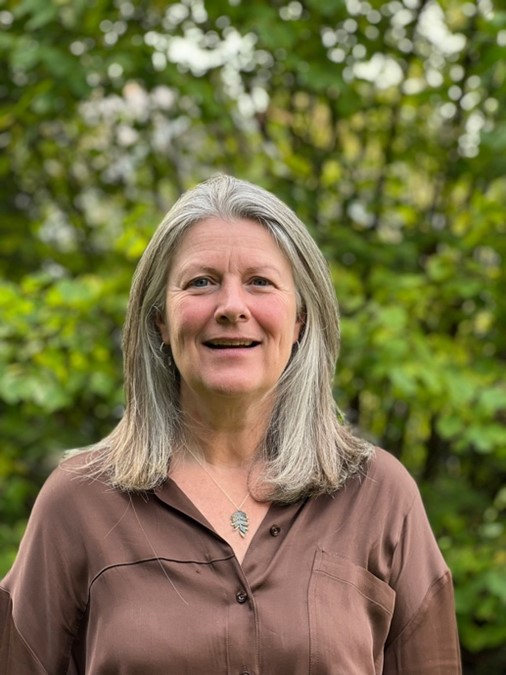
Revd Dr Carole Irwin, a woman with shoulder-length grey hair, wearing a brown button-up shirt and a leaf-shaped necklace, smiles whilst standing outdoors in front of green foliage.

Revd Dr Carole Irwin

Research Associate
Revd Dr Carole Irwin

Research Associate

My research is in theology, intellectual disability and Christian community. My current work uses a participative approach, investigating belonging to a Christian community of differing intellectual abilities with members of the community.

Carole received her PhD from the University of Durham, where she worked on Rowan Williams’ concept of difficulty as a tool for negotiating difference between religious and secular life and commitment in the public square. She was a member of the academic staff of Wesley House in the Cambridge Theological Federation from 2015 to 2021, and Director of Studies from 2017, teaching political theology and leading the MA programme on Pastoral Care and Chaplaincy. Carole is currently project leader for Growing in Friendship, a participative theological action research project of the University of Aberdeen’s Centre for Spirituality, Health and Disability and Lyn’s House Cambridge. Lyn’s House is a Christian community of friendship for people with and without intellectual disabilities. The Growing in Friendship project is the first instance of participative research using a theological action research approach with a community of differing intellectual abilities. She is also a member of the Von Hügel Institute’s research project Disability and Knowledge in collaboration with the University of Notre Dame’s Rome Global Gateway and L’Arche Italy. She is ordained in the British Methodist Church, has served on its Faith and Order Committee, and is currently a member of the British Methodist-Roman Catholic Dialogue Commission. She studied in Cambridge (King’s College) for her first degree in Modern Languages (French and Italian).

Academic Profile

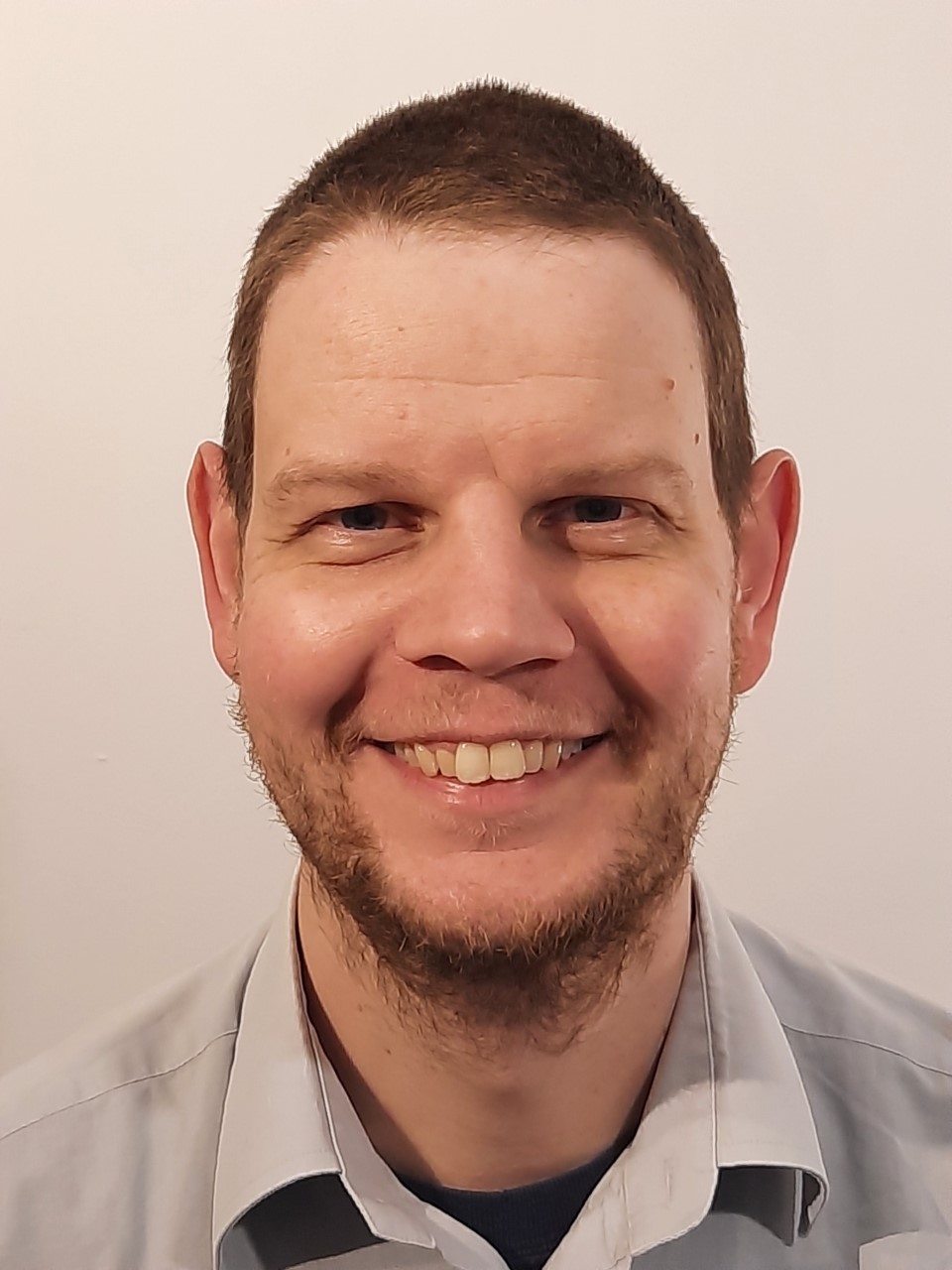
Dr Mike Brownnutt, a man with short brown hair and a trimmed beard, smiles at the camera. He is wearing a light grey collared shirt and stands against a plain white background.

Dr Mike Brownnutt

Research Associate

Dr Mike Brownnutt

Research Associate
Mike Brownnutt obtained his first Master’s degree (MSci in physics) and his PhD (in experimental quantum mechanics) from Imperial College London, UK. He then worked at the University of Innsbruck for eight years, writing his habilitation on his research there, which developed scalable architectures for trapped-ion quantum computers. He completed a second Master’s degree (MA in theology from the University of Chester, UK) considering how faith is understood by various parties in discourse on the relationship between Christianity and science.

He spent seven years at the University of Hong Kong, serving as Associate Director of the Faith and Science Collaborative Research Forum, and researching framings for science and religion which do not pre-suppose Modernist assumptions. He now serves as Course Director of the Faraday Institute. In his spare time, he is working on a PhD (with University of Birmingham) on non-Modern philosophy of science and religion.

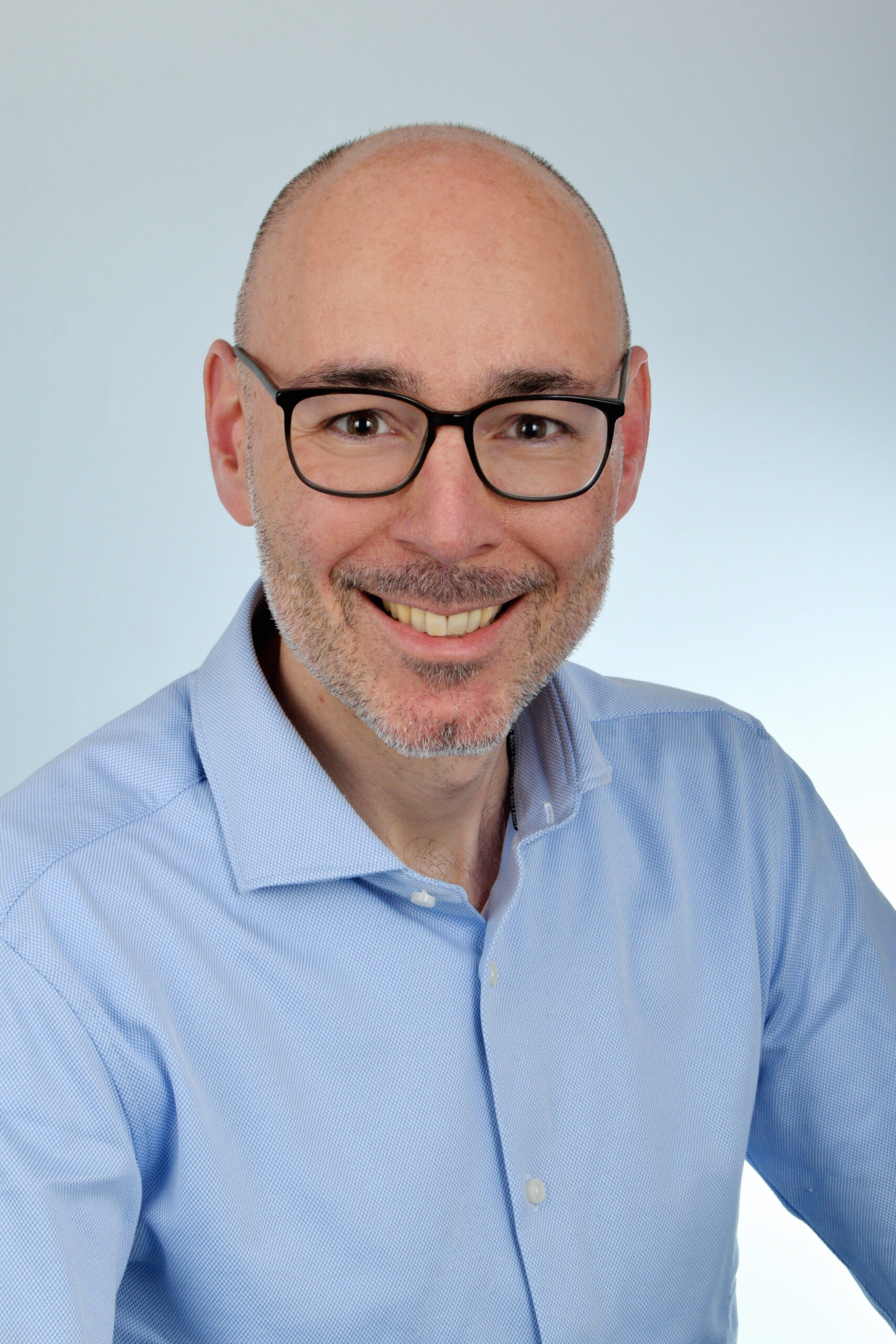
Dr Marc Neugröschel, a smiling, middle-aged man with a bald head, glasses, and a short beard, wearing a light blue button-up shirt, poses in front of a plain light background.

Dr Marc Neugröschel

Research Associate

Dr Marc Neugröschel

Research Associate

Dr. Marc Neugröschel is a Research Fellow in the ISGAP-Woolf Institute Fellowship Training Programme in Critical Contemporary Antisemitism Studies, Discrimination, and Human Rights. A sociologist, he earned his PhD and MA from Hebrew University in Jerusalem, Israel. Prior to this, he studied at RWTH University in Aachen, Germany, his birthplace and hometown. Additionally, he has worked as a journalist for German and Israeli English-language newspapers.

Dr Lydia Jaeger

Dr Lydia Jaeger

Research Associate

Dr Lydia Jaeger

Research Associate
My current research interests concern the epistemological and ethical implications of the doctrine of creation and the articulation between philosophy, the sciences and theology. In 2024, I was involved in setting up the Centre d'études et de recherche interdisciplinaire évangélique (CERIE).

After completing postgraduate studies in physics and mathematics at the University of Cologne (Germany) and in theology at the Seminary for Evangelical Theology in Vaux-sur-Seine (France), Lydia Jaeger obtained her Ph.D. in philosophy at the Sorbonne on the possible links between the concept of law of nature and religious presuppositions. She holds a permanent lectureship and is academic advisor and international relations officer at the Institut Biblique de Nogent-sur-Marne (France), and academic director of the Centre d’enseignement et de recherche interdisciplinaire évangélique en sciences, culture et théologie (CERIE). She is a research associate of St. Edmund’s College, University of Cambridge, a Faraday Associate of the Faraday Institute for Science and Religion and a KLC Research Fellow at the Kirby Laing Centre for Public Theology (all based in Cambridge, UK). Lydia Jaeger is the author of seven books and numerous articles on the relation between Christianity and the natural sciences. She has edited (or co-edited) nine collective volumes; among them is Lire la Bible aujourd’hui : Perspectives croisées sur les défis contemporains (Bibli’O, 2022 – English translation Zondervan Academic, 2024). Her book Ordinary Splendor: Living in God’s Creation was listed as a finalist in the 2024 Christianity Today Book Awards in the Theology (popular) category.

Academic Profile

Publications

  • Lydia Jaeger, Einstein, Polanyi and the Laws of Nature, West Conshohocken (PA): Templeton Foundation Press, 2010
  • Lydia Jaeger, What the Heavens Declare: Science in the Light of Creation, transl. Jonathan Vaughan, Eugene (OR), Wipf and Stock, 2012
  • Lydia Jaeger, Ordinary Splendor: Living in God's Creation, Bellingham [WA], Lexham Press, 2023
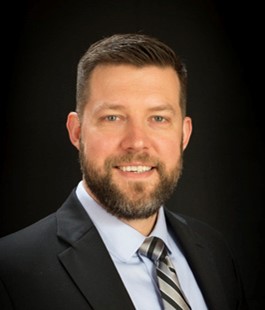
Dr Caleb Howard, a man with short brown hair and a beard, wearing a dark suit, light blue shirt, and striped tie, smiles at the camera against a plain black background.

Dr Caleb Howard

Associate Tutor, Bye-Fellow
Dr Caleb Howard

Associate Tutor, Bye-Fellow

I am an Assyriologist based at Tyndale House, Cambridge, researching scribal practices and onomastics (personal names) in ancient Mesopotamia and the Levant. At St Edmund’s I am a Bye-Fellow and Associate Tutor.

Dr J. Caleb Howard is an Assyriologist who studies the languages, texts, and history of ancient Mesopotamia and the Levant. He is a Research Fellow in Old Testament and Ancient Near East at Tyndale House, Cambridge, where he spends most of his time. He is also editor of Tyndale’s academic journal, Tyndale Bulletin. At St Edmund’s College, he is Bye-Fellow and Associate Tutor.

Dr Howard’s research focuses on two periods of ancient history and their textual corpora. First, he researches scribal practices in the Neo-Assyrian state, which flourished in northern Iraq, ca. 1000-600 B.C. His current book project investigates the mechanics of scribal production of Neo-Assyrian royal inscriptions, the propaganda of the Assyrian state. The basis of this project is first-hand collation and photography of royal inscriptions of the king Ashurnasirpal II (883-859 B.C.) in various museum collections.

A part of Dr Howard’s research on the Neo-Assyrian empire is carried out within the framework of the Cambridge-LMU Strategic Partnership, one aim of which is to publish up-to-date editions of Assyrian royal inscriptions, both online and in print publications. In cooperation with Dr Jamie Novotny (LMU) and Professor A. Kirk Grayson (University of Toronto), Dr Howard is preparing an updated edition of the royal inscriptions of Ashurnasirpal II. Transcriptions and translations of these inscriptions will be made available to scholars and the public via an online repository of cuneiform texts called Oracc (Open Richly Annotated Cuneiform Corpus).

Dr Howard’s second major research focus is personal names in the Levant in the second and first millennia B.C. At Tyndale House, Cambridge, he is part of a team of researchers collecting personal names from relevant primary sources and analysing them, to see what they tell us about the linguistic and social history of the region. This work will be documented in an open-access database and in a set of print publications. Dr Howard’s main research contribution to the project is a study of the personal names in about five hundred cuneiform tablets from the ancient city of Alalakh (Tell Atchana) in southern Turkey. These texts contain thousands of personal names, mainly derived from one or more West Semitic languages and from the Hurrian language. These names reveal aspects of language, religion, and culture which would otherwise be inaccessible to modern research.

Academic Profile


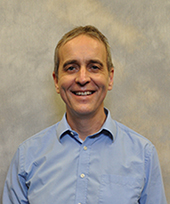
Dr William Farr, a man with short, light brown hair, is smiling at the camera. He is wearing a light blue collared shirt and standing in front of a neutral, mottled background.

Dr William Farr

Fellow

Dr William Farr

Fellow
I am a UTO Assistant Professor in the Faculty of Education. 

William initially worked as a primary school teacher after a degree from Sussex and UC Berkeley. Additionally, William works on the Primary PGCE and teaches on the UG Education Tripos, and has Masters and PhD students. In research, he collaborates across the University, Education and Healthcare sectors in various Chief Investigator or Co-applicant roles, mainly on the topic of assessment and diagnostic pathways for children with possible autism, or other neurodivergent conditions.

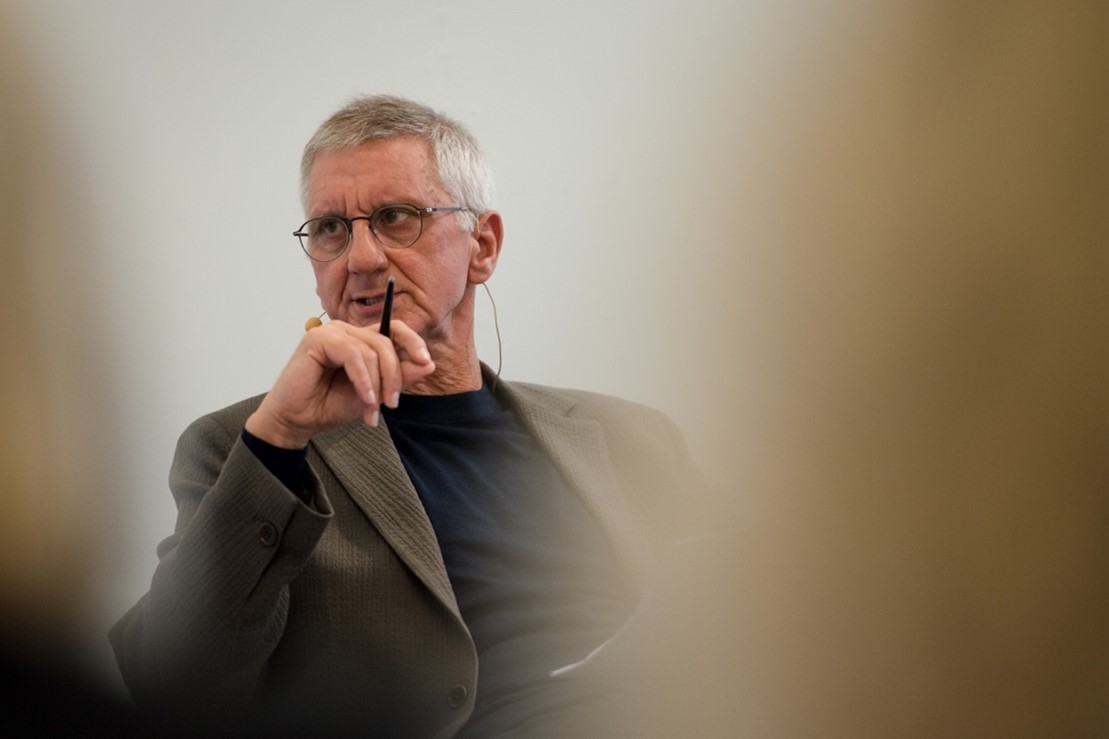
Dr Neville Bolt, an older man with grey hair and glasses, wearing a blazer and dark shirt, is seated indoors, holding a pen to his lips and looking thoughtful.

Dr Neville Bolt

Friend of St Edmund's

Dr Neville Bolt

Friend of St Edmund's

Neville is the Director of the King’s Centre for Strategic Communications (KCSC), the leading global centre of academic expertise in Strategic Communications. He is Reader in Strategic Communications and Convenor of the Masters programme in Strategic Communications in the Department of War Studies, King’s College London. And he is Senior Fellow at SCERU, University of Tokyo. Bolt is Editor-in-Chief of Defence Strategic Communications, the peer reviewed academic journal of NATO Strategic Communications Centre of Excellence.

He has convened the Masters course Evolution of Insurgency and Counterinsurgency and the International Relations course Transnational Movements, Networks and Revolutionary Strategy. He supervises PhD students researching topics including empathy in international negotiations; trust in the revolutionary theatre; counter-conduct & democratic dissent; materiality of communication in urban space; Cold War metaphor of containment; strategic communications policies in Afghanistan; phenomenology of the information environment; constructing political memory; jazz diplomacy in the Cold War; memory construction in Latvian independence; influence networks in South Caucasus; Brazil’s Amazonia dilemma. He was the Teaching Excellence Award Winner 2017.

Much of his career was spent as a television journalist and producer-director at the BBC, ITV, and CBC (Canada). Working in news and current affairs, he specialised as a producer of war zone documentaries, covering conflicts in Africa, Latin America, the Middle East, and Indian subcontinent. Later he created strategic communications campaigns for Britain’s Labour Party; Amnesty International; the African National Congress (ANC)/Anti-Apartheid Movement. He served too as communications advisor to UEFA Champions League football.

His book The Violent Image: Insurgent Propaganda and the New Revolutionaries (Columbia UP) was published in 2012, 2nd revised edition, 2020 (Oxford UP), winning the CHOICE ‘outstanding academic status award’. Unmapping the 21st Century: Between Networks and the State (Bristol UP) was published in 2022. He is writing Strategic Communications: Information, Disinformation & The Human Condition, and producing a volume of field-defining Perspectives from Defence Strategic Communications journal to appear late 2022.

Dr Javad Shamsi Headshot

Dr Javad Shamsi

Associate Tutor, Bye-Fellow

Dr Javad Shamsi

Associate Tutor, Bye-Fellow

Javad Shamsi is deeply interested in light-matter interactions, particularly in tiny semiconductors known as Quantum Dots (QDs), which possess intriguing properties for lighting technologies such as LEDs, lasers, and quantum light sources.

Javad completed his undergraduate studies in Chemistry at the University of Tehran, where he undertook a research project under the supervision of Prof. Mohammad Reza Ganjali. He then pursued a PhD at the Italian Institute of Technology (IIT) and the University of Genoa, focusing on semiconducting nanocrystals and their optoelectronic properties. Following his PhD, Javad joined the Hyperion ERC project led by Prof. Sam Stranks at the Cavendish Laboratory, University of Cambridge, where he researched quantum-confined perovskite nanoplatelets for lighting technologies, including LEDs and quantum lighting, from 2018 to 2022. After completing his postdoctoral research in September 2022, he stepped away from intensive research roles and accepted a position as the EPSRC Programme Grant Manager in the Department of Physics at the University of Cambridge. Although he initially intended to take a brief break of about a year, his plans were disrupted in October 2023, when he tragically lost his mother in an accident. This profound loss had a significant emotional impact, leaving him unable to re-enter the research sector immediately.

Recently, Javad began teaching energy materials courses to MPhil students in the Department of Materials and Physics at the University of Cambridge. He also took on a part-time lecturing role at Anglia Ruskin University in Cambridge. In 2019, he joined St Edmund’s College, University of Cambridge, initially as a PDRA, and later as a Tutor and Bye-Fellow, providing pastoral support to approximately 40 students each term. He has also delivered several public lectures on his research, making it more accessible to a wider audience and contributing to broader societal benefits. Additionally, Javad is the director of ShamsLab, a consultancy specialising in energy, energy materials, nanotechnology, and quantum technologies, with a focus on tackling the pressing challenges within the energy sector.

At the college, aside from engaging in intellectual discussions with peers and providing pastoral support to students in their academic lives, Javad is keen to explore his interest in understanding the nature of light - something beyond the ripples of the electromagnetic field. This work bridges his expertise with his religion, which to some extent aligns with the philosophy of Ishraq. Inspired by Georges Lemaître, he believes St Edmund’s College is the ideal place to contemplate the connection between science and religion.

Academic Profile

Dr Caterina Milo

Dr Caterina Milo

Research Associate

Dr Caterina Milo

Research Associate
My research interests lie in health law and ethics, particularly informed consent, doctor-patient relationship, and reproductive ethics widely considered.

Dr Milo is Lecturer in Law at the School of Law, University of Sheffield, where she leads the Health Law Research Group. Before joining Sheffield, she was College Assistant Professor and Fellow in Law at Robinson College-University of Cambridge, and previously Lecturer at the University of Exeter Law School. She holds a PhD in Health Law from Durham Law School; a MA in Bioethics and Medical Law (St Mary’s University-Twickenham); an integrated MA in Law (University of Siena, Italy); and a Diploma in Legal Studies (University of Oxford).

Academic Profile

A large brick building with multiple chimneys and dormer windows sits surrounded by lush green gardens, where flowering plants bloom under a partly cloudy sky. A curved path leads to the entrance, ready for the Master's welcome.

Dr Yuyan Jiang

Post Doctoral Research Associate

Dr Yuyan Jiang

Post Doctoral Research Associate

My work focuses on inequalities in education, intergenerational income mobility, and policies to narrow the socio-economic gap in education and the labour market. I am currently working on evaluating the My Village programme delivered by the People’s Action for Learning (PAL) Network.

Yuyan is a Research Associate at the Faculty of Education, working on the evaluation of the My Village programme. Yuyan’s research interests include educational inequalities, social mobility, and policy interventions to reduce socio-economic disparities in education and the labour market. She is an ONS Accredited Researcher, proficient in analysing large longitudinal datasets. Her PhD research focused on intergenerational income mobility in England, exploring the impacts of educational achievement, bursaries, and the COVID-19 pandemic on social mobility.

Academic Profile

A large brick building with multiple chimneys and dormer windows sits surrounded by lush green gardens, where flowering plants bloom under a partly cloudy sky. A curved path leads to the entrance, ready for the Master's welcome.

Dr Liam Saddington

Director of Studies

Dr Liam Saddington

Director of Studies

Liam is Director of Studies for Geography

Dr Charles Leavitt, a man with short brown hair, wearing a dark blazer over a light blue button-up shirt, smiles at the camera against a plain grey background.

Dr Charles Leavitt

Visiting Scholar

Dr Charles Leavitt

Visiting Scholar

Charles L. Leavitt IV is the William Payden Associate Professor of Romance Languages and Literatures and the Associate Director of the Center for Italian Studies at the University of Notre Dame. A Fellow of the American Academy in Rome, the Nanovic Institute for European Studies and the Kellogg Institute for International Studies, Leavitt studies modern and contemporary Italian literature and culture in a comparative context. He was awarded the 2022 Essay Prize from the Society for Italian Studies and the 2021 Book Prize in Visual Studies, Film, and Media from the American Association for Italian Studies for his first monograph, Italian Neorealism: A Cultural History (University of Toronto Press, 2020), which was also shortlisted for the Bridge Literary Prize in North American non-fiction.

Dr Malcolm Cameron, a middle-aged man with short hair, a beard, and glasses, smiles whilst wearing a blue shirt, striped tie, and lanyard around his neck. He is standing indoors in front of a wooden door.

Mr Malcolm Cameron

Bye-Fellow

Mr Malcolm Cameron

Bye-Fellow

Malcolm Cameron is a consultant Head and Neck Maxillofacial Surgeon and clinical lead at Addenbrooke’s, Cambridge University Hospitals NHS Trust where he has worked for over two decades.  He qualified in Medicine from St Bartholomew’s Hospital after his Dental degree at Guy’s Hospital, London.

His training involved time at The Royal Marsden Hospital and completed at University College Hospital in London including Great Ormond Street Children’s Hospital and Queen Victoria Hospital in East Grinstead.

Within Oral and Maxillofacial surgery, his special interests are head and neck oncology with special reference to mouth cancer and reconstruction. Additionally, he manages adult and paediatric facial trauma and he also looks after salivary gland pathology and complex cutaneous malignancy.

At Addenbrooke’s he is a trainer for medical and dental core trainees plus surgeons in higher training.  He hosts student selected components (SSP’s) for clinical medical students at the University of Cambridge Medical School and is the supervisor for head & neck anatomy at St Edmunds College, Cambridge.

He is a contributing author to the medical text books: Essential Surgery, Maxillofacial Trauma and Aesthetic Reconstruction.

Follow us

Stay up to date with our rich college life here at St Edmund's through our social media channels.