HomeAboutOur People

Our people

Filter staff:
Norfolk Building and Chapel

Professor Sir Martin Evans FRS

Honorary Fellow
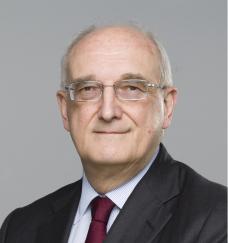
Professor Sir Martin Evans FRS

Honorary Fellow

Professor Sir Leszek Borysiewicz FRS FRCP FMedSci

Honorary Fellow

Professor Sir Leszek Borysiewicz FRS FRCP FMedSci

Honorary Fellow
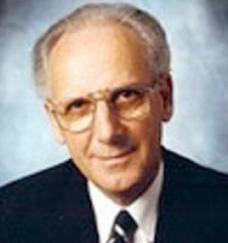
Former Vice-Chancellor, University of Cambridge

Professor Sir Brian Heap CBE FRS

Honorary Fellow

Professor Sir Brian Heap CBE FRS

Honorary Fellow
Former Master of St Edmund's College

Sir Brian Heap has doctorates from the Universities of Nottingham and Cambridge in animal physiology, and has published on endocrine physiology, biotechnology, sustainable consumption and production, and science advice for policy makers. He was University Demonstrator at the University of Cambridge, staff member of the Institute of Animal Physiology, Babraham, Cambridge, Director of the Institute of Animal Physiology and Genetics Research (Cambridge and Edinburgh), and Director of Research at the Biotechnology and Biological Sciences Research Council, Swindon. He was President of the Institute of Biology, UK Representative on the European Science Foundation, Strasbourg, UK Representative on the NATO Science Committee, member of the Scientific Advisory Panel for Emergency Responses (SAPER), Chief Scientist’s Office, Cabinet Office, and member of the Advisory Board of the Templeton Foundation. Elected a Fellow of the Royal Society in 1989, he became a member of Council, and Foreign Secretary and Vice-President from 1996 to 2001. In 1994 he was awarded CBE and in 2001 knighted for contributions to international science.

Sir Brian was President of the European Academies Science Advisory Council, Honorary Professor at the University of Nottingham, and is Chief Scientific Advisor to the Malaysian Commonwealth Study Centre and the Cambridge Malaysian Education and Development Trust, and is a Trustee of the Cambridge China Development Trust. He was Master of St Edmund’s College, Cambridge, and is Honorary Fellow at St Edmund’s College, Cambridge and formerly at Green Templeton College, Oxford. He was Editor of the Philosophical Transactions of the Royal Society, Series B, Chair of the Advisory Panel on Sustainable Consumption and Production at the Department of the Environment Food and Rural Affairs, and Specialist Advisor to the Parliamentary Select Committee on Putting Science and Engineering at the Heart of Government Policy.

With the UK’s Nuffield Council on Bioethics, the Department of Health’s Expert Group on Cloning, the EU President’s Advisory Group on Biotechnology, and the UK-China Forum he has been engaged in issues of population growth, environment and biotechnology. He is Senior Adviser of the Smart Villages Initiative in Africa, Asia and Latin America, International Adviser, Global Food Security, University of Cambridge, and previously project co-leader of Biosciences for Farming in Africa. He was scientific consultant for Merck, Sharp and Dohme, Johnson and Johnson, and Ligand Pharmaceuticals in the USA, and Principal Scientific Adviser for ZyGEM Co Ltd, New Zealand.

The Most Revd Archbishop Eamon Martin, Primate of all Ireland

Honorary Fellow

The Most Revd Archbishop Eamon Martin, Primate of all Ireland

Honorary Fellow

The Most Revd Archbishop Eamon Martin, Primate of all Ireland is an Honorary Fellow of St Edmund's College.

Dr Martin Thompson

Associate Tutor, Bye-Fellow
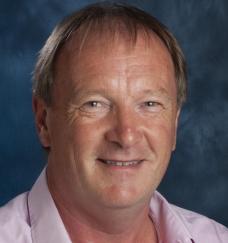
Dr Martin Thompson

Associate Tutor, Bye-Fellow

I am the intercollegiate Director of Undergraduate Admissions. I work with the Colleges on matters of process, policy and strategy relating to undergraduate admissions.

Martin began working in the admissions office at Peterhouse, Cambridge. Initially as a Schools Liaison Officer and then as Outreach Manager and Admissions Coordinator, Martin worked to support the admissions team and to plan and run programmes of events for schools and students about studying at Cambridge.

Martin moved on from Peterhouse in 2019, taking up the position of Director of Admissions and Fellow at St Edmund's College. Martin took up the role of Director of Undergraduate Admissions in July 2023. This role acts as the principal officer acting on behalf of all of the Cambridge Colleges to guide and to articulate strategy and policy relating to undergraduate admissions.

Norfolk Building and Chapel

Sir James MacMillan CBE

Honorary Fellow

Sir James MacMillan CBE

Honorary Fellow

Professor Richard B. Horne FRS

Honorary Fellow

Professor Richard B. Horne FRS

Honorary Fellow
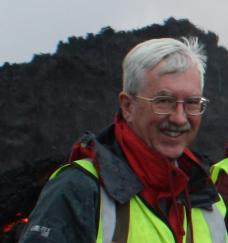
Richard was elected Honorary Fellow of St Edmunds College in 2023 after being a Fellow since 2014.  He is Head of Space Weather at the British Antarctic Survey where he holds an individual merit promotion reserved for world-leading scientists.   He is also a member of the Executive Team and Visiting Professor at the University of Sheffield.

Richard has published over 250 research papers on wave-particle interactions, wave propagation and space weather.  He is known for his work showing that plasma waves accelerate charged particles to very high energies and play a major role in the formation of the radiation belts at Earth, Jupiter, and Saturn.  Working with the commercial sector, Richard led two EU projects to turn this basic research into a forecasting system that is now used by the European Space Agency, satellite operators and insurance underwriters to help maintain the safe and reliable operation of satellites.

Richard was awarded the Gold Medal from the Royal Astronomical Society in 2022, the NERC Impact Award for Economic Impact in 2023, the International Kristian Birkeland Medal from the Norwegian Academy of Sciences in 2020, the Appleton Prize from the International Union of Radio Science (URSI) in 2020, and the Lloyds Science of Risk Prize in 2014.  He was awarded Sc.D. from the University of Cambridge in 2020 for distinguished research.

Richard was elected Fellow of the Royal Society in 2021 and Academia Europaea in 2023.  He is also Fellow of the American Geophysical Union, Fellow of the International Union of Radio Science (URSI), and Fellow and former Vice President of the Royal Astronomical Society.

Richard is Chair of the Space Environment Impacts Expert Group that advises the Government on space weather.  He also serves on other Government and UKRI committees.

Professor Robert (Bob) White, FRS

Emeritus Fellow

Professor Robert (Bob) White, FRS

Emeritus Fellow
Bob White is Emeritus Professor of Geophysics at Cambridge University and a trustee and Emeritus Director of The Faraday Institute for Science and Religion

Bob White is Emeritus Professor of Geophysics at Cambridge University and a trustee and Emeritus Director of The Faraday Institute for Science and Religion, originally founded in St Edmund's College, Cambridge in 2006. He studied Geology as an undergraduate at Emmanuel College, Cambridge and stayed to do research for a PhD in marine geophysics, which he completed in 1977. Since then he has been mostly in Cambridge, though with research interests around the world. He was elected a Fellow of St. Edmund’s College in 1988. In 1989 he was elected Professor of Geophysics, in 1994 a Fellow of the Royal Society, in 2016 a Fellow of the American Geophysical Union, and in 2018 was awarded a Gold Medal of The Royal Astronomical Society for his research.  His research interests include a wide variety of topics to do with how the earth works, with particular emphasis in recent years on the way in which molten rock is generated beneath the earth's major rift zones, and then stored in magma chambers in the crust before being erupted from volcanoes. Much of his current fieldwork is in Iceland.

He lectures and writes widely on science and Christian faith and believes that they are two ways of looking at the same world which give a richer and deeper view of it than either on their own. He is President of the charity Christians in Science, and Vice-President of the John Ray Initiative, a Christian environmental charity.

Lord Alec Broers FRS

Honorary Fellow

Lord Alec Broers FRS

Honorary Fellow

Former Vice-Chancellor of University of Cambridge, Lord Broers worked in the research and development laboratories of IBM in the United States for 19 years before returning to Cambridge in 1984 to become Professor of Electrical Engineering (1984–96) and Fellow of Trinity College, Cambridge (1985–90). He is a pioneer of nanotechnology.

Dr Hermann Hauser KBE CBE FRS FREng

Honorary Fellow

Dr Hermann Hauser KBE CBE FRS FREng

Honorary Fellow
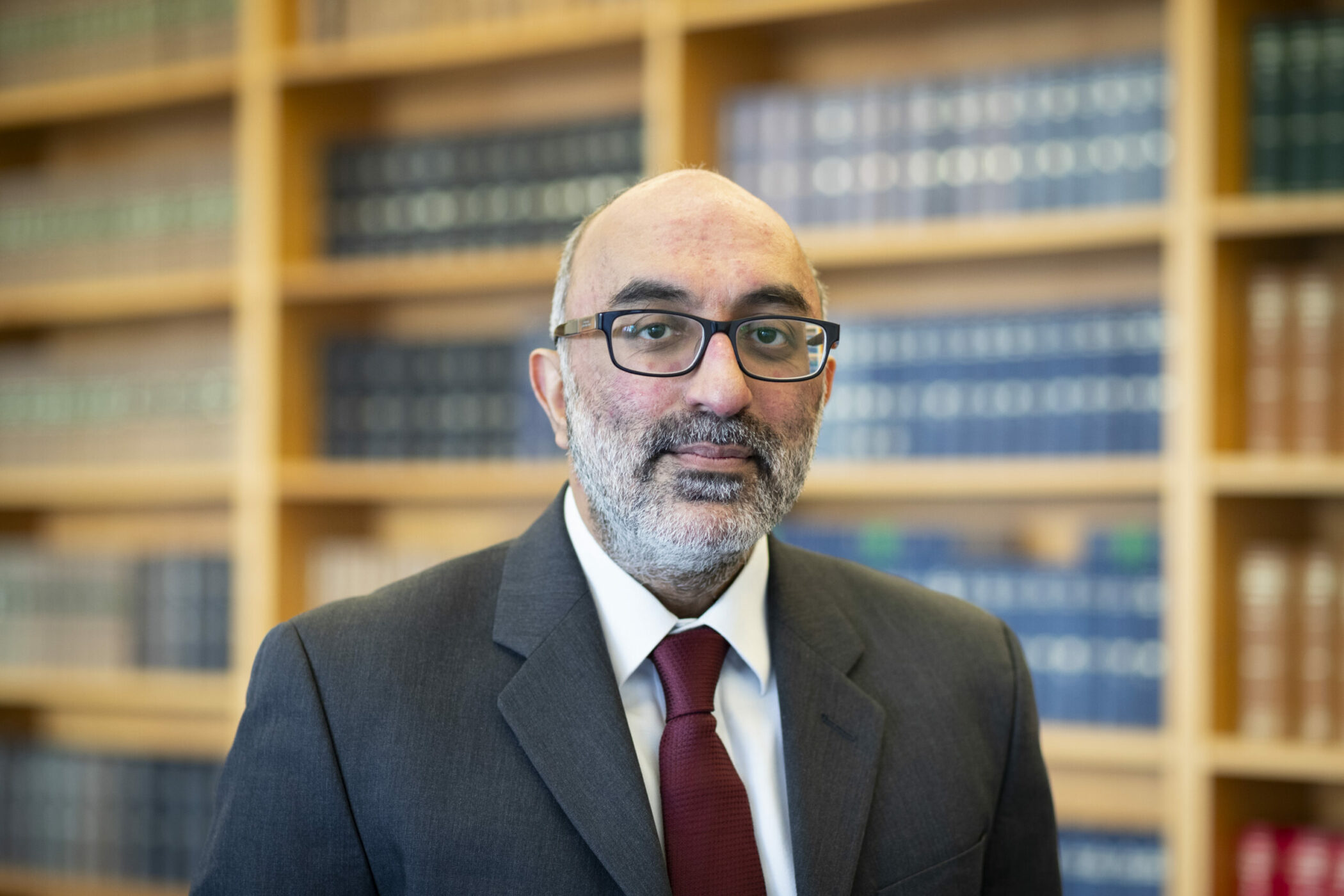
Dr Hermann Hauser KBE CBE FRS FREng is an Entrepreneur, Venture Capitalist and Honorary Fellow at St Edmund's College.

In his long and successful career as an entrepreneur and venture capitalist, Hermann has founded or co-founded companies in a wide range of technology sectors. These include Acorn Computers (where he helped spin our ARM), Active Book Company, Virata, Net Products, NetChannel and Cambridge Network Limited.

Hermann holds an MA in Physics from Vienna University and a PhD in Physics from the University of Cambridge.  He is a Fellow of the Institute of Physics and of the Royal Academy of Engineering and holds an Honorary Doctorate from several other universities.  Dr Hauser was awarded a CBE in 2001 for ‘innovate service to the UK enterprise sector’.  In 2012 he became a Fellow of the Royal Society and in 2015 he received a Honorary Knight Commander of the Most Excellent Order of the British Empire (KBE) for services to engineering and industry.

Norfolk Building and Chapel

Dame Bridget Ogilvie DBE FRS

Honorary Fellow

Dame Bridget Ogilvie DBE FRS

Honorary Fellow

Former Director, Wellcome Trust

Professor Sandesh Sivakumaran

Fellow, Director of Studies

Professor Sandesh Sivakumaran

Fellow, Director of Studies
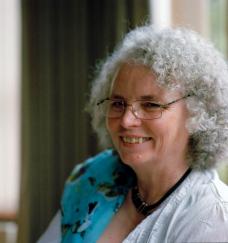
Professor Sandesh Sivakumaran's research focuses on international law, particularly the human dimension of international law.

Professor Sivakumaran is Professor of International Law at the University of Cambridge, Director of the Lauterpacht Centre for International Law, and Fellow of St Edmund's College, Cambridge. He is a Senior Fellow at the Lieber Institute for Law and Warfare, United States Military Academy (West Point), Fellow of the University of Nottingham Human Rights Law Centre, and Fellow of the Centre on Armed Groups. He advises and acts as expert for a range of states, international organizations and non-governmental organizations.

Academic Profile

Publications

  • Sivakumaran, The Law of Non-International Armed Conflict, 2012, OUP
  • Higgins, Webb, Akande, Sivakumaran & Sloan, Oppenheim's International Law: United Nations, 2017, OUP
  • Harris and Sivakumaran, Cases and Materials on International Law, 2020, Sweet and Maxwell
  • Moeckli, Shah, Sivakumaran (eds), International Human Rights Law, 2022, OUP
  • Sivakumaran and Burne (eds), Making and Shaping the Law of Armed Conflict, 2024, OUP
Professor Chris Young, Master of St Edmund's College

Professor Chris Young

College Master

Professor Chris Young

College Master

Professor Chris Young became Master of St Edmund's on 1 October 2024.

Professor Chris Young is Professor of Modern and Medieval German Studies at the University of Cambridge and was Head of the School of Arts and Humanities prior to his appointment as Master of St Edmund's College. He is also Director of the Cambridge DAAD Research Hub for German Studies, and founder and Director of the Cambridge-LMU Strategic Partnership, Cambridge’s first institution-wide partnership with any university. He is both a medievalist and a prize-winning historian of modern sport.

His primary teaching and research interests focus on medieval German literature and language, as well as the history of European sport, with a particular emphasis on German sport. He has been a Fellow of the Alexander von Humboldt-Stiftung (Cologne), a Permanent Visiting Fellow of the Friedrich Schlegel Graduiertenschule für literaturwissenschaftliche Studien der FU Berlin (2010-12), a Visiting Fellow of the Institut für Zeitgeschichte Munich (2018) and an Honorary Fellow of the Historisches Kolleg Munich (2018). His monograph ‘The 1972 Munich Olympics and the Making of Modern Germany’ (UC Press, 2010, with Kay Schiller) was the first book to win the prizes of both the British and North American Societies for sports history. In 2021, his ‘The Whole World was Watching. Sport in the Cold War’ (Stanford University Press, 2020) also won the latter’s anthology prize. He curated a major exhibition this summer at the Fitzwilliam Museum on the 1924 Paris Olympics (best known through the film ‘Chariots of Fire’) and serves on the German government’s Historical Commission on the terrorist attack at the 1972 Olympics in Munich.

Professor Eilís Ferran

Fellow

Professor Eilís Ferran

Fellow
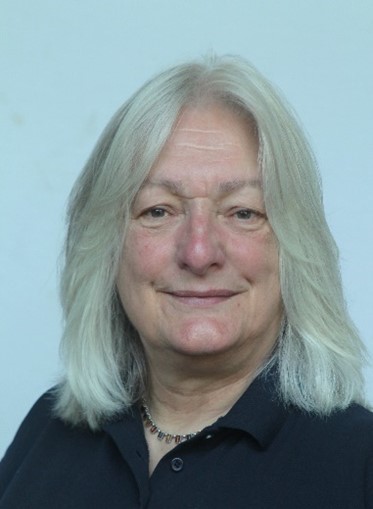
Professor Eilís Ferran is a Fellow at St Edmund's College and a Professor of Company and Securities Law at the University of Cambridge.

She is also the Provost of the Gates-Cambridge Trust, which provides scholarships for postgraduate study at Cambridge funded by a major donation from the Gates Foundation. She has written extensively on UK, EU and international financial regulation, company law and corporate finance law.  Her publications include Principles of Corporate Finance Law (OUP, 3rd edn, 2023, co-authored), Brexit and Financial Services (Hart Publishing, 2017 co-authored), The Oxford Handbook of Financial Regulation (OUP, 2015, co-edited) and The Regulatory Aftermath of the Global Financial Crisis (CUP 2012, co-authored).  She is a Fellow of the British Academy and an Honorary Bencher of Middle Temple.  She is an independent director of a number of profit and not-for-profit companies, and of a charitable foundation.

Professor Nick Mansley

Bye-Fellow

Professor Nick Mansley

Bye-Fellow
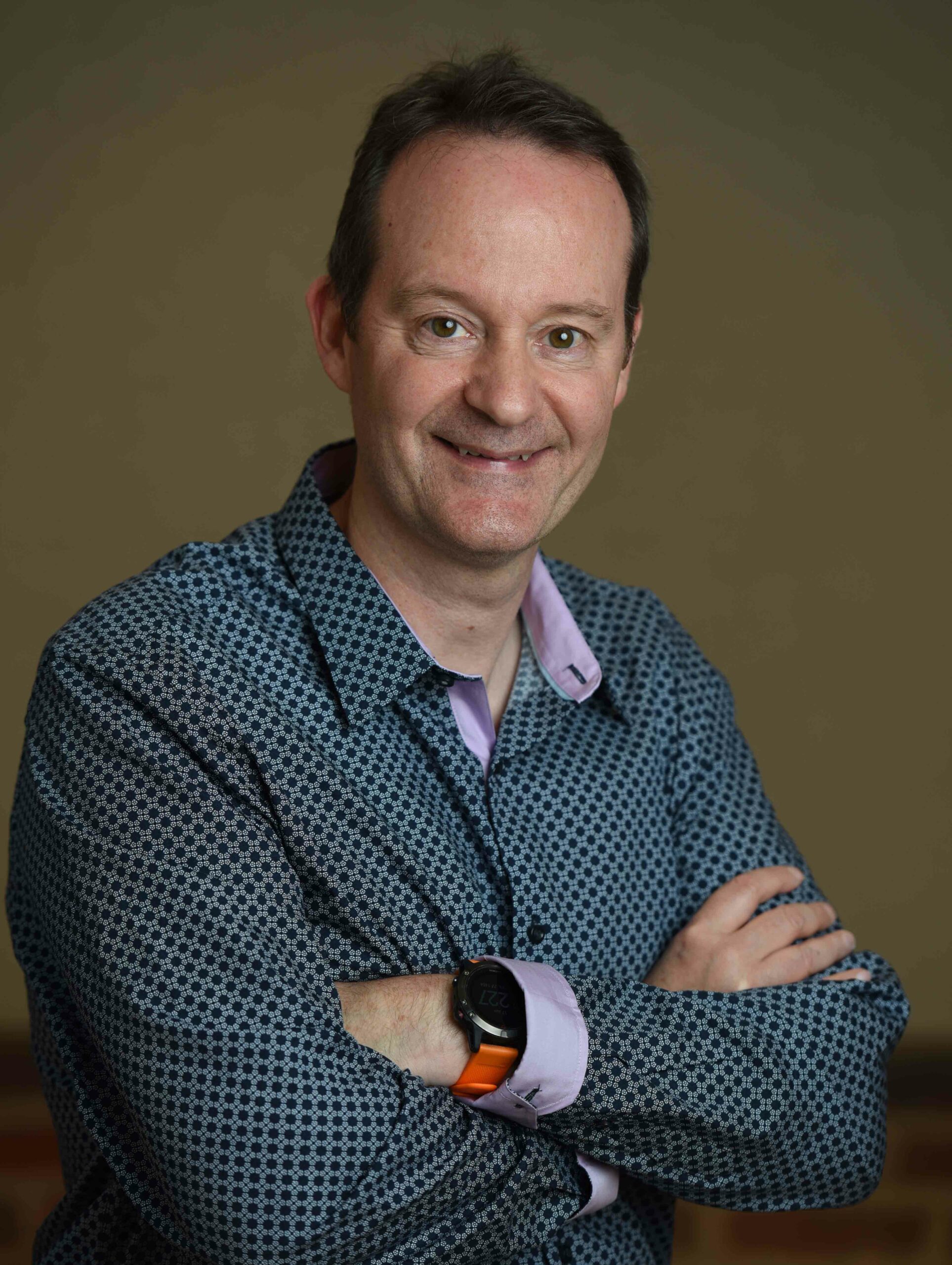
Professor Nick Mansley's research focuses on issues in real estate finance and investment, particularly issues around drivers of performance. He is still actively involved in the industry as an independent investment committee member and consultant.

Professor Nick Mansley is the Director of the Cambridge Real Estate Research Centre and Course Director of the part time Masters in Real Estate programme. He has published research on performance drivers of real estate, the structure of the market and fundamental value. He worked in the investment management industry for nearly 20 years in a global role at Aviva across all asset classes and previously in a Chief Investment Officer role in the real estate business. Prior to that he worked in economic consultancy based in Cambridge.

Academic Profile

Prof Evan Reid

Professor Evan Reid

Fellow

Professor Evan Reid

Fellow

Professor Evan Reid is a clinician-scientist who studies the molecular cell biology of genetic motor neuron disorders, with a research group based at Cambridge Institute for Medical Research. He is clinically active and see neurogenetics patients in my role as an NHS honorary consultant in Clinical Genetics.

Evan graduated in Medicine from Glasgow University in 1991 then trained in the specialty of Clinical Genetics in Glasgow and Cambridge. His main research interest is in the hereditary spastic paraplegias (HSPs), which are genetic forms of motor neuron degeneration. Evan moved to Cambridge in 1995 and completed a PhD in the Department of Medical Genetics in 2000, studying the genetics of these conditions. He has been involved in mapping and identifying numerous HSP genes. After stints as a Wellcome Trust Advanced and then Senior Research Fellow, he became a University Lecturer then Reader at the University of Cambridge. Since 2021 he has held the title of Professor of Neurogenetics and Molecular Neurobiology. Evan is a Principal Investigator at Cambridge Institute for Medical Research, a research institute of the University of Cambridge that has a strategic focus on unravelling the mechanisms of rare genetic disease. He is a clinically active and run a specialised neurogenetics clinic at Addenbrooke's Hospital. His research has encompassed the clinical features, genetics and cell biology of HSPs, but now concentrates on understanding the molecular pathology of HSP proteins that are involved in membrane traffic processes. This research has a strong focus on modelling the disease in human stem-cell derived neurons and encompasses proteomics, functional genomics and basic cell biological methodologies.

Academic Profile

Professor Edward Acton

Professor Edward Acton

Honorary Fellow

Professor Edward Acton

Honorary Fellow
Former Vice-Chancellor of the University of East Anglia

Edward Acton is an Emeritus Professor at the University of East Anglia where he is Professor of Modern European History.  Professor Acton was formerly Vice Chancellor of UEA.

Professor Francis Campbell. Image credit: Julita Sanders

Professor Francis Campbell

Honorary Fellow

Professor Francis Campbell

Honorary Fellow

Professor Campbell Joined the Foreign and Commonwealth Office (FCO) as a member of Her Majesty’s Diplomatic Service in 1997. He has worked at the United Nations Security Council in New York, the European Union, and at the Foreign & Commonwealth Office (FCO) in London and on diplomatic postings overseas. From 1999-2003, he served on the staff of the then Prime Minister Tony Blair, first as a Policy Adviser in the No.10 Policy Unit, and then as a Private Secretary to the Prime Minister. He also served on secondment with Amnesty International as the Senior Director of Policy. From 2005-2011, he served as Her Majesty’s Ambassador to the Holy See. From 2011-13, he served as Deputy High Commissioner in Pakistan. From 2013-2014 he was the Head of the Policy Unit in the FCO and Director of Innovation at UK Trade and Investment.

From 2014-2020, Professor Campbell served as Vice-Chancellor of St Mary’s University in London and also Professor of International Relations, while on special leave from the Foreign Office. In February 2020, Professor Campbell became the fourth Vice-Chancellor of The University of Notre Dame Australia. He also holds the position of Professor, International Relations.

He has been a Member of the Advisory Panel of the Independent Anti-Slavery Commissioner, London. He also served on a number of governing bodies including St. Mary’s University, St. Joseph’s Hospice (London), St. Elizabeth’s School (London) and Carlow College (Ireland). He continues to serve as a Trustee of Forward Thinking (London).

More recently, Professor Campbell was appointed a Governor of the Forrest Research Foundation, member of the Divine Word University Council, member of the Association of Catholic Colleges and Universities Board of Directors and is a founding member of the International Council on Human Trafficking at St Thomas University, Miami, School of Law.

Professor Paul Luzio

Honorary Fellow

Professor Paul Luzio

Honorary Fellow

Professor Paul Luzio undertakes research in the field of molecular cell biology, to discover and understand the molecular mechanisms of intracellular membrane traffic between specialised organelles in mammalian cells, as well as abnormalities in these mechanisms and organelle function, which lead to disease.

Professor Paul Luzio MA PhD FMedSci was Master of St Edmund’s College from 2004-2014. Paul was an undergraduate in Cambridge, reading Natural Sciences (Part II Biochemistry) at Clare College before studying for a PhD in the Department of Biochemistry. After a period in Cardiff as a lecturer in medical biochemistry at the Welsh National School of Medicine he returned to Cambridge where, in 1979 he became a University Lecturer in the Department of Clinical Biochemistry and was later promoted to Reader (1996) and then Professor (2001). In 1987-88 Paul spent a sabbatical year at the European Molecular Biology Laboratory in Heidelberg, Germany. He was elected a Fellow of St Edmund’s College in 1987 and was Senior Tutor from 1991-1996. From 2002 until 2012 Paul was Director of the Cambridge Institute for Medical Research (https://www.cimr.cam.ac.uk), a cross-departmental research institute in the Clinical School with a mission to determine the molecular mechanisms of disease in order to advance human health. From 2007-2012 he chaired the Medical Research Council’s Molecular and Cellular Medicine Board and was a member of the Strategy Board. Paul was Deputy Head of the School of Clinical Medicine from 2012-2014.

Following retirement in 2014, Paul became Emeritus Professor of Molecular Membrane Biology. As a Voluntary Director of Research, he continues to lead a small research group funded by the Medical Research Council at the Cambridge Institute for Medical Research. Paul’s research is largely concerned with intracellular membrane traffic pathways in mammalian cells and the biogenesis, re-modelling and function of intracellular organelles (little organs) called lysosomes, which play an important role in cellular nutrition and signalling. Lysosomes are acidic organelles, with changes in acidity having effects on their degradative function and ability to signal to other parts of the cells. Paul is currently studying the molecular regulation of acidification and lysosome re-modelling and how these processes contribute to lysosome function. His work has contributed to a greater understanding of how defects in membrane traffic and lysosome function contribute to human diseases, including lysosomal storage and neurodegenerative diseases.

Academic Profile

Awards & Recognitions 

  • 1987 Humboldt Research Fellowship
  • 1998 FRCPath
  • 1999 FMedSci
  • 2005 Association of Clinical Biochemists (ACB) Foundation Award
  • 2015 FRSB


Prof Patrick Griffin

Professor Patrick Griffin

Bye-Fellow

Professor Patrick Griffin

Bye-Fellow

Professor Patrick Griffin is Bye-Fellow at St Edmund's College and a Madden-Hennebry Professor at the University of Notre Dame. He is an historian, trained as an early Americanist and specialising in the Atlantic world. His work ranges from the seventeenth to the nineteenth century. It brings together American, British, and Irish history.

Patrick Griffin's work explores the intersection of colonial and early national American and early modern Irish and British history. As such, it focuses on Atlantic-wide themes and dynamics. He has published work on the movement of peoples and cultures across the Atlantic Ocean, as well as the process of adaptation. He also examines the ways in which Ireland, Britain, and America were linked—and differed—during the seventeenth and eighteenth centuries. He has looked at revolution and rebellion, movement and migration, and colonization and violence in each society in comparative perspective. Much of what he does explores these themes in the context of empire. In his most recent books, he studied how empire gave way to revolution, both in America and the wider Atlantic. His latest work on the period just after the Age of Revolution has taken a global turn, charting the plight of common men and women in a modernizing world.

Publications

  • The Age of Atlantic Revolution: The Fall and Rise of a Connected World (Yale, 2023).
  • The Townshend Moment: The Making of Empire and Revolution in the Eighteenth Century (Yale, 2017).
  • America’s Revolution (Oxford, 2012).
  • American Leviathan: Empire, Nation, and Revolutionary Frontier (Hill & Wang, 2007).
  • The People with No Name: Ireland’s Ulster Scots, America’s Scots Irish (Princeton, 2001).

Awards & Recognitions

  • Harold Vyvyan Harmsworth Professor of American History, University of Oxford, 2021-22.
  • Honorary Professor, School of History, Classics, and Archaeology, University of Edinburgh, 2018-21.
  • Distinguished Fellow, Rothermere American Institute, University of Oxford
  • Honorary Member, Royal Irish Academy
  • Member, American Antiquarian Society

Follow us

Stay up to date with our rich college life here at St Edmund's through our social media channels.