HomeAboutOur People

Our people

Filter staff:

Professor Peter Guthrie OBE

Emeritus Fellow

Professor Peter Guthrie OBE

Emeritus Fellow
My research is focused on resilience of infrastructure, the assessment of large scale projects for sustainability, and energy efficiency and infection control in buildings.

Peter Guthrie was the first Professor in Engineering for Sustainable Development in the UK, taking up this post at the University of Cambridge in 2000. Prior to that he was in engineering consultancy for over 25 years. His research is focused on resilience of infrastructure, the assessment of large scale projects for sustainability, and energy efficiency and infection control in buildings. A civil engineer, Peter has worked in countries such as Nigeria, Malaysia, Lesotho, Sudan, Philippines, Ethiopia, and Botswana, and on major infrastructure projects such as London 2012, Channel Tunnel Rail Link (HS1), Conwy Tunnel, major airports, and building projects. He has recently led research consultancy for Lloyd’s Register Foundation (LRF). Peter was a Vice-President of the Royal Academy of Engineering (2020-2024), and is currently leading work on Pandemic Preparedness and on Infection Resilient Environments. Peter is founder and Vice-President of the charity RedR Engineers for Disaster Relief.

Academic Profile

Publications

  • MacAskill, Kristen, O’Hanlon, Francesca, Guthrie, Peter, Mian, Juliet, (2020). Fostering resilience-oriented thinking in engineering practice Proceedings of the Institution of Civil Engineers - Engineering Sustainability Volume 173 Issue 7, October pp. 356- 364 DOI: 10.1680/jensu.19.00049
  • George, Jennifer; Guthrie, Peter; Orr, John, (2022). "Re-Defining Shelter: Humanitarian Sheltering". July. Disasters Journal doi: 10.1111/disa.12555
  • Short, CA, Forman, T, MacAskill, KA, Soulti, E, Mutschler, R, Mohareb, E, Solanki, J, Britnell, J, Georgiadou, MC, Brady-Patel, B, Guthrie, P, (2020). NHS Estate: Energy Efficiency and Practice. Journal of Building Engineering. Submitted for review, May.
  • Zhou, W., Reiner, D., Moncaster, A., Guthrie, P., (2022) Modelling future trends of annual embodied energy of urban residential building stock in China. Energy Policy Vol 165, June doi.org/10.1016/j.enpol.2022.112932
  • Blom CM and Guthrie PM, 2019. Strategic intent .... Proc ICE – Engg Sustainability 172(4): 167–183

Awards & Recognitions

  • CBE 2024
  • FREng 1997
  • OBE1993

Professor Peter J O’Donnell

Tutor, Fellow

Professor Peter J O’Donnell

Tutor, Fellow
Affiliated Lecturer at the Department of Applied Mathematics and Theoretical Physics, Director of Studies in Mathematics, Tutor, Financial Tutor

Peter O’Donnell is an Affiliated Lecturer in the Department of Applied Mathematics and Theoretical Physics, a member of the Relativity and Gravitation research group and a Fellow of the Institute of Mathematics and its Applications. His current research interests are:

Lanczos potential theory. The Weyl tensor can be generated differentially by a three index tensor: the Lanczos tensor, which was derived from a Lagrangian that was initially constructed to analyse the self-dual part of the Riemann tensor. An ongoing study is being carried out to investigate the mathematical and physical properties of the Lanczos tensor. In generating the Weyl tensor the Lanczos tensor acts as a potential – analogous to the electric tensor in electromagnetic theory.

Twistor theory applied to Lanczos potential theory. The purpose of this research is to utilise the techniques of twistor theory in order to carry out a qualitative and quantitative analysis of the Lanczos potential, which appears to have some connection with local twistor transport.

Amongst his publications, Peter is the author of two books:

Introduction to 2-Spinors in General Relativity (World Scientific, 2003)

Essential Dynamics & Relativity (CRC Press, 2014).

He is a Tutor and Director of Studies at St. Edmund’s for Mathematics.

Professor Sarah Perrett OBE

Fellow Commoner
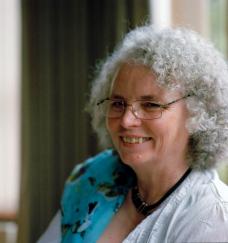
Professor Sarah Perrett OBE

Fellow Commoner

Professor Sarah Perrett  is Associate Director of The Faraday Institute, which she joined in 2020, when she was elected to Senior Membership of St Edmund’s College. She is also a Visiting Professor at the Institute of Biophysics, Chinese Academy of Sciences, where she has led a research group since 2003 and she continues to divide her time between Beijing and Cambridge. Sarah studied Natural Sciences (Chemistry) followed by a PhD in Protein Chemistry at the University of Cambridge. She then held a Research Fellowship at Sidney Sussex College, Cambridge before moving to Beijing in 2000. She was awarded an OBE for services to UK/China relations in the scientific field in the 2015 Queen’s New Year Honours List.

Sarah is Editor-in-Chief of Essays in Biochemistry (Portland Press). Her research interests include mechanisms of protein folding and amyloid formation. She has published over 100 research articles and has edited three books.

Professor Tina Barsby OBE

Emeritus Fellow

Professor Tina Barsby OBE

Emeritus Fellow

Tina Barsby is recognised for scientific achievements in crop science and is Honorary Professor of Agricultural Botany at the University. Following 18 years with the plant breeder Limagrain, in 2008 she became the first female CEO of NIAB, the National Institute of Agricultural Botany, from which she retired in 2021. She is a Fellow of the Royal Society of Biology, and a Fellow of the Royal Agricultural Society of England.

Tina was awarded the OBE in the 2018 New Year’s Honours List for services to agricultural science and biotechnology.  Tina chairs the Agricultural Advisory Board of Future Biogas, and the Board of Farm Data Principles. She is employed part-time as Agricultural and Scientific Advisor to the G’s group of companies.

She has extensive experience as a Trustee and is currently a member of the John Innes Foundation and the Lawes Trust, as well as a member of the College Council.

Professor Helen Mason OBE

Life Fellow

Professor Helen Mason OBE

Life Fellow
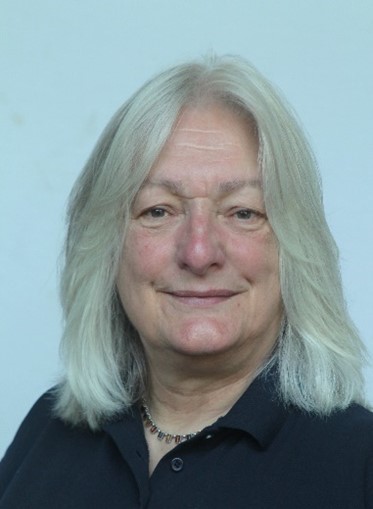
I am an Emeritus Professor in Solar Physics at DAMTP. I was a Tutor at St Eds for many years and then Senior Tutor from 2006-2011. I also served on many college and University committees. My photo portrait hangs in the Garden Room with other Life Fellows.

Helen Mason’s field of research is solar physics. She is one of the world’s leading experts on the ultraviolet, UV, and X-ray spectrum of the Sun. She led the Atomic- Astrophysics Group at DAMTP until her retirement in 2017. She has worked as a co-investigator and associated scientist on many joint UK, NASA, ESA, Japanese and Indian space projects including SoHO (Solar and Heliospheric Observatory), Hinode and SDO (Solar Dynamics Observatory). Solar space observations have completely changed our view of the Sun. She is a founder member of the CHIANTI team, an atomic database universally used for the analysis of solar spectroscopic observations, with over 4000 citations. Helen has been based at Cambridge University for over 40 years, having obtained a BSc (First Class Honours) in Physics and Astronomy and PhD at the University of London. She has taught at Cambridge University, London University and for the Open University. She has served as lecturer, examiner, Director of CATAM and on the Maths Faculty Board. She has also supervised many PhD students and post-docs who now have successful careers in the UK, Europe, India and the USA. She has organised and led many international conferences on solar physics. She has an extensive publication list (around 250 papers in refereed journals), with several (25) invited reviews and book chapters.

Helen has always been keen to convey her passion for solar physics to the public and school students. She has given many public lectures, including at the Cambridge Festival, Royal Institution and Institute of Physics. She has written articles for science magazines and participated in many radio and TV programmes, for example the BBC program ‘Seven Ages of Starlight’ and BBC Radio4 ‘In Our Time – Solar Wind’, reaching thousands of people. She was NASA’s solar representative at the Great American Eclipse, 2017, in the Great Smoky Mountains National Park, with media coverage reaching thousands. She has engaged in a multitude of outreach activities throughout her career, in particular working with school children, locally and nationally. She has focussed on those schools most in need of science enrichment. She produced an educational web site for teachers and students called Sun|trek (www.suntrek.org) which has been used extensively in the UK, USA and worldwide. More recently, she has led the SunSpaceArt project (sunspaceart.org), a team of scientists and artists, funded by STFC. Her team have run workshops in many schools (for children aged 7-12 years old) and led family activities at science festivals, reaching around 15,000 children and 2,000 teachers. The feedback has been superb. Helen has also been keen to promote education in developing countries. She has visited South Africa to work on astronomy projects with teachers and students in the former townships. She has also worked extensively in India, with schools in Pune, Maharashtra, and the rural areas of Tamil Nadu.

Academic Profile

Publications

  • Mondal, B, Mason, H.E. et al., Evolution of the Elemental Abundances during B-class solar flares: soft X-ray spectral measurements with Chandrayaan-2 XSM, 2021, ApJ, 920
  • Mulay, S., Tripathi, D. & Mason, H.E., Thermodynamic evolution of a sigmoid active region and associated flares, 2021, MNRAS, 504,
  • Mason, H.E. & Schell, H., We love STEAM, 2021, Astrononmy and Geophysics, 62,
  • Del Zanna, G. & Mason, H.E., Solar UV and X-ray Spectral Diagnostics, 2018, Solar Physics Living Reviews, 15, 5
    Awards & Recognitions
  • 2010- Helen was nominated as one of the six ‘Women of Outstanding Achievement’.
  • 2010 - An international meeting was held in her honour at DAMTP, Solar Plasma Spectroscopy- Achievements and Future Challenges: Celebrating the Career of Dr Helen Mason.
  • 2014 - Helen was awarded an OBE for her services to Higher Education and to Women in Science, Engineering and Technology.
  • 2018 - Helen was awarded the Royal Astronomical Society’s Annie Maunder Medal for Outreach.
  • 2024 - Helen won an Ogden Trust award for Sustained Contribution to Physics Outreach.
  • 2021 - the SunSpaceArt team, which Helen Mason leads, was awarded the Sir Arthur Clarke Group Award for Space Achievement in Education and Outreach.
  • 2024 - the CHIANTI team, of which Helen Mason is a Founder Member won the NASA Group Achievement Award ‘for outstanding contributions to the scientific productivity of NASA missions and the creation of a uniquely valuable tool for spectroscopic scientists worldwide’.

Professor Sandesh Sivakumaran

Fellow, Director of Studies

Professor Sandesh Sivakumaran

Fellow, Director of Studies

Professor Sandesh Sivakumaran's research focuses on international law, particularly the human dimension of international law.

Professor Sivakumaran is Professor of International Law at the University of Cambridge, Director of the Lauterpacht Centre for International Law, and Fellow of St Edmund's College, Cambridge. He is a Senior Fellow at the Lieber Institute for Law and Warfare, United States Military Academy (West Point), Fellow of the University of Nottingham Human Rights Law Centre, and Fellow of the Centre on Armed Groups. He advises and acts as expert for a range of states, international organizations and non-governmental organizations.

Academic Profile

Publications

  • Sivakumaran, The Law of Non-International Armed Conflict, 2012, OUP
  • Higgins, Webb, Akande, Sivakumaran & Sloan, Oppenheim's International Law: United Nations, 2017, OUP
  • Harris and Sivakumaran, Cases and Materials on International Law, 2020, Sweet and Maxwell
  • Moeckli, Shah, Sivakumaran (eds), International Human Rights Law, 2022, OUP
  • Sivakumaran and Burne (eds), Making and Shaping the Law of Armed Conflict, 2024, OUP
Professor Chris Young, Master of St Edmund's College

Professor Chris Young

College Master

Professor Chris Young

College Master

Professor Chris Young became Master of St Edmund's on 1 October 2024.

Professor Chris Young is Professor of Modern and Medieval German Studies at the University of Cambridge and was Head of the School of Arts and Humanities prior to his appointment as Master of St Edmund's College. He is also Director of the Cambridge DAAD Research Hub for German Studies, and founder and Director of the Cambridge-LMU Strategic Partnership, Cambridge’s first institution-wide partnership with any university. He is both a medievalist and a prize-winning historian of modern sport.

His primary teaching and research interests focus on medieval German literature and language, as well as the history of European sport, with a particular emphasis on German sport. He has been a Fellow of the Alexander von Humboldt-Stiftung (Cologne), a Permanent Visiting Fellow of the Friedrich Schlegel Graduiertenschule für literaturwissenschaftliche Studien der FU Berlin (2010-12), a Visiting Fellow of the Institut für Zeitgeschichte Munich (2018) and an Honorary Fellow of the Historisches Kolleg Munich (2018). His monograph ‘The 1972 Munich Olympics and the Making of Modern Germany’ (UC Press, 2010, with Kay Schiller) was the first book to win the prizes of both the British and North American Societies for sports history. In 2021, his ‘The Whole World was Watching. Sport in the Cold War’ (Stanford University Press, 2020) also won the latter’s anthology prize. He curated a major exhibition this summer at the Fitzwilliam Museum on the 1924 Paris Olympics (best known through the film ‘Chariots of Fire’) and serves on the German government’s Historical Commission on the terrorist attack at the 1972 Olympics in Munich.

Professor Eilís Ferran

Fellow

Professor Eilís Ferran

Fellow
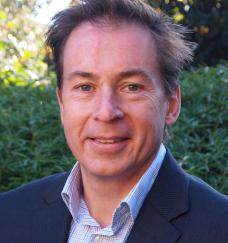
Professor Eilís Ferran is a Fellow at St Edmund's College and a Professor of Company and Securities Law at the University of Cambridge.

She is also the Provost of the Gates-Cambridge Trust, which provides scholarships for postgraduate study at Cambridge funded by a major donation from the Gates Foundation. She has written extensively on UK, EU and international financial regulation, company law and corporate finance law.  Her publications include Principles of Corporate Finance Law (OUP, 3rd edn, 2023, co-authored), Brexit and Financial Services (Hart Publishing, 2017 co-authored), The Oxford Handbook of Financial Regulation (OUP, 2015, co-edited) and The Regulatory Aftermath of the Global Financial Crisis (CUP 2012, co-authored).  She is a Fellow of the British Academy and an Honorary Bencher of Middle Temple.  She is an independent director of a number of profit and not-for-profit companies, and of a charitable foundation.

Professor Nick Mansley

Bye-Fellow

Professor Nick Mansley

Bye-Fellow
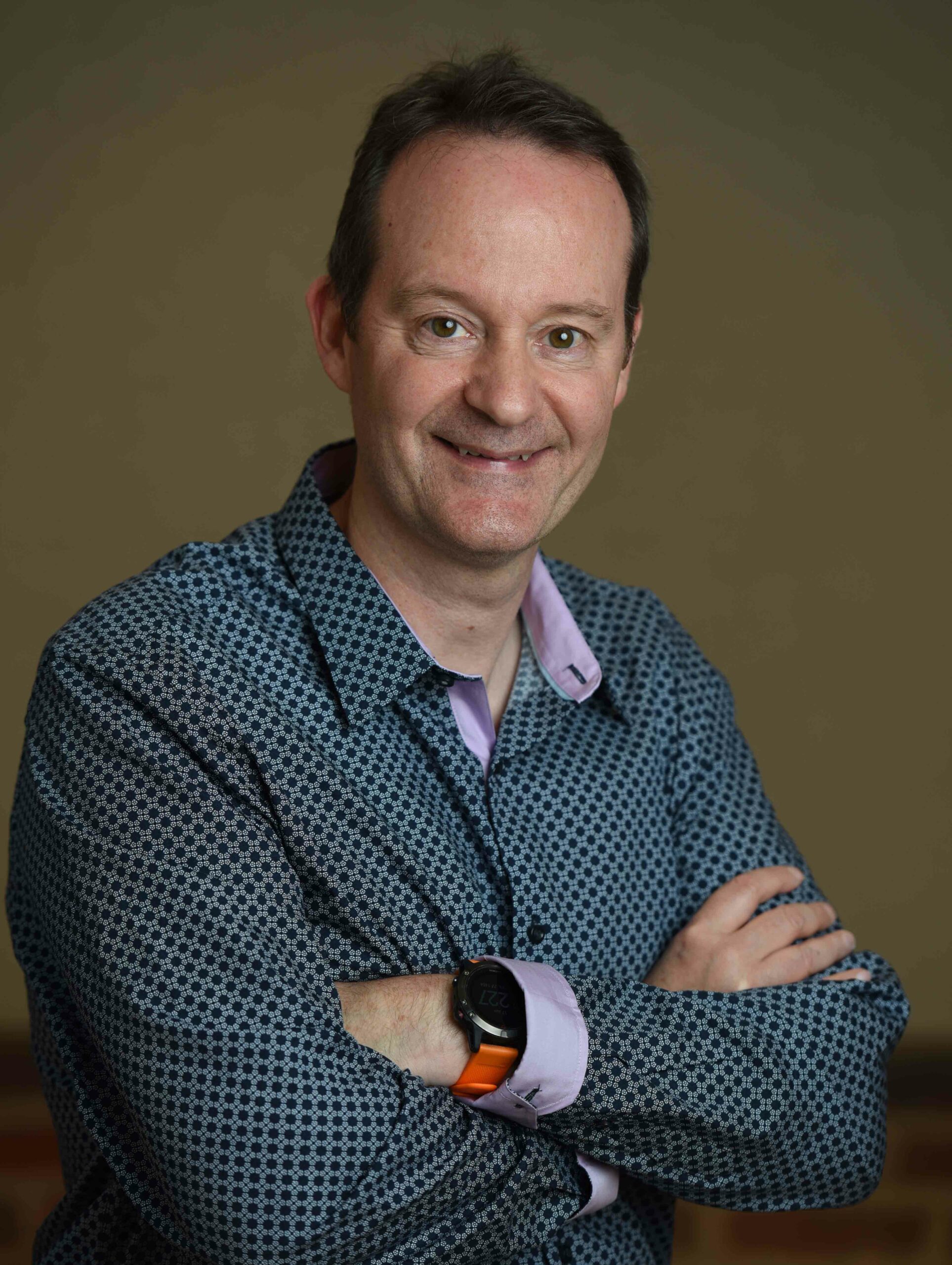
Professor Nick Mansley's research focuses on issues in real estate finance and investment, particularly issues around drivers of performance. He is still actively involved in the industry as an independent investment committee member and consultant.

Professor Nick Mansley is the Director of the Cambridge Real Estate Research Centre and Course Director of the part time Masters in Real Estate programme. He has published research on performance drivers of real estate, the structure of the market and fundamental value. He worked in the investment management industry for nearly 20 years in a global role at Aviva across all asset classes and previously in a Chief Investment Officer role in the real estate business. Prior to that he worked in economic consultancy based in Cambridge.

Academic Profile

Prof Evan Reid

Professor Evan Reid

Fellow

Professor Evan Reid

Fellow

Professor Evan Reid is a clinician-scientist who studies the molecular cell biology of genetic motor neuron disorders, with a research group based at Cambridge Institute for Medical Research. He is clinically active and see neurogenetics patients in my role as an NHS honorary consultant in Clinical Genetics.

Evan graduated in Medicine from Glasgow University in 1991 then trained in the specialty of Clinical Genetics in Glasgow and Cambridge. His main research interest is in the hereditary spastic paraplegias (HSPs), which are genetic forms of motor neuron degeneration. Evan moved to Cambridge in 1995 and completed a PhD in the Department of Medical Genetics in 2000, studying the genetics of these conditions. He has been involved in mapping and identifying numerous HSP genes. After stints as a Wellcome Trust Advanced and then Senior Research Fellow, he became a University Lecturer then Reader at the University of Cambridge. Since 2021 he has held the title of Professor of Neurogenetics and Molecular Neurobiology. Evan is a Principal Investigator at Cambridge Institute for Medical Research, a research institute of the University of Cambridge that has a strategic focus on unravelling the mechanisms of rare genetic disease. He is a clinically active and run a specialised neurogenetics clinic at Addenbrooke's Hospital. His research has encompassed the clinical features, genetics and cell biology of HSPs, but now concentrates on understanding the molecular pathology of HSP proteins that are involved in membrane traffic processes. This research has a strong focus on modelling the disease in human stem-cell derived neurons and encompasses proteomics, functional genomics and basic cell biological methodologies.

Academic Profile

Professor Edward Acton

Professor Edward Acton

Honorary Fellow

Professor Edward Acton

Honorary Fellow
Former Vice-Chancellor of the University of East Anglia

Edward Acton is an Emeritus Professor at the University of East Anglia where he is Professor of Modern European History.  Professor Acton was formerly Vice Chancellor of UEA.

Professor Francis Campbell. Image credit: Julita Sanders

Professor Francis Campbell

Honorary Fellow
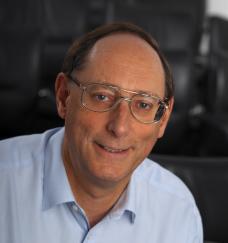
Professor Francis Campbell

Honorary Fellow

Professor Campbell Joined the Foreign and Commonwealth Office (FCO) as a member of Her Majesty’s Diplomatic Service in 1997. He has worked at the United Nations Security Council in New York, the European Union, and at the Foreign & Commonwealth Office (FCO) in London and on diplomatic postings overseas. From 1999-2003, he served on the staff of the then Prime Minister Tony Blair, first as a Policy Adviser in the No.10 Policy Unit, and then as a Private Secretary to the Prime Minister. He also served on secondment with Amnesty International as the Senior Director of Policy. From 2005-2011, he served as Her Majesty’s Ambassador to the Holy See. From 2011-13, he served as Deputy High Commissioner in Pakistan. From 2013-2014 he was the Head of the Policy Unit in the FCO and Director of Innovation at UK Trade and Investment.

From 2014-2020, Professor Campbell served as Vice-Chancellor of St Mary’s University in London and also Professor of International Relations, while on special leave from the Foreign Office. In February 2020, Professor Campbell became the fourth Vice-Chancellor of The University of Notre Dame Australia. He also holds the position of Professor, International Relations.

He has been a Member of the Advisory Panel of the Independent Anti-Slavery Commissioner, London. He also served on a number of governing bodies including St. Mary’s University, St. Joseph’s Hospice (London), St. Elizabeth’s School (London) and Carlow College (Ireland). He continues to serve as a Trustee of Forward Thinking (London).

More recently, Professor Campbell was appointed a Governor of the Forrest Research Foundation, member of the Divine Word University Council, member of the Association of Catholic Colleges and Universities Board of Directors and is a founding member of the International Council on Human Trafficking at St Thomas University, Miami, School of Law.

Professor Paul Luzio

Honorary Fellow

Professor Paul Luzio

Honorary Fellow
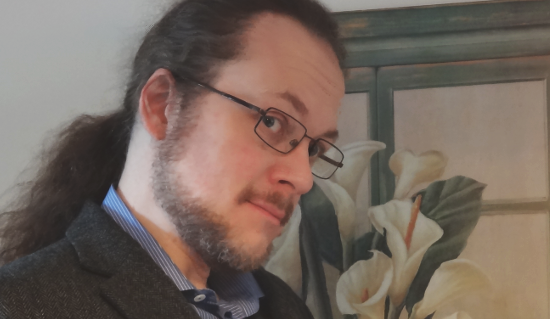
Professor Paul Luzio undertakes research in the field of molecular cell biology, to discover and understand the molecular mechanisms of intracellular membrane traffic between specialised organelles in mammalian cells, as well as abnormalities in these mechanisms and organelle function, which lead to disease.

Professor Paul Luzio MA PhD FMedSci was Master of St Edmund’s College from 2004-2014. Paul was an undergraduate in Cambridge, reading Natural Sciences (Part II Biochemistry) at Clare College before studying for a PhD in the Department of Biochemistry. After a period in Cardiff as a lecturer in medical biochemistry at the Welsh National School of Medicine he returned to Cambridge where, in 1979 he became a University Lecturer in the Department of Clinical Biochemistry and was later promoted to Reader (1996) and then Professor (2001). In 1987-88 Paul spent a sabbatical year at the European Molecular Biology Laboratory in Heidelberg, Germany. He was elected a Fellow of St Edmund’s College in 1987 and was Senior Tutor from 1991-1996. From 2002 until 2012 Paul was Director of the Cambridge Institute for Medical Research (https://www.cimr.cam.ac.uk), a cross-departmental research institute in the Clinical School with a mission to determine the molecular mechanisms of disease in order to advance human health. From 2007-2012 he chaired the Medical Research Council’s Molecular and Cellular Medicine Board and was a member of the Strategy Board. Paul was Deputy Head of the School of Clinical Medicine from 2012-2014.

Following retirement in 2014, Paul became Emeritus Professor of Molecular Membrane Biology. As a Voluntary Director of Research, he continues to lead a small research group funded by the Medical Research Council at the Cambridge Institute for Medical Research. Paul’s research is largely concerned with intracellular membrane traffic pathways in mammalian cells and the biogenesis, re-modelling and function of intracellular organelles (little organs) called lysosomes, which play an important role in cellular nutrition and signalling. Lysosomes are acidic organelles, with changes in acidity having effects on their degradative function and ability to signal to other parts of the cells. Paul is currently studying the molecular regulation of acidification and lysosome re-modelling and how these processes contribute to lysosome function. His work has contributed to a greater understanding of how defects in membrane traffic and lysosome function contribute to human diseases, including lysosomal storage and neurodegenerative diseases.

Academic Profile

Awards & Recognitions 

  • 1987 Humboldt Research Fellowship
  • 1998 FRCPath
  • 1999 FMedSci
  • 2005 Association of Clinical Biochemists (ACB) Foundation Award
  • 2015 FRSB


Prof Patrick Griffin

Professor Patrick Griffin

Bye-Fellow

Professor Patrick Griffin

Bye-Fellow

Professor Patrick Griffin is Bye-Fellow at St Edmund's College and a Madden-Hennebry Professor at the University of Notre Dame. He is an historian, trained as an early Americanist and specialising in the Atlantic world. His work ranges from the seventeenth to the nineteenth century. It brings together American, British, and Irish history.

Patrick Griffin's work explores the intersection of colonial and early national American and early modern Irish and British history. As such, it focuses on Atlantic-wide themes and dynamics. He has published work on the movement of peoples and cultures across the Atlantic Ocean, as well as the process of adaptation. He also examines the ways in which Ireland, Britain, and America were linked—and differed—during the seventeenth and eighteenth centuries. He has looked at revolution and rebellion, movement and migration, and colonization and violence in each society in comparative perspective. Much of what he does explores these themes in the context of empire. In his most recent books, he studied how empire gave way to revolution, both in America and the wider Atlantic. His latest work on the period just after the Age of Revolution has taken a global turn, charting the plight of common men and women in a modernizing world.

Publications

  • The Age of Atlantic Revolution: The Fall and Rise of a Connected World (Yale, 2023).
  • The Townshend Moment: The Making of Empire and Revolution in the Eighteenth Century (Yale, 2017).
  • America’s Revolution (Oxford, 2012).
  • American Leviathan: Empire, Nation, and Revolutionary Frontier (Hill & Wang, 2007).
  • The People with No Name: Ireland’s Ulster Scots, America’s Scots Irish (Princeton, 2001).

Awards & Recognitions

  • Harold Vyvyan Harmsworth Professor of American History, University of Oxford, 2021-22.
  • Honorary Professor, School of History, Classics, and Archaeology, University of Edinburgh, 2018-21.
  • Distinguished Fellow, Rothermere American Institute, University of Oxford
  • Honorary Member, Royal Irish Academy
  • Member, American Antiquarian Society
Prof Maria Burke Headshot

Professor Maria Burke

Bye-Fellow

Professor Maria Burke

Bye-Fellow

Professor Maria Burke's research expertise concerns the application of new digital technology to economic, environmental and social systems. She has a particular interest in the regulation of AI. 

Professor Maria Burke, PhD, MBA, MA, DMS, SFHEA, FRSA, is an academic and researcher at Birkbeck, University of London, and an Emerita Professor at the University of Winchester where she served as Head of Research for almost a decade. A Bye Fellow of St Edmund's College, she co-founded the Fragility and Flourishing research group at the Von Hügel Institute. Her research examines the intersection of digital technology and its economic, environmental, and social impacts, with a focus on AI regulatory frameworks. In 2023, she was honoured to receive the Society for Research in Higher Education (SRHE) Accolade Award. Professor Burke continues to contribute to international academic and policy discussions on AI regulation. In 2025 she was an invited speaker at New York University and the European Women’s Technology Conference in Amsterdam.

Professor Philip Sheldrake

Visiting Scholar

Professor Philip Sheldrake

Visiting Scholar

Professor Philip Sheldrake's research currently focuses on the intersection of both spirituality and theology with “place identity” and cities, particularly cultivating public values/virtues and enabling effective public leadership. 

Professor Philip Sheldrake is a Visiting Scholar at St Edmund’s College. He is also Professor, Senior Fellow & Research Director of the Institute for the Study of Contemporary Spirituality at Oblate School of Theology, San Antonio, Texas.

Professor Ken Dark

Senior Research Associate

Professor Ken Dark

Senior Research Associate

Professor Ken Dark is an archaeologist and historian specialising in the 1st millennium AD in Europe and the Middle East, archaeological method and theory, and the application of long-term perspectives to the contemporary world. A Fellow of the Society of Antiquaries of London, the Society of Antiquaries of Scotland, the Royal Historical Society and the Royal Anthropological Institute, and an elected member of the Royal Society of Antiquaries of Ireland and the Royal Institute of International Affairs, he has written 15 books and numerous papers, and directed archaeological projects in Istanbul, beside the Sea of Galilee, and in Nazareth – where he identified a 1st century house believed by many to have been the childhood home of Jesus. In addition to desk-based research, and fieldwork at Tintagel in Cornwall, he is currently directing research on the mission centre at Canterbury established in 597 by Gregory the Great to convert England.

Professor Mahinda Deegalle

Bye-Fellow

Professor Mahinda Deegalle

Bye-Fellow

Professor Mahinda Deegalle is a Bye-Fellow at St Edmund’s College, University of Cambridge.

He is a Professor Emeritus at Bath Spa University and a Professorial Research Associate at SOAS, University of London. He was a Visiting Scholar at the University of Cambridge in 2022–23. He is trained in the History of Religions at Harvard University and The University of Chicago. He held the first Numata Professorship at McGill University and NEH Professorship at Colgate University. He conducted post-doctoral research at Kyoto University and Aichi Gakuin University with funding from JSPS and Bukkyo Dendo Kyokai. He acquired grants from the British Academy / Leverhulme Trust, the British Council and Fulbright. He is the author of Popularizing Buddhism and the editor of several volumes, including Buddhism, Conflict and Violence in Modern Sri Lanka (2006), Philosophy, Ethics and Buddhist Practice (2023) and the co-editor of Buddhism and International Humanitarian Law (2024).


Professor Brandon Vaidyanathan

Senior Research Associate

Professor Brandon Vaidyanathan

Senior Research Associate

Brandon Vaidyanathan is Professor of Sociology and Director of the Institutional Flourishing Lab at the Catholic University of America.

His research examines the cultural dimensions of religious, commercial, medical, and scientific institutions and has been widely published in peer-reviewed journals. He is the author of Mercenaries and Missionaries: Capitalism and Catholicism in the Global South (Cornell University Press, 2019), co-author of Secularity and Science: What Scientists Around the World Really Think About Religion (Oxford University Press, 2019), and editor of Rebuilding Trust: Clergy Morale in the Wake of the Abuse Crisis (CUA Press, 2025). His latest book (under review) is The Beauty of Understanding: What Scientists Can Teach Us About the Pleasure of Learning. Brandon is also Founder of Beauty at Work, a media platform which includes a podcast and YouTube channel exploring the role of beauty. His ongoing research examines the transformative power of beauty at the individual and collective levels.

Ralf Wüstenberg

Professor Ralf Karolus Wüstenberg

Visiting Scholar

Professor Ralf Karolus Wüstenberg

Visiting Scholar

Professor Ralf Karolus Wüstenberg studied Protestant theology in Berlin, Cambridge and Heidelberg.

Since 2009 Chair of Protestant Theology specialising in Systematic and Historical Theology at the European University of Flensburg (EUF) and Director of the European Wasatia Graduate School for Peace and Conflict Resolution; he is an Extraordinary Professor at the University of Stellenbosch and a Visiting Scholar at St. Edmund’s College, University of Cambridge, previously Visiting Professorships at Union Theological Seminary, New York City (2002/2003) and Freie University of Berlin (2006-2009).

In addition to his international research activities, Dr Wüstenberg performs a number of voluntary tasks. Among other things, he is a project ambassador for the House of One in Berlin and, after ordination and parish ministry (2003-2005), has been a permanent guest preacher at Berlin Cathedral since 2018. Dr Wüstenberg is the author and editor of 25 titles in English and German, including introductions to theology and Christology; on current topics such as the political dimension of reconciliation or dialogue with Islam and on Dietrich Bonhoeffer's theology and ethics.

Follow us

Stay up to date with our rich college life here at St Edmund's through our social media channels.