
HomeAboutOur People

Our people

Filter staff:
Professor Chris Young, Master of St Edmund's College

Professor Chris Young

College Master

Professor Chris Young

College Master

Professor Chris Young became Master of St Edmund's on 1 October 2024.

Professor Chris Young is Professor of Modern and Medieval German Studies at the University of Cambridge and was Head of the School of Arts and Humanities prior to his appointment as Master of St Edmund's College. He is also Director of the Cambridge DAAD Research Hub for German Studies, and founder and Director of the Cambridge-LMU Strategic Partnership, Cambridge’s first institution-wide partnership with any university. He is both a medievalist and a prize-winning historian of modern sport.

His primary teaching and research interests focus on medieval German literature and language, as well as the history of European sport, with a particular emphasis on German sport. He has been a Fellow of the Alexander von Humboldt-Stiftung (Cologne), a Permanent Visiting Fellow of the Friedrich Schlegel Graduiertenschule für literaturwissenschaftliche Studien der FU Berlin (2010-12), a Visiting Fellow of the Institut für Zeitgeschichte Munich (2018) and an Honorary Fellow of the Historisches Kolleg Munich (2018). His monograph ‘The 1972 Munich Olympics and the Making of Modern Germany’ (UC Press, 2010, with Kay Schiller) was the first book to win the prizes of both the British and North American Societies for sports history. In 2021, his ‘The Whole World was Watching. Sport in the Cold War’ (Stanford University Press, 2020) also won the latter’s anthology prize. He curated a major exhibition this summer at the Fitzwilliam Museum on the 1924 Paris Olympics (best known through the film ‘Chariots of Fire’) and serves on the German government’s Historical Commission on the terrorist attack at the 1972 Olympics in Munich.

Dr Alex Pryce

Senior Tutor

Dr Alex Pryce

Senior Tutor

Alex joined St Edmund’s College as Senior Tutor in September 2025. Before joining the College, Alex was the inaugural Course Director for the University of Cambridge Foundation Year which was launched in 2022 and provided a unique pathway to Cambridge for students who had experienced significant educational disadvantage.

Alex completed a DPhil in English at the University of Oxford specialising in contemporary Northern Irish poetry and feminism. She is a Senior Fellow of the Higher Education Academy and a Fellow of the Royal Society of Arts. She was previously a Fellow of Homerton College and a Bye-Fellow of Fitzwilliam College.

Alex’s past professional experience includes setting up Cambridge’s first Foundation Year, work in widening participation and student recruitment at the University of Oxford and research communications at Cranfield University and the Arts and Humanities Research Council.

Mr Graham Watson

Bursar, Fellow

Mr Graham Watson

Bursar, Fellow
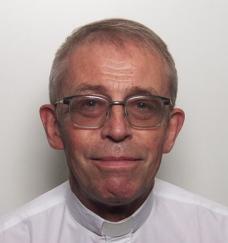
Graham joined St Edmund’s College as Bursar in November 2020. 

Before joining the College, Graham was CEO of the Seckford Foundation a charity based in Suffolk whose aim is the care and education of the young and old. The Foundation then included Woodbridge School, five academies, Seckford Care for older people and the Springboard programme for marginalised and disadvantaged young people.

Previously, Graham was Deputy Chief Executive of the National Endowment for Science, Technology, and the Arts (NESTA), a non-departmental public body set up by the Lottery Act 1998. NESTA funded programmes for creativity, invention and innovation, and education.

Prior to working for NESTA and after 10 years in commerce, he was Director of Finance and Support Services for The Prince’s Trusts and Royal Jubilee Trusts.

Graham is a Member of the Institute of Chartered Secretaries and Administrators and has extensive knowledge of charity law, tax regulation and governance issues.  Graham has been a board member of a number of other charities including Community Action Suffolk and Suffolk Libraries.

Fr Ed Hone

Dean, Fellow

Fr Ed Hone

Dean, Fellow
Fr Ed Hone is Dean of St Edmund’s. He was educated at the universities of Durham and Kent. Ordained in London 1988, he worked in Redemptorist Publications, writing, editing and managing the governing and editorial teams; he has published widely in the field of popular Catholic/Christian pastoral publications, and has worked part-time for publications for over 20 years.

As a member of the Redemptorist Order (Congregation of the Most Holy Redeemer) Fr Ed has long been engaged in preaching parish missions, retreats, been occupied with youth ministry, adult lay formation, joint ecumenical projects, and helping re-invent a parish as an active model of mission. In Edinburgh, he led a team which actively engaged in the Edinburgh International Fringe Festival, promoting a Catholic Christian presence in the world’s biggest arts Festival. This deepened his engagement in an ecumenical, multi-faith and no-faith environment.

Fr Ed pursued further studies in Durham, and was appointed parish priest to the English-speaking community in Luxembourg, where he served for eight years, engaging even further in a multicultural, multi-linguistic environment.

Dr Vittorio Montemaggi

VHI Director, Fellow

Dr Vittorio Montemaggi

VHI Director, Fellow

Vittorio Montemaggi is Director of the Von Hügel Institute for Critical Catholic Inquiry of St Edmund’s College.

Vittorio is also the Academic Director of Notre Dame London, responsible for leading the academic team, shaping the academic vision, and advancing the University’s mission of education and research in the UK. Vittorio oversees Notre Dame London’s academic programs, as well as its academic partnerships and collaborations with institutions in the UK.

Vittorio previously served as a faculty member at Notre Dame from 2009 to 2017 and most recently as reader in religion, literature, and the arts at King’s College London.

Vittorio’s primary academic expertise is in the relationship between literature and theology, and in the significance of the arts for humanity’s exploration of divinity. His research focuses primarily on Dante and Primo Levi, and his comparative interests also entail exploration of works of authors as different as Saint Gregory the Great, Duccio di Buoninsegna, Saint Catherine of Siena, Shakespeare, Mozart and Roberto Benigni.

Gemma Burgess 2

Professor Gemma Burgess

Vice-Master, Fellow

Professor Gemma Burgess

Vice-Master, Fellow

As Director of the Cambridge Centre for Housing and Planning Research, my research spans the domains of housing, digital inclusion, and social policy.

Professor Burgess is Director of the Cambridge Centre for Housing and Planning Research in the Department of Land Economy, Director of the Isaac Newton Trust, Vice-Master of St Edmund's College, and Deputy Senior Proctor, University of Cambridge.

Ms Kate Glennie

Fellow, Development Director
Ms Kate Glennie

Fellow, Development Director
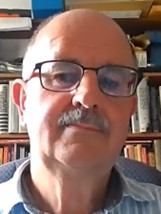
Ms Kate Glennie MA was appointed the College’s first full-time Development Director in January 2017, and is responsible for Alumni Relations and Fundraising at St Edmund’s.

Kate studied History as an undergraduate and postgraduate at University College London before joining the Development Office at the London School of Economics in 2003 to work on their £100 million Campaign.

Prior to her appointment at St Edmund’s, Kate spent three years as Development Manager at Trinity College, overseeing their Major Gifts team.

Rev Dr Roger Abbott

Senior Research Associate

Rev Dr Roger Abbott

Senior Research Associate

My research interests focus on the science-faith interface of natural hazards and disasters and theodicies. I also have research interest in the field of trauma studies, theologies of trauma and pastoral care of trauma.

The Rev. Dr. Abbott has an passionate academic and practical interest in the causation natural hazard related disasters, in the human responses to them, recovery from them and mitigation of them from the perspective of the science-faith intersection. From 2012-2021 he has carried out projects in Haiti following the devastating 2010 earthquake, exploring how survivors’ religious beliefs influenced their response to and recovery from that catastrophic event. From 2015 to 2019 he worked on projects in New Orleans, the Philippines, and in Somerset, exploring the influence of faith beliefs on survivors’ relationships with God, with their communities, and with the natural environment. Since 2020 to date he has been conducting a project around the impacts of fear, anger, trust and hope on Christians during the pandemic. He is also currently researching faith a resilience in a joint project between The Faraday Institute and the National Preparedness Commission. Following over thirty years of church pastoral ministry, Roger gained his Ph.D. in a practical theology of disaster response, from the University of Wales, Trinity & St. David. He has taught Master’s modules on the pastoral response to trauma, has run a consultancy on pastoral care of trauma, and has been an active responder to traumatic incidents in the UK since 1989. He is a member of the British and Irish Association for Practical Theologians, The Society for the Study of Theology, and The Society for the Study of Christian Ethics.

Publications

  • Abbott Roger et al What Good is God? Crises, faith, and resilience. 2020 Oxford: Monarch
  • Abbott, Roger Philip et al Narratives of Faith from the Haitian Earthquake. 2019 Abingdon: Routledge
  • Abbott, Roger Philip “‘I Will Show You My Faith by My Works’ 2019 Religions 10, 213
  • Abbott, Roger Philip. Sit On Our Hands, or Stand On Our Feet? 2013 . Eugene: Or.: Wipf & Stock
  • Abbott, Roger Philip. 2012. “Trauma, Compassion, and Community.” Practical Theology. 5.1: 31-46
Professor Edward Acton

Professor Edward Acton

Honorary Fellow

Professor Edward Acton

Honorary Fellow
Former Vice-Chancellor of the University of East Anglia

Edward Acton is an Emeritus Professor at the University of East Anglia where he is Professor of Modern European History.  Professor Acton was formerly Vice Chancellor of UEA.

Dr Mohammed Ahmed

Post Doctoral Research Associate

Dr Mohammed Ahmed

Post Doctoral Research Associate
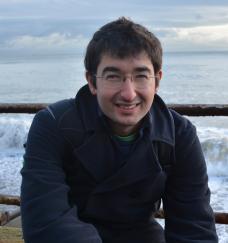
Dr Mohammed Ahmed is Policy Lead and Research Fellow at the Woolf Institute.

His research encompasses themes related to historical and modern Muslim-Jewish relations, issues around faith, race and gender in UK communities, and the impact of geopolitics and conflict on inter-faith relations. Dr Ahmed is also Associate Fellow at the DCDC, (UK MOD), where he has advised on security and personnel-related issues. He was formerly Lead Consultant at Good Faith Partnership, a social consultancy working between the UK Parliament and faith communities. A former Cambridge Trust MPhil and PhD scholar at St Edmund’s College, he was Vice President of the CR 2020-21 and captain of the college and university pool team.

Contact Dr Ahmed:
He welcomes opportunities to collaborate: mia41@cam.ac.uk

Dr Salim Al-Gailani

Friend of St Edmund's
Dr Salim Al-Gailani

Friend of St Edmund's

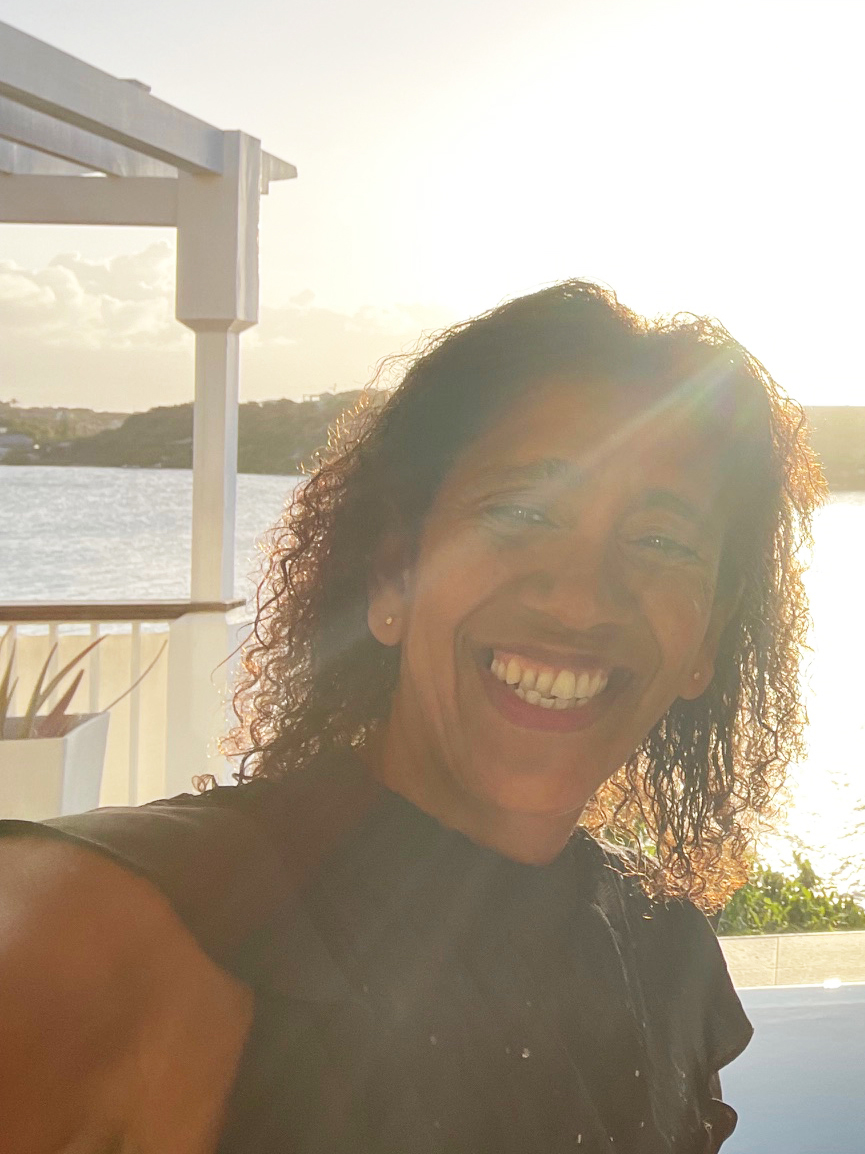
Salim Al-Gailani is an Assistant Professor at the Department of History and Philosophy of Science (HPS), University of Cambridge, where he lectures and supervises in the history of medicine. After completing his PhD on the history of antenatal care in Britain, he joined the Wellcome Trust-funded ‘Generation to Reproduction’ Strategic Award at Cambridge as a Research Associate. He has also held a fellowship at the John Rylands Research Institute at the University of Manchester. Broadly interested in the histories of modern medicine, biomedical sciences and public health, his research has focused in particular on transformations in the experience and management of pregnancy and childbirth since the late nineteenth century.

His writing has also explored the visual and material and cultures of science and medicine, including toy chemistry sets, anatomical images and educational films. He is currently working on a book that examines the history of folic acid as a technology of pregnancy, with its implications beyond reproduction for the globalization of biomedical knowledge, the management of risk and the role of consumer activism in shaping public health policy.

Dr Rafia Al-Lamki

Fellow, Tutor

Dr Rafia Al-Lamki

Fellow, Tutor

My research focuses on the effect of tumour necrosis factor in human kidney cancer using cellular, molecular, and imaging techniques. I am a Senior Clinical Scientist at Cambridge University. My findings have contributed to understanding of kidney cancer through publications.

Dr. Rafia is a Senior Clinical Scientist in the Department of Medicine, University of Cambridge. She holds a PhD in Cellular Pathology from Fitzwilliam College. She is a Fellow and Tutor at St Edmund’s College (2019). She has received prestigious awards, including the Oman-American Joint Commission Scholarship, the Leatherseller’s Award, a WHO fellowship, and the Cambridge Commonwealth/Overseas Trust bursary. Dr. Rafia developed a unique tissue organ culture model for studying kidney and heart tissue responses and established a novel model for isolating cancer stem cells from human kidney tissue, contributing to publications. She is actively involved in the Cambridge-Yale-AstraZeneca Research Programme, serves on editorial boards, and co-authored The TNF Superfamily. Dr. Rafia has consulted for companies like GlaxoSmithKline and Immutrin and is a fellow of several prestigious organisations.

Academic Profile

Norfolk Building and Chapel

Professor Bruce Alberts CBE

Honorary Fellow
Professor Bruce Alberts CBE

Honorary Fellow

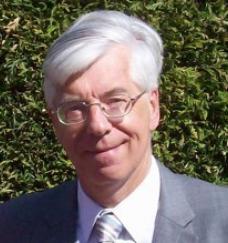
Former President, US National Academy of Sciences

Dr Denis Alexander

Emeritus Fellow

Dr Denis Alexander

Emeritus Fellow

Dr Alexander spent 40 years in the sciences, first in the field of neurochemistry, then human genetics, and finally in molecular immunology, spending 15 years helping to develop new science initiatives in the Middle East. Dr Alexander is also engaged in the academic field of science and religion.

Dr Alexander was an Open Scholar at Oxford University reading Biochemistry [1964-1968] before a PhD in Neurochemistry at the Institute of Psychiatry, London University [1968-1971]. This was followed by a period of 15 years helping to develop scientific research in the Middle East [1971 – 1986], first in Ankara, Turkey, at Hacettepe University and the Middle East Technical University, and then as Associate Professor of Biochemistry on the medical faculty of the American University of Beirut, Lebanon, where he helped to establish the National Unit of Human Genetics in the Department of Pediatrics. Working in Beirut [1981-1986] involved three evacuations due to political violence. After the third and final evacuation Dr Alexander returned to the UK to take up a position as a Visiting Research Fellow at the Imperial Cancer Research Fund [now Cancer Research UK] in London [1986 – 1989], before becoming a Project Leader at The Babraham Institute, and establishing a new research laboratory in molecular immunology, initially entitled the ‘T Cell Laboratory’. Dr Alexander eventually became Head of this expanded laboratory, incorporating the research teams of five Project Leaders, re-named as the Laboratory of Lymphocyte Signalling and Development, also becoming Chair of the Programme of Molecular Immunology. During this period Dr Alexander had consultancies with Biogen and GenMab; served on the Babraham Executive Committee and on the BBSRC Biochemistry and Cell Biology Grants Committee; and became a Fellow of St. Edmund’s College in 1997. During his final two years at The Babraham Institute [2006 – 2008], Dr Alexander worked as a part-time Senior Affiliated Scientist.

Upon retirement from active science, Dr Alexander further developed his interests in the academic field of science and religion, co-founding The Faraday Institute for Science and Religion as part of St. Edmund’s College in 2006, and becoming the Institute’s first director from 2006 – 2012. He became a Founding Fellow of the International Society for Science and Religion in 2001, serving on its Executive Committee; Editor of the Journal Science and Christian Belief, 1992-2013; and served from 2008 - 2014 as a Trustee of the John Templeton Foundation and the Templeton World Charity Foundation, and on the Steering Committee of the Templeton Religion Trust. Having given the Gifford Lectures at St. Andrews University in 2012, these lectures were published by CUP under the title Genes, Determinism and God. By 2017 The Faraday Institute had become too large to stay in College and so moved to become a tenant of the Woolf Building on the grounds of Westminster College, signing an academic agreement with St. Edmund’s College and becoming a member of the Cambridge Theological Federation. Dr Alexander was Chair of the Board of Trustees of The Faraday Institute from 2017 – 2024. Dr Alexander continues to publish and speak widely in the UK and internationally in the field of science and religion.

Publications

  • Denis Alexander, Are We Slaves to Our Genes? 2023. Cambridge University Press.
  • Zhao, R., Follows, G.A., Beer, P.A., Scott, L.M., Huntly, B.J.P, Green, A.R. and Alexander, D.R. ‘Inhibition of the Bcl-xL deamidation pathway in myeloproliferative disorders’ (2008). New England J. Medicine, 359: 2778-2789.
  • McNeill, L. Salmond, R.J. Cooper, J.C., Carret, C.K., Cassady-Cain, R.L., Roche-Molina, M., Tandon, P., Holmes, N. and Alexander, D.R. ‘The differential regulation by CD45 of Lck kinase phosphorylation sites is critical for TCR signaling thresholds’ (2007). Immunity 27: 425-437.
  • Zhao, R., Yang, F.-T., and Alexander, D.R. ‘An oncogenic tyrosine kinase inhibits DNA repair and DNA damage-induced Bcl-xL deamidation in T cell transformation’ (2004). Cancer Cell, 5: 37-49.
  • Denis Alexander, Rebuilding the Matrix - Science and Faith in the 21st Century, 2001. Oxford: Lion.

Joaquín Almunia

Honorary Fellow

Joaquín Almunia

Honorary Fellow

Former Visiting Fellow at St Edmund's and former Vice President of the European Commission

A former Visiting Fellow at St Edmund's, Joaquín Almunia is one of Spain’s most experienced politicians on the international scene, especially in relation to the European Union. He was the EC Vice President and European Commissioner for Competition from 2010 to 2014, and prior to that was the European Commissioner for Economic and Monetary Affairs from 2004 to 2010.  Nowadays, having left his positions in the European Union, Almunia devotes his time to research and thought at various think tanks and through other platforms, such as lectures, books and articles for different media. He is currently a Visiting Professor at the European Institute of the London School of Economics and Political Science.

Follow us

Stay up to date with our rich college life here at St Edmund's through our social media channels.