HomeAboutOur People

Our people

Filter staff:
Mr Benjamin Woolf

Dr Benjamin Woolf

Associate Tutor, Bye-Fellow

Dr Benjamin Woolf

Associate Tutor, Bye-Fellow

Dr Benjamin Woolf is a genetic epidemiologist who works on casual inference from observational data. His research focuses on using the inheritance of genetic variation to emulate randomised control trials, and thereby accelerate drug development.

Having failed to become a philosopher, Benji became a genetic epidemiologist. He currently works at the Medical Research Council Biostatistics and Integrative Epidemiology Units (at the Universities of Cambridge and Bristol respectively). His research leverages the random inheritance of genes to emulate clinical trials ('Mendelian randomization'), and thereby accelerate drug development for cardiovascular and respiratory conditions. His PhD research won the 2023 Cambridge Public Health Early Carer Researcher award for developing a novel approach to assess the causal impact of intergenerational risk factors, such as familial second-hand smoke exposure.

In addition to being an Associate Tutor at St Edmunds, Benji is a tutor at the London School of Hygiene and Tropical Medicine and has been elected a fellow of the Royal Society of Arts.

Publications

Dr Bernadette O’Keeffe

Emeritus Fellow

Dr Bernadette O’Keeffe

Emeritus Fellow

Emeritus Fellow. Former Co-Director of the Von Hugel Institute and tutor

Dr Caleb Howard

Associate Tutor, Bye-Fellow

Dr Caleb Howard

Associate Tutor, Bye-Fellow

I am an Assyriologist based at Tyndale House, Cambridge, researching scribal practices and onomastics (personal names) in ancient Mesopotamia and the Levant. At St Edmund’s I am a Bye-Fellow and Associate Tutor.

Dr J. Caleb Howard is an Assyriologist who studies the languages, texts, and history of ancient Mesopotamia and the Levant. He is a Research Fellow in Old Testament and Ancient Near East at Tyndale House, Cambridge, where he spends most of his time. He is also editor of Tyndale’s academic journal, Tyndale Bulletin. At St Edmund’s College, he is Bye-Fellow and Associate Tutor.

Dr Howard’s research focuses on two periods of ancient history and their textual corpora. First, he researches scribal practices in the Neo-Assyrian state, which flourished in northern Iraq, ca. 1000-600 B.C. His current book project investigates the mechanics of scribal production of Neo-Assyrian royal inscriptions, the propaganda of the Assyrian state. The basis of this project is first-hand collation and photography of royal inscriptions of the king Ashurnasirpal II (883-859 B.C.) in various museum collections.

A part of Dr Howard’s research on the Neo-Assyrian empire is carried out within the framework of the Cambridge-LMU Strategic Partnership, one aim of which is to publish up-to-date editions of Assyrian royal inscriptions, both online and in print publications. In cooperation with Dr Jamie Novotny (LMU) and Professor A. Kirk Grayson (University of Toronto), Dr Howard is preparing an updated edition of the royal inscriptions of Ashurnasirpal II. Transcriptions and translations of these inscriptions will be made available to scholars and the public via an online repository of cuneiform texts called Oracc (Open Richly Annotated Cuneiform Corpus).

Dr Howard’s second major research focus is personal names in the Levant in the second and first millennia B.C. At Tyndale House, Cambridge, he is part of a team of researchers collecting personal names from relevant primary sources and analysing them, to see what they tell us about the linguistic and social history of the region. This work will be documented in an open-access database and in a set of print publications. Dr Howard’s main research contribution to the project is a study of the personal names in about five hundred cuneiform tablets from the ancient city of Alalakh (Tell Atchana) in southern Turkey. These texts contain thousands of personal names, mainly derived from one or more West Semitic languages and from the Hurrian language. These names reveal aspects of language, religion, and culture which would otherwise be inaccessible to modern research.

Academic Profile


Dr Camilla Benfield

Associate Tutor, Bye-Fellow

Dr Camilla Benfield

Associate Tutor, Bye-Fellow

Camilla is currently a Consultant in the Animal Production and Health Division of the Food and Agriculture Organization of the United Nations (FAO). Prior to that she was a Senior Lecturer in Virology and Course Director for the MSc in One Health at the Royal Veterinary College, University of London.

Camilla has a degree in veterinary medicine, MA in Zoology and PhD in the molecular virology of influenza virus from the University of Cambridge (St. Catharine’s College), awarded in 2010. She was a Postdoctoral Research Associate at Imperial College London and the Department of Pathology, University of Cambridge, where she worked on virus immunomodulation and virus-vectored recombinant vaccines.

Her research has focused on virus cross-species transmission, and she is interested in infectious diseases at the human-wildlife-livestock interface and the One Health approach.

Camilla is also an Associate Tutor here at St Edmund’s.

Dr Caterina Milo

Dr Caterina Milo

Research Associate

Dr Caterina Milo

Research Associate

My research interests lie in health law and ethics, particularly informed consent, doctor-patient relationship, and reproductive ethics widely considered.

Dr Milo is Lecturer in Law at the School of Law, University of Sheffield, where she leads the Health Law Research Group. Before joining Sheffield, she was College Assistant Professor and Fellow in Law at Robinson College-University of Cambridge, and previously Lecturer at the University of Exeter Law School. She holds a PhD in Health Law from Durham Law School; a MA in Bioethics and Medical Law (St Mary’s University-Twickenham); an integrated MA in Law (University of Siena, Italy); and a Diploma in Legal Studies (University of Oxford).

Academic Profile

Dr Charles Asher Small

Research Fellow

Dr Charles Asher Small

Research Fellow
Dr. Charles Asher Small is the founding Director and President of the Institute for the Study of Global Antisemitism and Policy (ISGAP).  He is also the Director of the ISGAP-Woolf Institute Fellowship Training Programme in Critical Contemporary Antisemitism Studies, Woolf Institute, Cambridge, UK;  a Senior Research Fellow, Moshe Dayan Centre for Middle East and African Studies, Tel Aviv University, and was the Koret Distinguished Fellow, Stanford University and Visitor Scholar St. Antony’s College, Oxford.

Charles received his Bachelor of Arts in Political Science, McGill University, Montreal; M.Sc. in Urban Development Planning in Economics, Development Planning Unit (DPU), University College London; and a (D.Phil), St. Antony’s College, Oxford University.

Charles convened ground breaking academic seminar series in the emerging field of contemporary antisemitism studies at Columbia University, Fordham University, Harvard University, McGill University, National University of Kyiv Mohyla Academy, Kyiv, Sapienza University, Rome, the Sorbonne and the CNRS, Paris, Stanford University, University of Miami, Yale University, as well as an academic training programme for professors at Pembrook College, Hertford College, St. John’s College, and St. Antony’s College, Oxford University.

Dr Charlotte Kenchington

Fellow, Director of Studies, Tutor, Deputy Praelector

Dr Charlotte Kenchington

Fellow, Director of Studies, Tutor, Deputy Praelector
Leverhulme Trust Early Career Fellow, Department of Earth Sciences

Charlotte is a palaeobiologist based at the Department of Earth Sciences in Cambridge. Her research focuses on the ecology and diversity of the first large, complex macro-organisms – the Ediacaran Biota – which include fossils of some of the earliest animals. Charlotte’s field areas include southern Namibia, central England, and Newfoundland (Canada). She is currently funded by a Leverhulme Early Career Research Fellowship and the Isaac Newton Trust. She is actively engaged in undergraduate teaching in the Department, and especially loves teaching on field courses.

Charlotte was a Postdoctoral Research Fellow at Memorial University of Newfoundland in 2016-2018, researching the ecology of marine meiofauna under mentorship of Prof. Duncan McIlroy. She completed her PhD at the Department of Earth Sciences in Cambridge under supervision of Prof. Nick Butterfield and Philip Wilby (British Geological Society), awarded in 2016. Before that, she gained her BA(Mod) in Geology from Trinity College Dublin, Ireland, graduating with a Gold Medal and high first class honours degree in 2011.

Dr Chen Chen Headshot

Dr Chen Chen

Post Doctoral Research Associate

Dr Chen Chen

Post Doctoral Research Associate

Dr Chen Chen is also a Senior Member at St Edmunds College.

Dr Chen Chen's research interests are broadly in areas of EdgeAI, Serverless Computing, Cloud/Edge Computing, Network Resource Orchestration, In-network Computing, Distributed System and IoTs.

Chen is a Postdoctoral Researcher with the System Research Group, Department of Computer Science and Technology, University of Cambridge. In SRG, Chen works on the EDGELESS project with Professor Richard Mortier, exploring the opportunities for efficient virtualization in small edge devices for serverless computing. Chen is also a Senior Member at St Edmunds College.

Prior to that, Chen received his PhD in Computer Science from Loughborough Univeristy (LU), UK with a full scholarship. Chen received his BEng from Xidian University, Xi’an, China. His research interests are broadly in areas of Serverless Computing, Cloud/Edge Computing, Network Resource Orchestration, In-network Computing, Distributed System and IoTs. His latest work focuses on resource orchestration in serverless edge computing, aiming to optimize the overall performance for the system, including latency, energy consumption and system cost. Chen has extensive experience collaborating with industries such as Siemens, Infineon, EMS-UK, National Physical Lab and many others.

Also, Chen is actively serving as a TPC member and reviewer for many conferences and journals such as ICDCS 2024, IFIP NPC 2024, IEEE MSN 2023, IEEE TSC, Computer Networks, JNCA and etc. Chen also holds an Associate Fellowship of Higher Education Academy.

Dr Chris Heath

Bye-Fellow, Director of Studies

Dr Chris Heath

Bye-Fellow, Director of Studies
Director of Studies, PBS

Following training in experimental psychology and behavioural neuroscience as a post-doctoral research associate in the Department of Psychology, University of Cambridge, Dr. Chris Heath was recruited as a Lecturer in Health Sciences in the School of Life, Health and Chemical Sciences at The Open University.

At the OU he leads the Translational Neuroscience Research Group, a major objective of which is to utilise touchscreen-based assessment techniques to evaluate a wide variety of psychological constructs across laboratory models and both non-clinical and clinical populations. Recent work has focused on the development of touchscreen-based assessments for motivation, cost-benefit decision making and emotional state regulation and their application to both disease-related and non-disease related areas.

At Cambridge, Dr Heath has been the Director of Studies in the Psychological and Behavioural Sciences (PBS) Tripos at St. Edmund’s College and has supervised and given lectures on various PBS courses.

Dr Christopher Williamson

Bye-Fellow

Dr Christopher Williamson

Bye-Fellow

Chris is a Research Associate in the Centre for Photonic Devices and Sensors specialising in liquid crystal displays and scalable manufacturing processes. He completed his PhD in electronic engineering at St. Edmund’s College.

He has developed an electrically switchable window capable of reflecting heat, controlling privacy, and displaying images while using no continuous power. To commercialise this innovation, he cofounded Flexypix in 2016 and was awarded an Enterprise Fellowship from the Royal Academy of Engineering to pursue this venture.

His wider interests include playing the guitar, photography, and motorcycles.

Dr Claire Barlow

Director of Studies

Dr Claire Barlow

Director of Studies
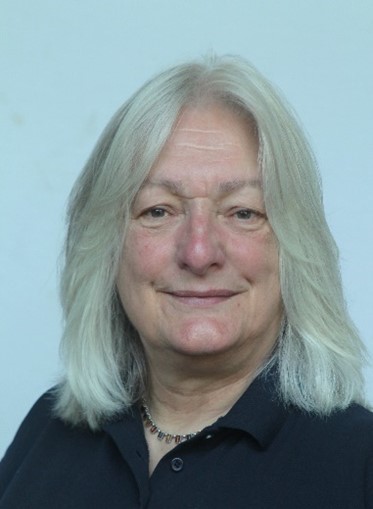
Claire is Director of Studies for Manufacturing Engineering

Norfolk Building and Chapel

Dr Colin Bundy

Honorary Fellow

Dr Colin Bundy

Honorary Fellow
Norfolk Building and Chapel

Dr Corinne Roughley

Director of Studies

Dr Corinne Roughley

Director of Studies

Corinne is Director of Studies for our Archaeology degree

Dr Cristiano Longarini Headshot

Dr Cristiano Longarini

Post Doctoral Research Associate

Dr Cristiano Longarini

Post Doctoral Research Associate

Dr Cristiano Longarini is a PDRA at St Edmund's College.

His research focuses on astrophysics, with a particular interest in planet formation. His is currently a Postdoctoral Associate at the Institute of Astronomy, and his work combines theoretical modelling, numerical simulations, and data analysis to explore the processes driving planet formation.

Dr. Cristiano Longarini is a postdoctoral associate at the Institute of Astronomy, specialising in planet formation and protoplanetary disc dynamics. His research explores the role of gravitational instabilities in shaping planetary systems, combining theoretical modelling, numerical simulations, and observational data analysis. He has contributed to large observational programs, and has expertise in interpreting high-resolution data from ALMA telescope.

Dr David Friedman

Bye-Fellow, Director of Studies

Dr David Friedman

Bye-Fellow, Director of Studies
Dr David Friedman is Director of Studies in Classics at St Edmund's and an Affiliated Researcher in the Faculty of Classics.

Dr Friedman studies Judaism in the Greco-Roman world, with a particular focus on Josephus and ancient historiography. After receiving a BA in Mathematics (Yale) and working first at a physics lab and for many years in derivatives trading, he returned to university to earn an MA (UCL), MPhil (Oxford), and DPhil (Oxford), which explored how Josephus presented the origins of the Jews to his Roman audience. David is a Bye Fellow of Darwin College, a Bye Fellow and Director of Studies in Classics at St  Edmund's and an affiliated researcher in the Faculty of Classics.

Norfolk Building and Chapel

Dr David McCay

Director of Studies

Dr David McCay

Director of Studies

David is Director of Studies for Anglo-Saxon, Norse and Celtic

Dr Denis Alexander

Emeritus Fellow

Dr Denis Alexander

Emeritus Fellow

Dr Alexander spent 40 years in the sciences, first in the field of neurochemistry, then human genetics, and finally in molecular immunology, spending 15 years helping to develop new science initiatives in the Middle East. Dr Alexander is also engaged in the academic field of science and religion.

Dr Alexander was an Open Scholar at Oxford University reading Biochemistry [1964-1968] before a PhD in Neurochemistry at the Institute of Psychiatry, London University [1968-1971]. This was followed by a period of 15 years helping to develop scientific research in the Middle East [1971 – 1986], first in Ankara, Turkey, at Hacettepe University and the Middle East Technical University, and then as Associate Professor of Biochemistry on the medical faculty of the American University of Beirut, Lebanon, where he helped to establish the National Unit of Human Genetics in the Department of Pediatrics. Working in Beirut [1981-1986] involved three evacuations due to political violence. After the third and final evacuation Dr Alexander returned to the UK to take up a position as a Visiting Research Fellow at the Imperial Cancer Research Fund [now Cancer Research UK] in London [1986 – 1989], before becoming a Project Leader at The Babraham Institute, and establishing a new research laboratory in molecular immunology, initially entitled the ‘T Cell Laboratory’. Dr Alexander eventually became Head of this expanded laboratory, incorporating the research teams of five Project Leaders, re-named as the Laboratory of Lymphocyte Signalling and Development, also becoming Chair of the Programme of Molecular Immunology. During this period Dr Alexander had consultancies with Biogen and GenMab; served on the Babraham Executive Committee and on the BBSRC Biochemistry and Cell Biology Grants Committee; and became a Fellow of St. Edmund’s College in 1997. During his final two years at The Babraham Institute [2006 – 2008], Dr Alexander worked as a part-time Senior Affiliated Scientist.

Upon retirement from active science, Dr Alexander further developed his interests in the academic field of science and religion, co-founding The Faraday Institute for Science and Religion as part of St. Edmund’s College in 2006, and becoming the Institute’s first director from 2006 – 2012. He became a Founding Fellow of the International Society for Science and Religion in 2001, serving on its Executive Committee; Editor of the Journal Science and Christian Belief, 1992-2013; and served from 2008 - 2014 as a Trustee of the John Templeton Foundation and the Templeton World Charity Foundation, and on the Steering Committee of the Templeton Religion Trust. Having given the Gifford Lectures at St. Andrews University in 2012, these lectures were published by CUP under the title Genes, Determinism and God. By 2017 The Faraday Institute had become too large to stay in College and so moved to become a tenant of the Woolf Building on the grounds of Westminster College, signing an academic agreement with St. Edmund’s College and becoming a member of the Cambridge Theological Federation. Dr Alexander was Chair of the Board of Trustees of The Faraday Institute from 2017 – 2024. Dr Alexander continues to publish and speak widely in the UK and internationally in the field of science and religion.

Publications

  • Denis Alexander, Are We Slaves to Our Genes? 2023. Cambridge University Press.
  • Zhao, R., Follows, G.A., Beer, P.A., Scott, L.M., Huntly, B.J.P, Green, A.R. and Alexander, D.R. ‘Inhibition of the Bcl-xL deamidation pathway in myeloproliferative disorders’ (2008). New England J. Medicine, 359: 2778-2789.
  • McNeill, L. Salmond, R.J. Cooper, J.C., Carret, C.K., Cassady-Cain, R.L., Roche-Molina, M., Tandon, P., Holmes, N. and Alexander, D.R. ‘The differential regulation by CD45 of Lck kinase phosphorylation sites is critical for TCR signaling thresholds’ (2007). Immunity 27: 425-437.
  • Zhao, R., Yang, F.-T., and Alexander, D.R. ‘An oncogenic tyrosine kinase inhibits DNA repair and DNA damage-induced Bcl-xL deamidation in T cell transformation’ (2004). Cancer Cell, 5: 37-49.
  • Denis Alexander, Rebuilding the Matrix - Science and Faith in the 21st Century, 2001. Oxford: Lion.

Dr Diana Wood

Emeritus Fellow

Dr Diana Wood

Emeritus Fellow
Emeritus Clinical Dean in the University of Cambridge School of Clinical Medicine

Dr Diana Wood MA MD FRCP FHEA was the Vice-Master of St Edmund's College, from 1 September 2020 to 30 September 2022.

Dr Wood is Emeritus Clinical Dean at the University of Cambridge School of Clinical Medicine. She studied medicine at the University of Birmingham, qualifying in 1980.  Having followed postgraduate training and research posts in Birmingham, she became a Lecturer in Clinical Medicine at St Mary’s Hospital Medical School, London and later was appointed as Senior Lecturer, and then Reader, in Medicine and Honorary Consultant Physician at Barts and the London School of Medicine, University of London.  She moved to Cambridge in 2003 having been appointed as the University’s first full-time Director of Medical Education and Clinical Dean, a post which she held until the end of 2020.  She was an honorary consultant physician in the Department of Endocrinology at Addenbrookes Hospital, Cambridge University Hospitals NHS Foundation Trust from 2003 - 2020.

Diana was elected to the Fellowship at St Edmund’s College in October 2003.  Having retired from the substantive Clinical Dean role, she maintains an active involvement in the University’s student mental health and wellbeing programme and is a past Non-Executive Director and current University–appointed Governor of the Cambridge and Peterborough Foundation Trust.  She has served on numerous committees relating to undergraduate and postgraduate medical education locally, nationally, and internationally, with special interests in clinical education, clinical communication skills, and the development of professional skills, resilience, and wellbeing in medical students and junior doctors.

Dr Dirk Jongkind

Fellow

Dr Dirk Jongkind

Fellow
Academic Vice Principal of Tyndale House

Dirk Jongkind has a business background in the horticultural sector in the Netherlands before he returned to academic study. In his doctoral work he studied the Codex Sinaiticus, an extremely old manuscript of the Greek Bible. After his doctorate in 2005 he was employed by the British Library in London in order to prepare the curatorial side of the Codex Sinaiticus Digitisation project. His specialisation is in the area of the Greek philology of the first century AD, including areas such as the study of inscriptions, papyri, and archaeology. He is the editor of a critical edition of the Greek New Testament which appeared in 2017.

He is keen to show that the language of the New Testament shows all the signs of being produced and used in a world that was just as dynamic and complex as ours. Though he has no problem supporting the English cricket and rugby teams, he cannot forget his Dutch roots when it comes to football. As an affiliated lecturer he teaches textual criticism and manuscripts in the Faculty of Divinity

Dr Dunya Habash

Post Doctoral Research Associate

Dr Dunya Habash

Post Doctoral Research Associate

Dunya Habash is a Postdoctoral Research Associate at the Faculty of Education, University of Cambridge. Her interdisciplinary research explores the intersection of aesthetics, the arts, forced migration, integration, and education in post-conflict settings. She completed a PhD in Ethnomusicology at the University of Cambridge in 2023. Through a Woolf Institute Cambridge Scholarship and under the supervision of Dr Matthew Machin-Autenrieth, her ethnographic research with Syrian musicians and artists in Türkiye examined the effects of ‘integration’ on performance practices and cultural education among Syrian communities post-displacement. Before and during her PhD studies, Dunya worked as a Public Engagement Coordinator and Outreach Officer at the Woolf Institute. Through these roles she developed and disseminated an interfaith workshop programme based on the institute's Living in Harmony research project alongside a series of teacher resources for RE educators. She is also a Teaching Fellow at CRASSH’s Global History Lab and an affiliated researcher at the Woolf Institute. Her research has been supported by the British Forum for Ethnomusicology, the Royal Musical Association, the Music & Letters Trust, and the Cambridge Trust.

Follow us

Stay up to date with our rich college life here at St Edmund's through our social media channels.