
HomeAboutOur People

Our people

Filter staff:
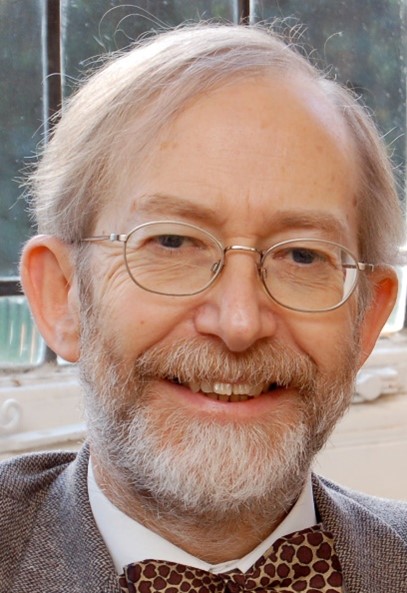
Revd Dr Rodney Holder, an older man with fair hair and a beard, smiles at the camera. He is wearing glasses, a grey jacket, a white shirt, and a patterned bow tie whilst seated near a window with metal framing.

Revd Dr Rodney Holder

Fellow Commoner

Revd Dr Rodney Holder

Fellow Commoner

My interests lie in the relationship between science and theology. Topics include: (i) the fine-tunings of natural law necessary for the universe to evolve life; (ii) Karl Barth’s rejection of natural theology; and (iii) ‘ramified natural theology’, i.e. the defence of specifically Christian claims.

The Revd Dr Rodney Holder read mathematics at Trinity College, Cambridge (MA, MMath), and spent two years teaching mathematics at The Manchester Grammar School. In 1974 he returned to academia to research for a D.Phil. in astrophysics at Christ Church, Oxford, following this with a two-year post-doctoral fellowship in the Department of Astrophysics in Oxford. His research was on accretion of intergalactic gas by the galaxy. Dr Holder then spent fourteen years with EDS (formerly Scicon) as an operational research consultant to UK Ministry of Defence clients. This involved mathematical modelling and decision analysis applied to defence procurement, and led to several published papers. His first book on science and religion (Nothing But Atoms and Molecules? Probing the Limits of Science) was published in 1993. In 1994 Dr Holder returned to Oxford, taking a first class degree in theology, and a Diploma in Ministry. Following ordination in the Church of England, Dr Holder served in parish ministry in South Warwickshire, Heidelberg, and Buckinghamshire. During this time he published several papers and his second book, God, the Multiverse, and Everything: Modern Cosmology and the Argument from Design.

Dr Holder was Course Director of The Faraday Institute for Science and Religion, Cambridge, from its inception in January 2006 until 31 January 2013. He has remained active academically since then. His research focus has largely been in three areas: (i) utilizing Bayesian confirmation theory to assess the metaphysical significance of the fine-tunings of natural law necessary for the universe to be capable of evolving life; (ii) challenging Karl Barth’s rejection of natural theology through dialogue with major theologians who have succeeded him; and (iii) describing and utilizing ‘ramified natural theology’, which adopts the same Bayesian approach used to argue for the existence of God in natural theology, to defend specifically Christian claims about God’s acting in history in the person of Jesus Christ. Dr Holder has supervised undergraduates and postgraduate diploma students for ten colleges, including St Edmund’s, for the ‘Theology and Science’ paper in Part IIB of the Cambridge Theological and Religious Studies Tripos, 2007-2016. He has (2019 – 2025) taught overseas students on a Faraday Institute enrichment course and has given many lectures at Faraday Institute courses and more widely, here and overseas. Dr Holder’s further books include The Heavens Declare: Natural Theology and the Legacy of Karl Barth; Ramified Natural Theology in Science and Religion; and, co-edited with Simon Mitton, Georges Lemaître: Life, Science and Legacy. He was Reviews Editor of Science and Christian Belief and on the national committee of Christians in Science from 2006-2017. He is a Fellow of the International Society for Science and Religion, a member of the Society of Ordained Scientists and of the Science and Religion Forum, and a trustee of The Faraday Institute.

Academic Profile

Publications 

  • Rodney D. Holder, Ramified Natural Theology in Science and Religion: Moving on from Natural Theology, 2021, Abingdon, Oxon, and New York, NY: Routledge.
  • Rodney D. Holder, God, the Multiverse, and Everything: Modern Cosmology and the Argument from Design, 2016 [2004], Abingdon, Oxon, and New York, NY: Routledge.
  • R. D. Holder, The Heavens Declare: Natural Theology and the Legacy of Karl Barth, 2012, West Conshohocken: Templeton Press.
  • Rodney Holder, ‘Georges Lemaître and Fred Hoyle: Contrasting Characters in Science and Religion’, in Rodney Holder and Simon Mitton (eds), Georges Lemaître: Life, Science and Legacy, 2012, Heidelberg: Royal Astronomical Society-Springer, 39-53.
  • R. D. Holder, ‘Hume on Miracles’, 1998, British Journal for the Philosophy of Science, 49, 49-65.

Awards & Recognitions

  • Fellow of the Institute of Mathematics and Its Applications
  • Fellow of the Royal Astronomical Society
  • Fellow of the International Society for Science and Religion
  • Templeton Foundation Prize for Exemplary Papers in Humility Theology (1998)


Revd Dr Kevin Grove, a man with short light brown hair, is wearing a black clerical suit and white collar, posing in front of a plain grey background.

Revd Dr Kevin Grove

Visiting Scholar

Revd Dr Kevin Grove

Visiting Scholar

Revd Dr Kevin Grove is an Associate Professor of Theology at the University of Notre Dame.

Born and raised in Montana, USA, Kevin Grove was ordained a Holy Cross priest at Notre Dame in 2010. After doctoral studies at the University of Cambridge (Trinity College) and before joining the faculty at Notre Dame, Grove was a post-doctoral researcher at L’Institut Catholique in Paris, France and a fellow at the Notre Dame Institute for Advanced Study. In addition to his research and teaching, Grove serves at Notre Dame as an assistant faculty chaplain, Director of the Master of Divinity program, and as a pastoral resident for undergraduates in Dunne Hall.

Revd Dr Isidoros Katsos, a man with a beard and glasses dressed in a dark robe, sits at a wooden desk with his hands clasped. He is indoors, framed by a window and wooden panelling in the background.

The Revd Dr Isidoros Katsos

Visiting Scholar
The Revd Dr Isidoros Katsos

Visiting Scholar

Isidoros (né Charalampos) Katsos is Assistant Professor of Theological Epistemology and Philosophy at the Divinity Faculty, National University of Athens. He holds a PhD in Human Rights, Ecology, and Cultural Heritage Law (Freie Universität Berlin, 2009); and a PhD in Philosophy and Theology (University of Cambridge, 2019), under the supervision of Rowan Williams. He has studied law in Athens, Paris and Berlin; and philosophy and theology in Athens and Cambridge. Previous appointments include a British Academy Postdoctoral Fellowship at the University of Oxford; a Junior Research Fellowship at Campion Hall, Oxford; and a Postdoctoral Fellowship at the Center for the Study of Christianity, Hebrew University of Jerusalem. Αuthor of The Metaphysics of Light in the Hexaemeral Literature: From Philo of Alexandria to Gregory of Nyssa (Oxford: Oxford University Press, 2023); and – as Charalampos Katsos – of Nachhaltiger Schutz des kulturellen Erbes: Zur ökologischen Dimension des Kulturgüterschutzes (Baden-Baden: Nomos ; Zürich: Dike ; Wien: Facultas, 2011). His teaching and research interests focus on ‘Christian Philosophy’, largely defined, and the intersection of theology, ecology, and human rights in the age of A.I.

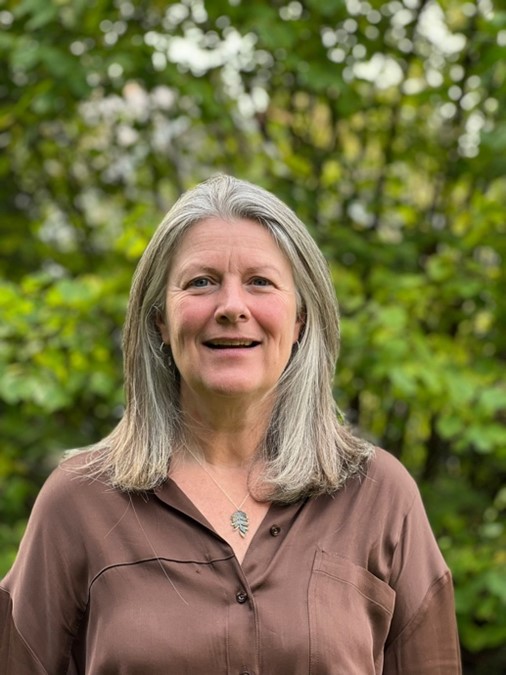
Revd Dr Carole Irwin, a woman with shoulder-length grey hair, wearing a brown button-up shirt and a leaf-shaped necklace, smiles whilst standing outdoors in front of green foliage.

Revd Dr Carole Irwin

Research Associate

Revd Dr Carole Irwin

Research Associate

My research is in theology, intellectual disability and Christian community. My current work uses a participative approach, investigating belonging to a Christian community of differing intellectual abilities with members of the community.

Carole received her PhD from the University of Durham, where she worked on Rowan Williams’ concept of difficulty as a tool for negotiating difference between religious and secular life and commitment in the public square. She was a member of the academic staff of Wesley House in the Cambridge Theological Federation from 2015 to 2021, and Director of Studies from 2017, teaching political theology and leading the MA programme on Pastoral Care and Chaplaincy. Carole is currently project leader for Growing in Friendship, a participative theological action research project of the University of Aberdeen’s Centre for Spirituality, Health and Disability and Lyn’s House Cambridge. Lyn’s House is a Christian community of friendship for people with and without intellectual disabilities. The Growing in Friendship project is the first instance of participative research using a theological action research approach with a community of differing intellectual abilities. She is also a member of the Von Hügel Institute’s research project Disability and Knowledge in collaboration with the University of Notre Dame’s Rome Global Gateway and L’Arche Italy. She is ordained in the British Methodist Church, has served on its Faith and Order Committee, and is currently a member of the British Methodist-Roman Catholic Dialogue Commission. She studied in Cambridge (King’s College) for her first degree in Modern Languages (French and Italian).

Academic Profile

A man wearing clerical attire with a black robe trimmed in red and a large cross necklace, resembling Eamon Martin, stands in front of ornate wooden doors with stained glass windows.

The Most Revd Archbishop Eamon Martin, Primate of all Ireland

Honorary Fellow

The Most Revd Archbishop Eamon Martin, Primate of all Ireland

Honorary Fellow

The Most Revd Archbishop Eamon Martin, Primate of all Ireland is an Honorary Fellow of St Edmund's College.

Norfolk Building and Chapel

Rt Revd Alan Hopes

Honorary Fellow

Rt Revd Alan Hopes

Honorary Fellow
Dr Alexandra Urban, a woman with long brown hair, wearing a beige blazer and white top, smiles confidently with her arms folded in front of a blurred, light-coloured background.

Dr Alexandra Urban

Visiting Scholar

Dr Alexandra Urban

Visiting Scholar

Dr Alexandra Urban studied German philology and Latin at LMU Munich (First State Examination, 2016) and went on to complete a Master’s degree in German Language and Literature with a specialization in medieval studies (2017). From 2016 to 2020, she was a research associate in the DFG research group 1986 “Nature in Political Conceptions of Order: Antiquity – Middle Ages – Early Modern Period”, where she completed her PhD, awarded summa cum laude, in July 2020. The book was published in 2021 by De Gruyter under the title Poetik der Meisterschaft in ›Der meide kranz‹: Heinrich von Mügeln auf den Schultern des Alanus ab Insulis (series Deutsche Literatur. Studien und Quellen). Since 2020, she has been a research associate at the Chair of Professor Kellner (LMU Munich).

Dr Sandra Brunnegger, a woman with short brown hair and glasses, smiles at the camera. She wears a black jumper over a white collared shirt and stands outdoors in front of green foliage.

Dr Sandra Brunnegger

College Teaching Officer, Director of Studies, Fellow

Dr Sandra Brunnegger

College Teaching Officer, Director of Studies, Fellow
Dr Sandra Brunnegger is a Fellow in Law and Anthropology.

Dr Brunnegger is a legal anthropologist. Her research interests span human rights, indigenous legal systems and practices, everyday conceptions of justice, transitional justice, violence, environmental issues and social movements. Ethnographically, her research focuses on Latin America, with particular emphasis on Colombia. Her teaching interests include development, political and legal anthropology and international law.

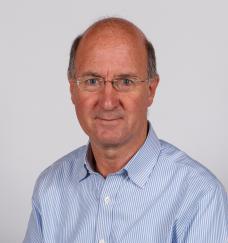
Dr Sean Butler, a middle-aged man with glasses, short thinning hair, and a light blue striped button-up shirt, sits against a plain light background.

Dr Sean Butler

Emeritus Fellow

Dr Sean Butler

Emeritus Fellow

Dr Sean Butler is an Emeritus Fellow at St Edmund's College. His main field of research is animal rights law.

Dr Sean Butler studied Law at Oxford (St Edmund Hall) and the LSE, London, as well as Genetics at Cambridge (CPGS) before taking his PhD in social science at Imperial College, London. He supervises Roman Law and lectures Animal Rights Law in the Law Faculty, and is Co-Director of the Cambridge Centre for Animal Rights Law.

Academic Profile

Dr Philip McCosker, in a dark suit, light blue shirt, and black and yellow striped tie, smiles slightly in front of a plain light grey background.

Dr Philip McCosker FRSA

Fellow

Dr Philip McCosker FRSA

Fellow
Dr Philip McCosker, FSRA, is Director of the Religion and Theology Research Programme at the Institute for Religion and Critical Inquiry, Australian Catholic University, and a Fellow of St Edmund’s College, University of Cambridge. He is the former Vice-Master of St Edmund's College and former Director of the Von Hügel Institute for Critical Catholic Inquiry. He was previously Deputy Master of St Benet’s Hall and Lecturer in Theology at Trinity and Jesus Colleges in Oxford. He received his theological formation at the universities of Oxford, Cambridge, Harvard, and Yale. His research focuses on historical, philosophical, and constructive theology, frequently in connection with the Catholic traditions.
A smiling man with short light brown hair, Dr Ian McCrone, wears a blue jacket over a collared shirt. The jacket features yellow text that reads Cambridge University Veterinary School. The background is plain and white.

Dr Ian McCrone

Fellow, Director of Studies

Dr Ian McCrone

Fellow, Director of Studies

Mr Ian Stewart McCrone graduated from the University of Liverpool with a degree in veterinary science and has completed further postgraduate qualifications with a Royal College of Veterinary Surgeons' certificate in cattle health and production and a Masters Degree in epidemiology and a Diploma of the London School of Hygiene and Tropical Medicine. Before joining the department of veterinary medicine Ian worked almost exclusively as a farm animal (veterinary) practitioner in North Norfolk, South Yorkshire and the Lancashire-Yorkshire border.  Ian joined Cambridge in 2006 initially as a Clinical Farm Animal Veterinarian, then as a Clinician Teaching Fellow in Veterinary Public Health and Farm Animal Medicine, and since October 2013 as University Physician, a reader level position with responsibility as Farm Animal Clinical Team Leader.

Suzanne Paul

Dr Suzanne Paul

Tutor, Fellow, Fellow Archivist and Librarian

Dr Suzanne Paul

Tutor, Fellow, Fellow Archivist and Librarian
Dr Suzanne Paul is the Keeper of Rare Books and Early Manuscripts at Cambridge University Library. She is a Tutor, Fellow Librarian and Fellow Archivist.

Suzanne obtained an MA in Classics and Medieval History from the University of Edinburgh, followed by an MA and PhD in Medieval Studies from the University of Leeds. A medieval manuscript scholar by training, she is particularly interested in the application of digital and scientific approaches to the study and curation of manuscripts.

She has collaborated on several large-scale manuscript digitisation and conservation projects, including the Polonsky Foundation Greek Manuscripts project. She currently a co-investigator on the Hidden in Plain Sight project, applying methods such as X-ray fluorescence, multispectral imaging and DNA analysis to the study of premodern books.

Dr Matthew Psycharis, a man with short dark hair, wearing a light blue shirt and a dark blazer, is smiling whilst sitting indoors. The softly blurred background reveals other people and shelves.

Dr Matthew Psycharis

Fellow, Director of Studies

Dr Matthew Psycharis

Fellow, Director of Studies
  • Director of Studies: Law 

Matthew is a Fellow of St Edmund’s College and Director of Studies of Undergraduate Law.  He is a member of the Centre for Public Law, Cambridge.  He teaches constitutional law, and the law of trusts and equity, across a number of Cambridge colleges.  His research is in the field of constitutional law and constitutional theory.  His works on topics ranging from contemporary populism, constitutional change, referendums, and constitutional history, have been published in leading UK and Australian journals.

Matthew completed his PhD in law at Gonville & Caius College, Cambridge, supported by a WM Tapp Scholarship, on the topic of ‘Policy Referendums in the United Kingdom, New Zealand and Australia’.  In addition to his doctorate, Matthew holds a Bachelor of Arts and Juris Doctor from the University of Melbourne.  In 2015 he matriculated at St Edmund’s College, Cambridge, completing a Master of Laws.

Before Cambridge, Matthew was admitted to legal practice, and worked as an Associate at the Australian firm Allens-Linklaters, practising as a litigator.  He advised clients on a wide range of government investigations, business disputes, class actions, and cross-border disputes.  In a pro bono capacity, he instructed in constitutional proceedings concerning democratic rights, and advised peak human rights bodies on issues concerning offshore refugee detention and the drafting of anti-discrimination legislation.  Taking time out of practice, Matthew spent a year working as the Senior Judicial Assistant to a Judge of the Supreme Court of Victoria (Australia).  Before coming to the law, Matthew trained as an economist and worked, in 2012, as a policy analyst at the Department of Treasury and Finance (Australia).

His Law Faculty page, including a list of publications and research projects, is available here:  https://www.law.cam.ac.uk/people/academic/mj-psycharis/78801

Dr James Whitworth, a smiling man with a shaved head, wearing a dark suit jacket and white collared shirt, poses against a plain white background.

Dr James Whitworth

Fellow

Dr James Whitworth

Fellow
Dr James Whitworth's research and clinical activity focuses on the identification of individuals at increased risk of cancer due to a heritable genetic cause, and methods to mitigate that risk where identified.

James obtained his medical degree from the University of Leicester in 2007. He continued his clinical training in the East Midlands before taking up an NIHR Academic Clinical Fellowship in Clinical Genetics in Birmingham. He moved to Cambridge to undertake a PhD, which was completed in 2019 and led to his appointment as an NIHR Academic Clinical Lecturer prior to his current post.

Dr Anna Gannon, a woman with shoulder-length grey hair and light skin, smiles gently at the camera. She is wearing a patterned top and is indoors, with a soft background.

Dr Anna Gannon MA PhD Cantab FSA FHEA

Emerita Fellow

Dr Anna Gannon MA PhD Cantab FSA FHEA

Emerita Fellow

Dr Anna Gannon is an Emerita Fellow of St Edmund's College.

She specialises in early medieval Insular Art. She is part of an international group working on early Irish reliquaries found in Italy, and co-edits a Medieval studies Festschrift. Current research focuses on the exegesis of evoked sacred landscapes, religious approaches to nature in the Insular world.

Her first degree was in Italy: she studied Modern Languages and specialised in German Philology at the Catholic University of Milan, where she was teaching as an ‘Assistente Ministeriale’ for four years. She subsequently read History of Art at the University of Cambridge, with a PhD on the iconography of Early Anglo-Saxon coinage, published as a monograph by Oxford University Press in 2003. She worked on coin-related projects at the Fitzwilliam Museum and then at the British Museum as a Curator in the Department of Coins and Medals and supporting the Portable Antiquities Scheme, identifying and recording ‘treasure’.

Dr Gannon began attending St Edmund’s Chapel as a student, c. 1995, but her academic connection with the College began in 2001, first as a Director of Studies, then as a Senior Member, and eventually she was elected Fellow in 2006. Her roles at St Edmund’s (as DoS (for 25 years), Tutor, Keeper of Art and serving on several other committees) were combined with and complementary to her other activities for the University. In addition to research and publications on Anglo-Saxon numismatics and art, and an academic role as affiliated lecturer in Early Medieval Art at my Department, she was single-handedly in charge of the professional development of all newly-appointed lecturers on probation across the University – something that could be described as a 'pastoral role’, but which made a huge difference orienteering many new-comers. She retired in 2019.

Her current research interests and publications deal with Insular art and culture, particularly in responses to Christianity. She is part of the international Research Project ‘Insular reliquaries in Italy: in the footsteps of Columbanus’ and is editing a collection of early medieval papers. Her interests have moved towards Theology and ecotheology: she is a regular contributor to the Visual Commentary on Scripture and is exploring the exegesis of imagined sacred landscapes through the sense of smell.

She is a committed Benedictine Oblate and attends Mass at St Edmund’s Chapel regularly. She is happy to report that she was the one behind the project of the new entrance to the Chapel, with the access ramp and the bench for St Edmund’s.

Selected publications:

  • The Iconography of Early Anglo-Saxon Coinage (6th-8th centuries), Oxford University Press 2003.
  • Sylloge of Coins of the British Isles, 63. British Museum.  Anglo-Saxon Coins. Part i. Early Anglo-Saxon Coins and Continental Silver Coins of the North Sea, c.600-760, British Museum Publications, 2013.
  • ‘The Coins of the Irish Free State, 1928: are animals good to think with?’ in Le Molte Facce di una Moneta: Saggi in Onore di Lucia Travaini, M. Baldasssari, B. Cook and S. Locatelli eds, Milano University Press, 2025, 109-26.
  • ‘Insular numismatics: the relationship between ancient British and early Anglo-Saxon coins ‘, in Barbaric Splendor: the use of image in Europe before and after Rome, T.F. Martin and W.A. Morrison eds. Archeopress Publishing 2020, 121-139.
  • ‘Guarding the Sacred: early Anglo-Saxon cylindrical containers’ Atti del convegno ’Custodire il Sacro’, Vercelli, 11-12 Gennaio 2021, "Temporis Signa. Archeologia della tarda antichità e del medioevo", Fondazione Centro italiano di Studi sull'Alto Medioevo di Spoleto, number XVI 2021, 213-233.
  • ‘Art in the round: tradition and creativity in early Anglo-Saxon coinage’, in Money and Coinage in the Middle Ages, R. Naismith ed., Brill, 2019, 289-321

Contributions to the Visual Commentary on Scripture (VCS), Ben Quash ed., King’s College, London:


An elderly woman holding a cup of tea sits next to an elderly man with a walking stick in a striped armchair. Dr Tony Palmer stands in the background near a counter with coffee machines and cups.

Dr Tony Palmer

Emeritus Fellow

Dr Tony Palmer

Emeritus Fellow

Dr Palmer was an Assistant Director of Research at the Veterinary School responsible for clinical neurology and neuropathology. His research concerned the neuropathology of nervous diseases of animals and a special interest in the neuropathology of decompression sickness.

Dr Palmer raised grants for the building of a unit of Comparative Neurology including the provision of three electron microscopes. His research was focussed on the relation of clinical signs to underlying neuropathology. He was the Senior Tutor at St Edmund's from 1974 - 1978.

Publications

  • Introduction to Animal Neurology. Blackwell Scientific Publications 1976

Awards and recognitions

  • President of the British Neuropathological Society
Smiling older man with grey hair, Dr Hermann Hauser, wearing a navy suit, white shirt, and a dark patterned scarf around his neck, standing indoors with a blurred background.

Dr Hermann Hauser KBE CBE FRS FREng

Honorary Fellow

Dr Hermann Hauser KBE CBE FRS FREng

Honorary Fellow
Dr Hermann Hauser KBE CBE FRS FREng is an Entrepreneur, Venture Capitalist and Honorary Fellow at St Edmund's College.

In his long and successful career as an entrepreneur and venture capitalist, Hermann has founded or co-founded companies in a wide range of technology sectors. These include Acorn Computers (where he helped spin our ARM), Active Book Company, Virata, Net Products, NetChannel and Cambridge Network Limited.

Hermann holds an MA in Physics from Vienna University and a PhD in Physics from the University of Cambridge.  He is a Fellow of the Institute of Physics and of the Royal Academy of Engineering and holds an Honorary Doctorate from several other universities.  Dr Hauser was awarded a CBE in 2001 for ‘innovate service to the UK enterprise sector’.  In 2012 he became a Fellow of the Royal Society and in 2015 he received a Honorary Knight Commander of the Most Excellent Order of the British Empire (KBE) for services to engineering and industry.

Dr David Friedman, a man with short dark hair and glasses, smiles softly at the camera. He is wearing a purple shirt and is photographed in a well-lit, possibly outdoor setting.

Dr David Friedman

Bye-Fellow, Director of Studies

Dr David Friedman

Bye-Fellow, Director of Studies
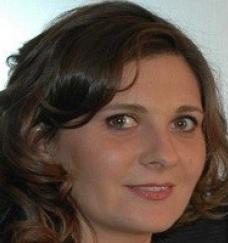
  • Director of Studies in Classics at St Edmund's
  • Affiliated Researcher in the Faculty of Classics.

Dr Friedman studies Judaism in the Greco-Roman world, with a particular focus on Josephus and ancient historiography. After receiving a BA in Mathematics (Yale) and working first at a physics lab and for many years in derivatives trading, he returned to university to earn an MA (UCL), MPhil (Oxford), and DPhil (Oxford), which explored how Josephus presented the origins of the Jews to his Roman audience. David is a Bye Fellow of Darwin College, a Bye Fellow and Director of Studies in Classics at St  Edmund's and an affiliated researcher in the Faculty of Classics.

Dr Sara Silvestri, a woman with wavy brown hair and fair skin, looks at the camera with a slight smile. She is indoors and the background is softly blurred.

Dr Sara Silvestri

Bye-Fellow, Director of Studies

Dr Sara Silvestri

Bye-Fellow, Director of Studies
Dr Sara Silvestri is interested in the contested meaning and multifaceted roles of religion in international relations, with particular attention to Islam and the Euro-Mediterranean region. Located at the intersection between IR, Politics, and Sociology, her research, publications and teaching are concerned with how religious identities, symbols and political theologies impact global governance; the way faith-based networks, social movements, and secular international institutions relate to each other; and the evolution of public policies responding to the challenges of migration, multiculturalism, Islamism, and terrorism.

Sara is based between London, where she is Senior lecturer in International Politics at City University, and Cambridge, where she undertook her PhD (at St John’s College) and ESRC Post-Doc. In Cambridge she is currently Bye Fellow and Director of Studies in HSPS (Politics) at St Edmund’s College and collaborates with the POLIS department and the Divinity faculty. Sara also held visiting positions at the Cambridge Muslim College, the University of Bristol, the Univ. of Padua, and was a Marie Curie Fellow in Paris.

After her first degree in Arts (La Sapienza University, Rome) and qualifying as a journalist, Sara went to the University of Cambridge to undertake and MPhil in EU affairs and PhD and Post-Doc on the Politics of and about Islam in Europe. She also specialised in EU migration policies at the ULB (Belgium). She then became interested in role of Christians (especially but not only the Catholic Church) in the governance of migration and refugee flows when she was a Research Associate of the Von Hügel Institute and a member of the Cambridge Centre for the Study of Global Human movement .

Dr Silvestri has collaborated extensively with the policy and media world in her areas of expertise. She has worked in the Cabinet of the EU Commission President, has been a Research Associate at Chatham House (London); she has served as an advisor to the Brussels think tank European Policy Centre and the Annal Lindh Foundation for Intercultural Dialogue (Alexandria, Egypt) and as a 'global expert' for the UN Alliance of Civilisations. Sara currently serves as a Trustee of the Centre for Catholic Social Thought and Practice and of the Council on Christian Approaches to Defence and Disarmament.

Her research has been funded inter alia by the ESRC, British Academy, British Council, Luce Foundation, FCDO, European Commission, Caritas Internationalis, the European Science Foundation.

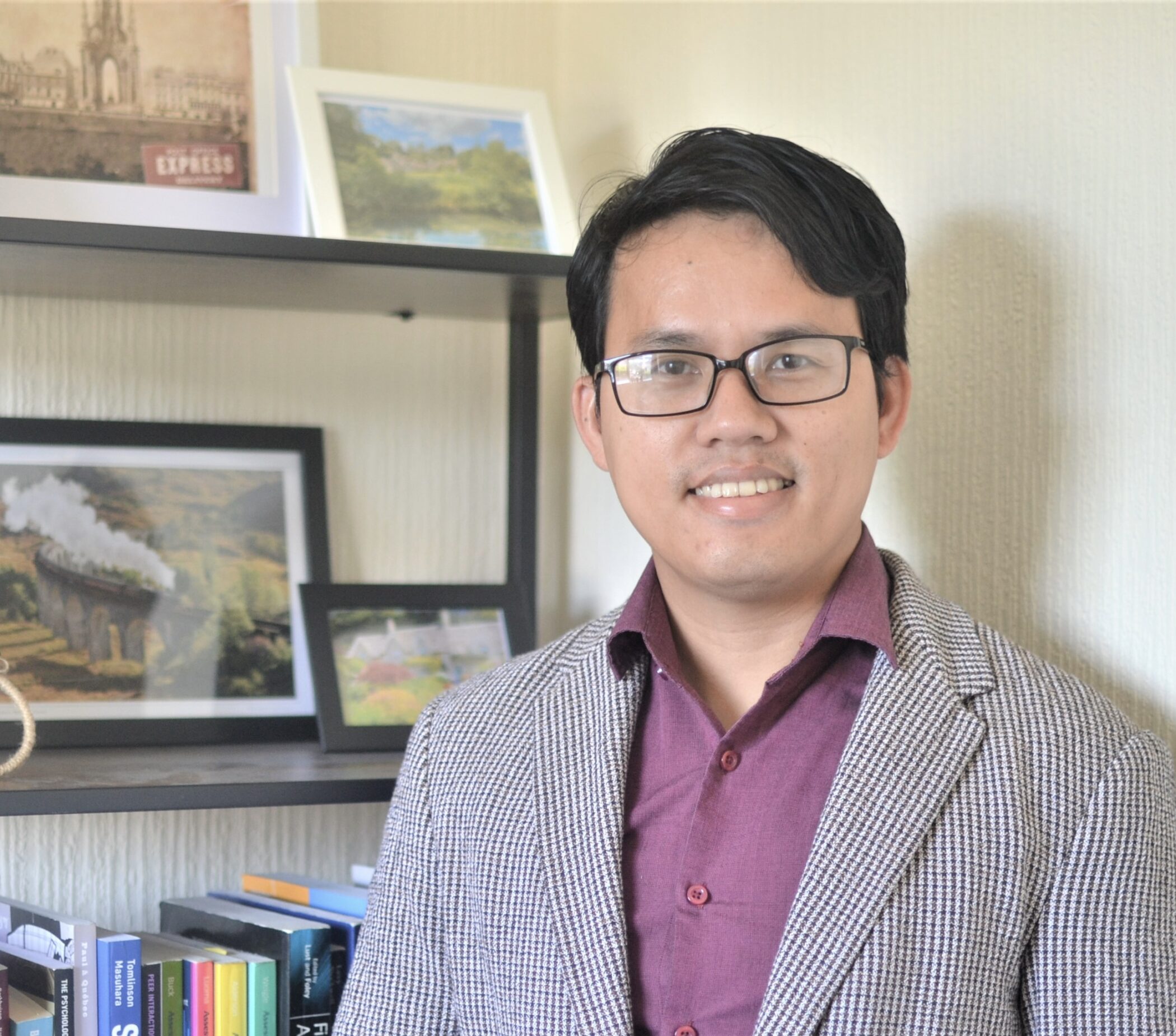
Dr Phung Dao, wearing glasses, a maroon shirt, and a grey checkered blazer, smiles whilst standing in front of a bookcase filled with books and framed pictures.

Dr Phung Dao

Tutor and Fellow

Dr Phung Dao

Tutor and Fellow

Dr Phung Dao is Associate Professor in Second Language Education. His research focuses on the intersection of second language acquisition (SLA), educational technology, and language education.

Phung Dao is Associate Professor in Second Language Education at the Faculty of Education, University of Cambridge, where he teaches MPhil/MEd courses in Research in Second Language Education (RSLE) and supervises PhD students. Before joining the University of Cambridge, Phung was a senior Lecturer in TESOL and Applied Linguistics at Manchester Metropolitan University (2018-2022), teaching undergraduate/postgraduate courses and supervising PhD students in TESOL/Applied Linguistics. He also taught undergraduate/postgraduate courses in Applied Linguistics at University of Queensland (Australia), Concordia University (Canada) and An Giang University (Vietnam). His research interests focus on instructed second language acquisition (ISLA), technology for language teaching and learning, peer interaction, learner engagement, Task-Based Language Teaching (TBLT), L2 pedagogy, and L2 teacher education. His publications appear in international peer-reviewed Applied Linguistic journals such as Modern Language Journal, TESOL Quarterly, Studies in Second Language Acquisition, Language Teaching, Computer Assisted Language Learning, Language Teaching Research, Applied Linguistics Review, TESOL Journal, System, Innovation in Language Learning and Teaching, Language Learning Journal, IRAL and among others.

His current research projects, funded by British Council and IELTS IDP Australia, investigate online English language teaching in Vietnamese public schools, IELTS impacts on stakeholders, and young learners’ engagement in L2 learning tasks in face-to-face and online classes.

Academic Profile 

Publications

  • Dao, P. (2024). Learner Engagement in Online Second Language Classrooms. Palgrave Macmillan.
  • Iwashita, N., Dao, P., & Nguyen, M. (2025). Understanding Interaction in the Second Language Classroom Context. Multilingual Matters.
  • Dao, P., M. Nguyen, PT. Duong, V. Tran-Thanh. (2021) Learners’ Engagement in L2 Computer-Mediated Interaction: Chat Mode, Interlocutor Familiarity, and Text Quality. Modern Language Journal. https://doi.org/10.1111/modl.12737
  • Dao, P., Bui, T. & Nguyen, XNCM (2024). Public primary school teachers’ perceptions and assessment of young learners’ engagement. Language Teaching Research. https://doi.org/10.1177/13621688241253546


Follow us

Stay up to date with our rich college life here at St Edmund's through our social media channels.