HomeAboutOur People

Our people

Filter staff:

Professor Paul Luzio

Honorary Fellow

Professor Paul Luzio

Honorary Fellow

Professor Paul Luzio undertakes research in the field of molecular cell biology, to discover and understand the molecular mechanisms of intracellular membrane traffic between specialised organelles in mammalian cells, as well as abnormalities in these mechanisms and organelle function, which lead to disease.

Professor Paul Luzio MA PhD FMedSci was Master of St Edmund’s College from 2004-2014. Paul was an undergraduate in Cambridge, reading Natural Sciences (Part II Biochemistry) at Clare College before studying for a PhD in the Department of Biochemistry. After a period in Cardiff as a lecturer in medical biochemistry at the Welsh National School of Medicine he returned to Cambridge where, in 1979 he became a University Lecturer in the Department of Clinical Biochemistry and was later promoted to Reader (1996) and then Professor (2001). In 1987-88 Paul spent a sabbatical year at the European Molecular Biology Laboratory in Heidelberg, Germany. He was elected a Fellow of St Edmund’s College in 1987 and was Senior Tutor from 1991-1996. From 2002 until 2012 Paul was Director of the Cambridge Institute for Medical Research (https://www.cimr.cam.ac.uk), a cross-departmental research institute in the Clinical School with a mission to determine the molecular mechanisms of disease in order to advance human health. From 2007-2012 he chaired the Medical Research Council’s Molecular and Cellular Medicine Board and was a member of the Strategy Board. Paul was Deputy Head of the School of Clinical Medicine from 2012-2014.

Following retirement in 2014, Paul became Emeritus Professor of Molecular Membrane Biology. As a Voluntary Director of Research, he continues to lead a small research group funded by the Medical Research Council at the Cambridge Institute for Medical Research. Paul’s research is largely concerned with intracellular membrane traffic pathways in mammalian cells and the biogenesis, re-modelling and function of intracellular organelles (little organs) called lysosomes, which play an important role in cellular nutrition and signalling. Lysosomes are acidic organelles, with changes in acidity having effects on their degradative function and ability to signal to other parts of the cells. Paul is currently studying the molecular regulation of acidification and lysosome re-modelling and how these processes contribute to lysosome function. His work has contributed to a greater understanding of how defects in membrane traffic and lysosome function contribute to human diseases, including lysosomal storage and neurodegenerative diseases.

Academic Profile

Awards & Recognitions 

  • 1987 Humboldt Research Fellowship
  • 1998 FRCPath
  • 1999 FMedSci
  • 2005 Association of Clinical Biochemists (ACB) Foundation Award
  • 2015 FRSB


Prof Paul Wiethman Headshot

Professor Paul Weithman

Senior Research Associate

Professor Paul Weithman

Senior Research Associate

My research focuses on contemporary political philosophy in the analytic tradition. I have also worked on moral philosophy, the philosophy of education and medieval political theory.

Paul Weithman is the Glynn Family Honors Professor of Philosophy at Notre Dame, the university from which he received his B.A. in 1981. He earned his Ph.D. at Harvard, where he wrote his dissertation under John Rawls and Judith Shklar. He joined the Notre Dame faculty in 1991. Professor Weithman chaired the Philosophy Department between 2001 and 2007 and currently directs the interdisciplinary minor in Philosophy, Politics and Economics. He serves on the editorial boards of the JOURNAL OF RELIGIOUS ETHICS, THE REVIEW OF POLITICS and POLITICS, PHILOSOPHY AND ECONOMICS. He is a member of the international advisory board of PHILOSOPHY AND PUBLIC ISSUES and is an honorary member of the Brazilian Society for Legal Philosophy. Professor Weithman has won several awards for his teaching. His book RELIGION AND THE OBLIGATIONS OF CITIZENSHIP (Cambridge, 2002), won the annual book award from the North American Society for Social Philosophy. His WHY POLITICAL LIBERALISM (Oxford, 2010) won the David and Elaine Spitz Prize for the best book on liberal democratic theory published in its year. In 2015, Cambridge University Press published a collection of his papers under the title RAWLS, POLITICAL LIBERALISM AND REASONABLE FAITH.

Academic Profile

Awards & Recognitions 

  • National Humanities Center Residential Fellowship, 2000
  • Annual Book Award from the North American Society for Social Philosophy, 2003
  • David and Elaine K. Spitz Prize for the best work of liberal and democratic theory published in 2010
  • NEH Grant to host a conference, "A Theory of Justice at Fifty", 2021

Professor Peter Guthrie OBE

Emeritus Fellow

Professor Peter Guthrie OBE

Emeritus Fellow

My research is focused on resilience of infrastructure, the assessment of large scale projects for sustainability, and energy efficiency and infection control in buildings.

Peter Guthrie was the first Professor in Engineering for Sustainable Development in the UK, taking up this post at the University of Cambridge in 2000. Prior to that he was in engineering consultancy for over 25 years. His research is focused on resilience of infrastructure, the assessment of large scale projects for sustainability, and energy efficiency and infection control in buildings. A civil engineer, Peter has worked in countries such as Nigeria, Malaysia, Lesotho, Sudan, Philippines, Ethiopia, and Botswana, and on major infrastructure projects such as London 2012, Channel Tunnel Rail Link (HS1), Conwy Tunnel, major airports, and building projects. He has recently led research consultancy for Lloyd’s Register Foundation (LRF). Peter was a Vice-President of the Royal Academy of Engineering (2020-2024), and is currently leading work on Pandemic Preparedness and on Infection Resilient Environments. Peter is founder and Vice-President of the charity RedR Engineers for Disaster Relief.

Academic Profile

Publications

  • MacAskill, Kristen, O’Hanlon, Francesca, Guthrie, Peter, Mian, Juliet, (2020). Fostering resilience-oriented thinking in engineering practice Proceedings of the Institution of Civil Engineers - Engineering Sustainability Volume 173 Issue 7, October pp. 356- 364 DOI: 10.1680/jensu.19.00049
  • George, Jennifer; Guthrie, Peter; Orr, John, (2022). "Re-Defining Shelter: Humanitarian Sheltering". July. Disasters Journal doi: 10.1111/disa.12555
  • Short, CA, Forman, T, MacAskill, KA, Soulti, E, Mutschler, R, Mohareb, E, Solanki, J, Britnell, J, Georgiadou, MC, Brady-Patel, B, Guthrie, P, (2020). NHS Estate: Energy Efficiency and Practice. Journal of Building Engineering. Submitted for review, May.
  • Zhou, W., Reiner, D., Moncaster, A., Guthrie, P., (2022) Modelling future trends of annual embodied energy of urban residential building stock in China. Energy Policy Vol 165, June doi.org/10.1016/j.enpol.2022.112932
  • Blom CM and Guthrie PM, 2019. Strategic intent .... Proc ICE – Engg Sustainability 172(4): 167–183

Awards & Recognitions

  • CBE 2024
  • FREng 1997
  • OBE1993

Professor Peter J O’Donnell

Tutor, Fellow

Professor Peter J O’Donnell

Tutor, Fellow
Affiliated Lecturer at the Department of Applied Mathematics and Theoretical Physics, Director of Studies in Mathematics, Tutor, Financial Tutor

Peter O’Donnell is an Affiliated Lecturer in the Department of Applied Mathematics and Theoretical Physics, a member of the Relativity and Gravitation research group and a Fellow of the Institute of Mathematics and its Applications. His current research interests are:

Lanczos potential theory. The Weyl tensor can be generated differentially by a three index tensor: the Lanczos tensor, which was derived from a Lagrangian that was initially constructed to analyse the self-dual part of the Riemann tensor. An ongoing study is being carried out to investigate the mathematical and physical properties of the Lanczos tensor. In generating the Weyl tensor the Lanczos tensor acts as a potential – analogous to the electric tensor in electromagnetic theory.

Twistor theory applied to Lanczos potential theory. The purpose of this research is to utilise the techniques of twistor theory in order to carry out a qualitative and quantitative analysis of the Lanczos potential, which appears to have some connection with local twistor transport.

Amongst his publications, Peter is the author of two books:

Introduction to 2-Spinors in General Relativity (World Scientific, 2003)

Essential Dynamics & Relativity (CRC Press, 2014).

He is a Tutor and Director of Studies at St. Edmund’s for Mathematics.

Professor Philip Sheldrake

Visiting Scholar
Professor Philip Sheldrake

Visiting Scholar

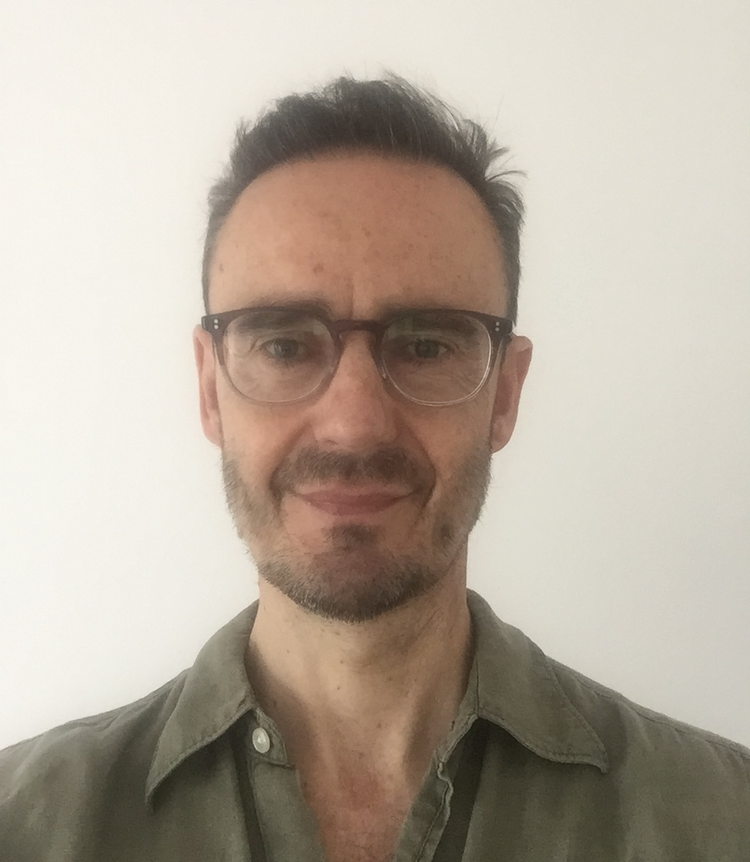
Professor Philip Sheldrake's research currently focuses on the intersection of both spirituality and theology with “place identity” and cities, particularly cultivating public values/virtues and enabling effective public leadership. 

Professor Philip Sheldrake is a Visiting Scholar at St Edmund’s College. He is also Professor, Senior Fellow & Research Director of the Institute for the Study of Contemporary Spirituality at Oblate School of Theology, San Antonio, Texas.

Professor Richard B. Horne FRS

Honorary Fellow

Professor Richard B. Horne FRS

Honorary Fellow

Richard was elected Honorary Fellow of St Edmunds College in 2023 after being a Fellow since 2014.  He is Head of Space Weather at the British Antarctic Survey where he holds an individual merit promotion reserved for world-leading scientists.   He is also a member of the Executive Team and Visiting Professor at the University of Sheffield.

Richard has published over 250 research papers on wave-particle interactions, wave propagation and space weather.  He is known for his work showing that plasma waves accelerate charged particles to very high energies and play a major role in the formation of the radiation belts at Earth, Jupiter, and Saturn.  Working with the commercial sector, Richard led two EU projects to turn this basic research into a forecasting system that is now used by the European Space Agency, satellite operators and insurance underwriters to help maintain the safe and reliable operation of satellites.

Richard was awarded the Gold Medal from the Royal Astronomical Society in 2022, the NERC Impact Award for Economic Impact in 2023, the International Kristian Birkeland Medal from the Norwegian Academy of Sciences in 2020, the Appleton Prize from the International Union of Radio Science (URSI) in 2020, and the Lloyds Science of Risk Prize in 2014.  He was awarded Sc.D. from the University of Cambridge in 2020 for distinguished research.

Richard was elected Fellow of the Royal Society in 2021 and Academia Europaea in 2023.  He is also Fellow of the American Geophysical Union, Fellow of the International Union of Radio Science (URSI), and Fellow and former Vice President of the Royal Astronomical Society.

Richard is Chair of the Space Environment Impacts Expert Group that advises the Government on space weather.  He also serves on other Government and UKRI committees.

Professor Robert (Bob) White, FRS

Emeritus Fellow

Professor Robert (Bob) White, FRS

Emeritus Fellow
Bob White is Emeritus Professor of Geophysics at Cambridge University and a trustee and Emeritus Director of The Faraday Institute for Science and Religion

Bob White is Emeritus Professor of Geophysics at Cambridge University and a trustee and Emeritus Director of The Faraday Institute for Science and Religion, originally founded in St Edmund's College, Cambridge in 2006. He studied Geology as an undergraduate at Emmanuel College, Cambridge and stayed to do research for a PhD in marine geophysics, which he completed in 1977. Since then he has been mostly in Cambridge, though with research interests around the world. He was elected a Fellow of St. Edmund’s College in 1988. In 1989 he was elected Professor of Geophysics, in 1994 a Fellow of the Royal Society, in 2016 a Fellow of the American Geophysical Union, and in 2018 was awarded a Gold Medal of The Royal Astronomical Society for his research.  His research interests include a wide variety of topics to do with how the earth works, with particular emphasis in recent years on the way in which molten rock is generated beneath the earth's major rift zones, and then stored in magma chambers in the crust before being erupted from volcanoes. Much of his current fieldwork is in Iceland.

He lectures and writes widely on science and Christian faith and believes that they are two ways of looking at the same world which give a richer and deeper view of it than either on their own. He is President of the charity Christians in Science, and Vice-President of the John Ray Initiative, a Christian environmental charity.

Professor Sandesh Sivakumaran

Fellow, Director of Studies

Professor Sandesh Sivakumaran

Fellow, Director of Studies
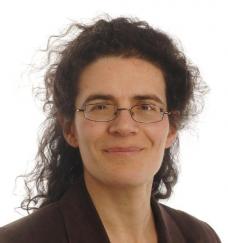
Professor Sandesh Sivakumaran's research focuses on international law, particularly the human dimension of international law.

Professor Sivakumaran is Professor of International Law at the University of Cambridge, Director of the Lauterpacht Centre for International Law, and Fellow of St Edmund's College, Cambridge. He is a Senior Fellow at the Lieber Institute for Law and Warfare, United States Military Academy (West Point), Fellow of the University of Nottingham Human Rights Law Centre, and Fellow of the Centre on Armed Groups. He advises and acts as expert for a range of states, international organizations and non-governmental organizations.

Academic Profile

Publications

  • Sivakumaran, The Law of Non-International Armed Conflict, 2012, OUP
  • Higgins, Webb, Akande, Sivakumaran & Sloan, Oppenheim's International Law: United Nations, 2017, OUP
  • Harris and Sivakumaran, Cases and Materials on International Law, 2020, Sweet and Maxwell
  • Moeckli, Shah, Sivakumaran (eds), International Human Rights Law, 2022, OUP
  • Sivakumaran and Burne (eds), Making and Shaping the Law of Armed Conflict, 2024, OUP

Professor Sarah Perrett OBE

Fellow Commoner

Professor Sarah Perrett OBE

Fellow Commoner

Professor Sarah Perrett  is Associate Director of The Faraday Institute, which she joined in 2020, when she was elected to Senior Membership of St Edmund’s College. She is also a Visiting Professor at the Institute of Biophysics, Chinese Academy of Sciences, where she has led a research group since 2003 and she continues to divide her time between Beijing and Cambridge. Sarah studied Natural Sciences (Chemistry) followed by a PhD in Protein Chemistry at the University of Cambridge. She then held a Research Fellowship at Sidney Sussex College, Cambridge before moving to Beijing in 2000. She was awarded an OBE for services to UK/China relations in the scientific field in the 2015 Queen’s New Year Honours List.

Sarah is Editor-in-Chief of Essays in Biochemistry (Portland Press). Her research interests include mechanisms of protein folding and amyloid formation. She has published over 100 research articles and has edited three books.

Norfolk Building and Chapel

Professor Seamus Higson

Bye-Fellow, Director of Studies

Professor Seamus Higson

Bye-Fellow, Director of Studies

Seamus is Director of Studies for our Chemical Engineering and Biotechnology degree.

Professor Shahzad Ansari

Fellow

Professor Shahzad Ansari

Fellow

Research interests

Institutional processes and diffusion of practices; social and environmental issues, technological and management innovations; value creation and new market development; offshoring and outsourcing, reputation management, and bottom-of-the-pyramid strategies.

Subject group: Strategy & International Business

Professional experience

Professor Ansari has published in several leading academic journals including Academy of Management Review, Organization Science, Journal of Management Studies, Strategic Organization, Research Policy and Organization Studies. He serves on the editorial boards of Academy of Management Review, Organization Science, Journal of Management Studies and Organization Studies, and is a high performing member of the Erasmus Research Institute of Management (ERIM) at Erasmus University in Rotterdam, the Netherlands. He is also a consultant at Thinfilms Inc., a New Jersey firm providing thin film services (in particular coating services) to over 150 corporations in the hybrid microelectronics, semiconductor, optical, medical and sensor industries.

Professor Ansari's areas of expertise in executive education include strategic management, technological and business model innovation, social innovation, and corporate social responsibility. He has contributed to executive education programs in many organisations, including McKinsey, Airbus. Shell, British Telecom, China Development Bank, Nokia, Laing O'Rourke, UNICEF, Essex County Council, City & Guilds, KLEC (Kuala Lumpur Education City), Shanghai University of Finance and Education among several others. He is frequently invited to speak on issues related to strategy, innovation and social change. Dr Ansari is a member of the Cambridge Corporate Governance Network (CCGN).

Previous appointments

Prior to joining the School, Professor Ansari was an Assistant Professor at the Rotterdam School of Management (RSM), Erasmus University, Rotterdam, The Netherlands, where he now has a Visiting Assistant Professorship. He previously held a Visiting Research Associate position at Cambridge Judge Business School.

Awards & honours

  • Nominee, Best Paper Award, EGOS Annual Colloquium, Rotterdam, The Netherlands, 2014
  • Best International Paper for "When times collide: temporal brokerage at the intersection of markets and development", Organization & Management Theory (OMT) Division, Academy of Management, Philadelphia, USA, 2014
  • TUM Research Excellence in Innovation & Leadership Award for the paper "Incumbent performance in the face of a radical innovation", 2014
  • Distinguished Scholar - World Famous Scholars Series, Minzu University, Beijing, China, 14-15 September 2013
  • Best Environmental and Social Practices Paper for "Be fair or care? Fairtrade and the standardization of ethical practices", Organization & Management Theory (OMT) Division, Academy of Management, Orlando, USA, 2013
  • Best International Paper (Caroline Dexter Award) for "Averting the tragedy of the commons", Organization & Management Theory (OMT) Division, Academy of Management, Chicago, USA, 2009
  • Selected to attend the 42nd Annual International Achievement Summit in Washington, DC, USA, 2003
  • Gates Scholarship, Gates Cambridge Trust, for doctoral studies at the University of Cambridge, 2001
  • Chevening Scholarship, British Council, for MPhil Studies at the University of Cambridge, 2000
  • Winner of the Claydon Prize for outstanding students in economics and related areas for MPhil dissertation at the University of Cambridge, 2001
  • Lundgren Research Award, University of Cambridge, 2001

Professor Sir Brian Heap CBE FRS

Honorary Fellow

Professor Sir Brian Heap CBE FRS

Honorary Fellow
Former Master of St Edmund's College

Sir Brian Heap has doctorates from the Universities of Nottingham and Cambridge in animal physiology, and has published on endocrine physiology, biotechnology, sustainable consumption and production, and science advice for policy makers. He was University Demonstrator at the University of Cambridge, staff member of the Institute of Animal Physiology, Babraham, Cambridge, Director of the Institute of Animal Physiology and Genetics Research (Cambridge and Edinburgh), and Director of Research at the Biotechnology and Biological Sciences Research Council, Swindon. He was President of the Institute of Biology, UK Representative on the European Science Foundation, Strasbourg, UK Representative on the NATO Science Committee, member of the Scientific Advisory Panel for Emergency Responses (SAPER), Chief Scientist’s Office, Cabinet Office, and member of the Advisory Board of the Templeton Foundation. Elected a Fellow of the Royal Society in 1989, he became a member of Council, and Foreign Secretary and Vice-President from 1996 to 2001. In 1994 he was awarded CBE and in 2001 knighted for contributions to international science.

Sir Brian was President of the European Academies Science Advisory Council, Honorary Professor at the University of Nottingham, and is Chief Scientific Advisor to the Malaysian Commonwealth Study Centre and the Cambridge Malaysian Education and Development Trust, and is a Trustee of the Cambridge China Development Trust. He was Master of St Edmund’s College, Cambridge, and is Honorary Fellow at St Edmund’s College, Cambridge and formerly at Green Templeton College, Oxford. He was Editor of the Philosophical Transactions of the Royal Society, Series B, Chair of the Advisory Panel on Sustainable Consumption and Production at the Department of the Environment Food and Rural Affairs, and Specialist Advisor to the Parliamentary Select Committee on Putting Science and Engineering at the Heart of Government Policy.

With the UK’s Nuffield Council on Bioethics, the Department of Health’s Expert Group on Cloning, the EU President’s Advisory Group on Biotechnology, and the UK-China Forum he has been engaged in issues of population growth, environment and biotechnology. He is Senior Adviser of the Smart Villages Initiative in Africa, Asia and Latin America, International Adviser, Global Food Security, University of Cambridge, and previously project co-leader of Biosciences for Farming in Africa. He was scientific consultant for Merck, Sharp and Dohme, Johnson and Johnson, and Ligand Pharmaceuticals in the USA, and Principal Scientific Adviser for ZyGEM Co Ltd, New Zealand.

Professor Sir Leszek Borysiewicz FRS FRCP FMedSci

Honorary Fellow

Professor Sir Leszek Borysiewicz FRS FRCP FMedSci

Honorary Fellow

Former Vice-Chancellor, University of Cambridge

Norfolk Building and Chapel

Professor Sir Martin Evans FRS

Honorary Fellow

Professor Sir Martin Evans FRS

Honorary Fellow

Professor Stephan van Erp

Senior Research Associate

Professor Stephan van Erp

Senior Research Associate

Stephan van Erp is Full Professor of Fundamental Theology, and holds the Ladies of Bethany Chair at KU Leuven, Belgium.

He is the Coordinator of the Research Group for Fundamental and Political Theology, and Director of the Interfaculty Centre for Catholic Thought. Currently, he is also a Professorial Fellow at the Institute for Religion and Critical Inquiry at the Australian Catholic University, and Director of the KUL/AdMU Research Centre for Catholic Theology and Social Justice at Ateneo de Manila University. He studied theology at the Theological Faculty of Tilburg and at the University of Oxford, and philosophy at the Catholic University of Nijmegen. His dissertation was on fundamental theology and aesthetics, and was entitled The Art of Theology: Hans Urs von Balthasar's Theological Aesthetics and the Foundations of Faith. His research interests concern the fields of philosophical and fundamental theology, in particular the relationship between faith and reason, and between metaphysics and theology.

Professor Stephen Jenkins

Fellow

Professor Stephen Jenkins

Fellow
Reader in Physical Chemistry, Department of Chemistry

Stephen Jenkins leads the Surface Science Group in the Department of Chemistry, directing research that explores the interaction of industrially and environmentally important molecules with reactive metals. Having gained his BSc and PhD in theoretical physics from the University of Exeter (1991 and 1995 respectively) Stephen held a Royal Society University Research Fellowship at Cambridge (2001-09) prior to his appointment as a University Lecturer in 2009 and promotion to Reader in 2014. He is currently Treasurer of the Royal Society of Chemistry Solid Surfaces Group and Rooms Tutor at St Edmund's College.  Author of nearly 150 peer-reviewed papers, Stephen's book on `Chirality at Solid Surfaces' was published by Wiley in 2018.

Professor Tina Barsby OBE

Emeritus Fellow

Professor Tina Barsby OBE

Emeritus Fellow

Tina Barsby is recognised for scientific achievements in crop science and is Honorary Professor of Agricultural Botany at the University. Following 18 years with the plant breeder Limagrain, in 2008 she became the first female CEO of NIAB, the National Institute of Agricultural Botany, from which she retired in 2021. She is a Fellow of the Royal Society of Biology, and a Fellow of the Royal Agricultural Society of England.

Tina was awarded the OBE in the 2018 New Year’s Honours List for services to agricultural science and biotechnology.  Tina chairs the Agricultural Advisory Board of Future Biogas, and the Board of Farm Data Principles. She is employed part-time as Agricultural and Scientific Advisor to the G’s group of companies.

She has extensive experience as a Trustee and is currently a member of the John Innes Foundation and the Lawes Trust, as well as a member of the College Council.

Professor Walter Van Herck

VHI Affiliate Member

Professor Walter Van Herck

VHI Affiliate Member

My research focus is on philosophy of religion. More specifically topics like: theodicee and suffering, religious language and metaphor, religious emotions, and broader interdisciplinary, collaborative research on subjects related to 'lived/living religion'.

Walter Van Herck received a BA in Philosophy from the Jesuit university (UFSIA) in Antwerp and a MA in Philosophy from the Institute of Philosophy of the Catholic University of Leuven, Belgium. His PhD dissertation was on the role of metaphors in religious language (Catholic University of Leuven, 1996). After postdoctoral research on religious emotions, he became lecturer and later on professor of philosophy of religion at the University of Antwerp. From 2013 till 2023 he was also a guest-professor for the same discipline at the University of Ghent. From 2017 till 2024 he was senior research associate of the VHI, Saint Edmund's College.
He provided together with colleagues the first Dutch translations of David Humes The Natural History of Religion and Immanuel Kants Die Religion innerhalb der Grenzen der blossen Vernunft. He has published numerous book reviews, journal articles and contributions to collections of essays.He is the editor in chief of International Journal of Philosophy and Theology (published by Routledge). Currently, he is president of the European Society for Philosophy of Religion (ESPR).

Publications

  • Lemmens, Willem & Walter Van Herck (eds), Religious Emotions. Some Philosophical Explorations, Newcastle: Cambridge Scholars Publishing, 2008
  • Geybels, Hans & Walter Van Herck (eds), Humour and Religion: Challenges and Ambiguities, London/New York: Continuum, 2011, paperback edition: London: Bloomsbury, 2012
  • Gómez, Liliana & Walter Van Herck (eds), The Sacred in the City, London/New York: Continuum, 2012, paperback edition: London: Bloomsbury, 2013
  • Cools, Arthur, Walter Van Herck, Koen Verrycken (eds), Metaphors in modern and contemporary philosophy, Brussels: University Press Antwerp, 2013
  • Latré, Stijn, Walter Van Herck and Guido Vanheeswijck (eds), Radical Secularization? An inquiry into the religious roots of secular culture, New York: Bloomsbury, 2014

Rev Dr Geoffrey Cook

Life Fellow

Rev Dr Geoffrey Cook

Life Fellow
Affiliated Lecturer, Department of Physiology, Development and Neuroscience and former Vice-Master

Rev Dr Geoffrey Cook MSc PhD CBiol FRSB CChem FRSC was elected to the Fellowship at the end of 1978. After a period as Secretary to the Fellows Council he was elected Vice-Master, an office he held for twenty five years. During this period he was responsible for petitioning the Earl Marshall for the grant of Arms for the College, as well as serving on the group of fellows charged with drafting Statutes that enabled the College to successfully petition the Privy Council for a Royal Charter. In 1986 he became Chairman of the College's newly established Development Committee and was responsible for coordinating and the delivery of the extensions to the Norfolk Building, the construction of the College Tower, the Library Building and the three residential buildings on the College's site. Retiring from the Governing Body in 2007 he was elected to a Life Fellowship.

Dr Cook read Chemistry at the University of Nottingham coming to Cambridge in 1959 to undertake his doctoral research in the Department of the then Regius Professor of Physic. From 1963-65 he was a Research Associate, Department of Biochemistry, University of Southern California School of Medicine, Los Angeles. He returned to Cambridge as a Member of the External Scientific Staff of the Medical Research Council, initially at the Strangeways Research Laboratory, moving in 1976 to the Department of Pharmacology, where the University granted him an Associate Lectureship. In 1977 he was a Canadian Commonwealth Research Fellow, Biological Sciences Centre, University of Alberta, Edmonton. In 1986 he transferred his MRC appointment to the Department of Anatomy, now part of the Department of Physiology, Development & Neuroscience, where as an Affiliated Lecturer he is undertaking research in developmental neurobiology.

In 1978 Geoffrey Cook was ordained as the first permanent deacon in the newly erected Diocese of East Anglia. He has chaired the Diocesan Commission for Dialogue and Unity since 1984 and was a Member of the Committee for Christian Unity of the RC Bishops' Conference of England & Wales 1984-92. He served as a Member of the Governing Council of the Cambridge Theological Federation 2008-14 and is currently the RC Member, Methodist-Anglican Panel for Unity in Mission. Chairman of the Cambridgeshire Ecumenical Council 1990-92 he has Chaired Shared Churches (Ely) Limited, a company established by the mainstream churches in the County to build and own church centres in the newly developing townships, from 2003-to date. He is a Member of the Society of Ordained Scientists and a Member of the Advisory Board, Faraday Institute for Science and Religion, a Governor of Ipswich School, Suffolk and Chair of Governors, St Bede's Inter-Church School, Cambridge.

Rev Dr Greg Peters

Research Associate

Rev Dr Greg Peters

Research Associate

My research is on the history and theology of Christian monasticism, mainly how monastic theology is a unique theological methodology. I also research the history of monasticism and spirituality in the Anglican tradition. I actively contribute to academic, professional, and ecclesial communities.

Rev Dr Peters is Professor of Medieval and Spiritual Theology in the Torrey Honors College at Biola University, USA. He is also the Servants of Christ Research Professor of Monastic Studies and Ascetical Theology at Nashotah House Theological Seminary, USA. He is the author of "Reforming the Monastery: Protestant Theologies of the Religious Life," "The Monkhood of All Believers: The Monastic Foundation of Christian Spirituality," and "Peter of Damascus: Byzantine Monk and Spiritual Theologian," among other works. He serves on the Executive Committee of the Society of Anglican Theologians, the Executive Board of the American Benedictine Academy and is a board member of Anglican House Publishers. Professor Peters’ interest in Christian monasticism led him to pursue a Dottorato in Studi Monastici from the Pontificio Ateneo di Sant’Anselmo in Rome, the first non-monastic to earn the degree.

Though an expert on Christian monasticism, Professor Peters has also been involved in researching and writing on Anglicanism, including Edward Pusey’s support of the re-establishment of monasticism in the nineteenth-century Church of England and Anglican spirituality. To that end he has published "Anglican Spirituality: An Introduction" and several articles on Anglican monasticism. His interest in Anglicanism grew out of his appointment as Vicar of the Anglican Church of the Epiphany, La Mirada, USA.

Professor Peters is a Consulting Editor for the Journal of Spiritual Formation and Soul Care, is on the Editorial Board of Magistra: A Journal of Women’s Spirituality in History and is a regular reviewer for the American Benedictine Review. In addition to his appointment at St Edmund’s College, he is a Visiting Scholar at Wycliffe Hall, University of Oxford.

Academic Profile

Publications

  • Greg Peters, Anglican Spirituality, 2024, Cascade Books
  • Greg Peters, The Monkhood of All Believers: The Monastic Foundation of Christian Spirituality, 2018, Baker Academic
  • Greg Peters, Peter of Damascus: Byzantine Monk and Spiritual Theologian, 2011, Pontifical Institute of Mediaeval Studies
  • Greg Peters, “The ‘Reanimation Principle’ of Edward Bouverie Pusey: The Re-Establishment of Monasticism in the Church of England,” 2025, Anglican and Episcopal History


Follow us

Stay up to date with our rich college life here at St Edmund's through our social media channels.