
Home→About→Our People

Our people

Filter staff:
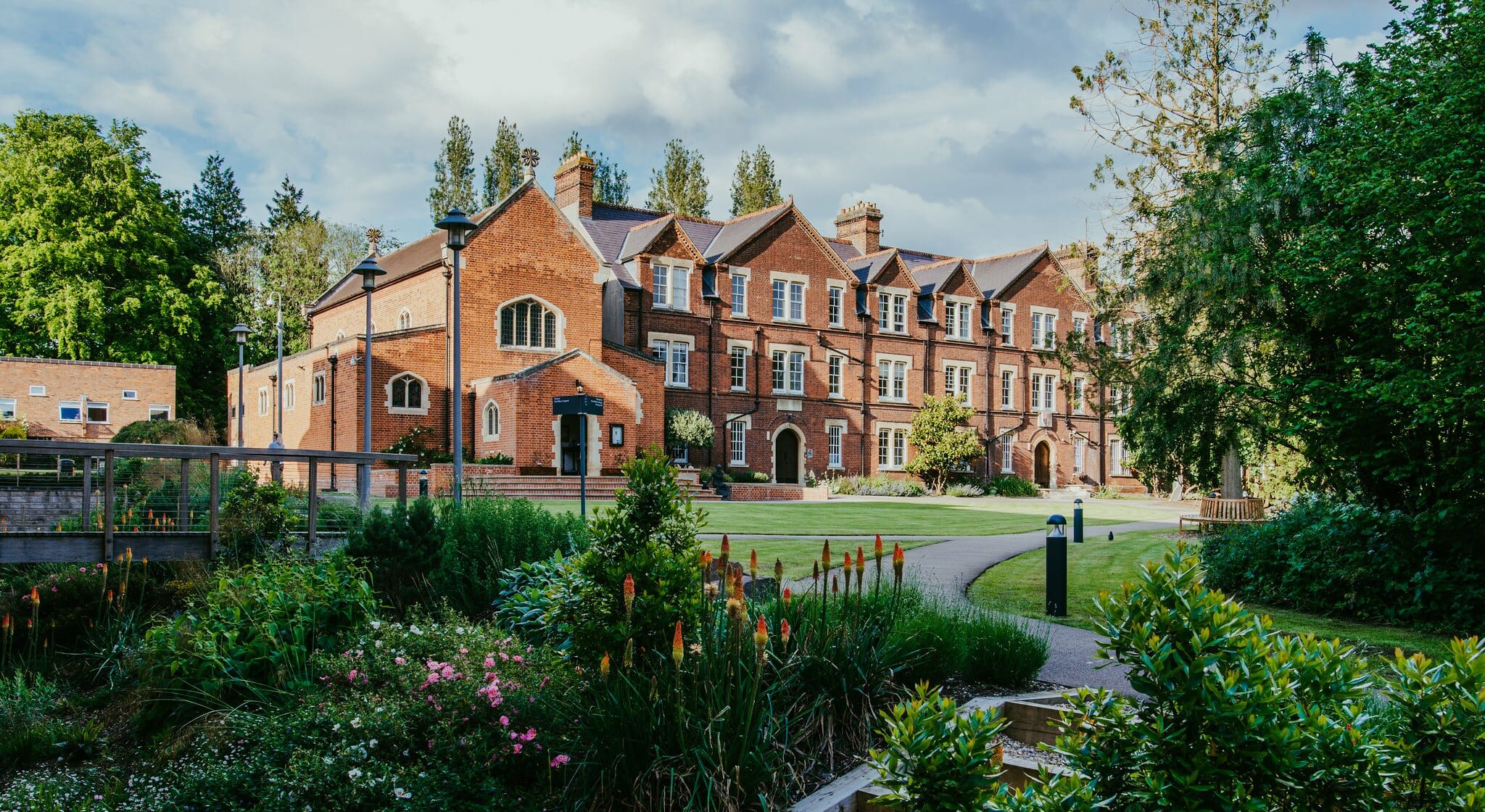
A large brick building with multiple chimneys and dormer windows sits surrounded by lush green gardens, where flowering plants bloom under a partly cloudy sky. A curved path leads to the entrance, ready for the Master's welcome.

Bernadette O’Flynn

Emerita Fellow

Bernadette O’Flynn

Emerita Fellow
Emerita Fellow

Bernadette O'Flynn was Head of Personnel for the assistant staff in the University of Cambridge from 1992 - 1999, having joined the University in 1972 as Industrial Relations Officer. From 1999-2005 she worked for the British Council, as Personnel Director for Spain.

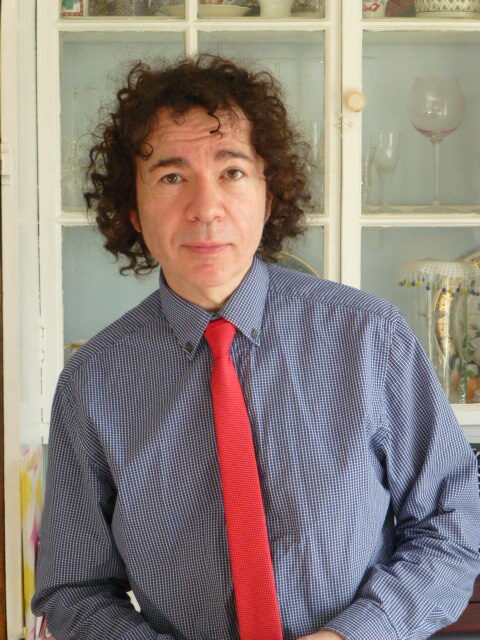
Professor Peter J O’Donnell, a man with curly dark hair wearing a blue checked shirt and bright red tie, stands indoors before a glass-fronted cupboard filled with glassware and decorative items.

Professor Peter J O’Donnell

Finance Tutor, Fellow

Professor Peter J O’Donnell

Finance Tutor, Fellow
Affiliated Lecturer at the Department of Applied Mathematics and Theoretical Physics, Director of Studies in Mathematics, Tutor, Financial Tutor

Peter O’Donnell is an Affiliated Lecturer in the Department of Applied Mathematics and Theoretical Physics, a member of the Relativity and Gravitation research group and a Fellow of the Institute of Mathematics and its Applications. His current research interests are:

Lanczos potential theory. The Weyl tensor can be generated differentially by a three index tensor: the Lanczos tensor, which was derived from a Lagrangian that was initially constructed to analyse the self-dual part of the Riemann tensor. An ongoing study is being carried out to investigate the mathematical and physical properties of the Lanczos tensor. In generating the Weyl tensor the Lanczos tensor acts as a potential – analogous to the electric tensor in electromagnetic theory.

Twistor theory applied to Lanczos potential theory. The purpose of this research is to utilise the techniques of twistor theory in order to carry out a qualitative and quantitative analysis of the Lanczos potential, which appears to have some connection with local twistor transport.

Amongst his publications, Peter is the author of two books:

Introduction to 2-Spinors in General Relativity (World Scientific, 2003)

Essential Dynamics & Relativity (CRC Press, 2014).

He is a Tutor and Director of Studies at St Edmund’s for Mathematics.

A man with a beard and tied-back hair, wearing a blue and red checked shirt and light shorts, stands smiling with arms crossed in a stone corridor with arched ceilings.

Dr Jonathan Padley

Bye-Fellow, Director of Studies

Dr Jonathan Padley

Bye-Fellow, Director of Studies
  • Director of Studies: Education

Jonathan Padley is a specialist in English children’s literature from the eighteenth century to the present day. His work explores margins, particularly the marginalisation of authors, texts, and characters. His PhD argued that the child protagonists of children’s literature can be understood, etymologically and theoretically, as monsters. He serves on the Editorial Board of Children’s Literature in Education.

As well as children’s literature, Jonathan is interested in interdisciplinary dialogues between literature, media, music, science, and theology. He has published broadly, including on transgressive creation in Shelley’s Frankenstein, bibliographical anomaly in Tennyson’s English Idyls, and Christological imaging in Tolkien’s Middle-earth mythos.

Jonathan is a Bye-Fellow and Director of Studies in Education at St Edmund’s College. He is also a Fellow, Tutor, and the Tutor for Undergraduate Admissions at St John’s College; a Bye-Fellow and Director of Studies in Education at Lucy Cavendish College; an Affiliated Lecturer at Cambridge’s Faculty of Education; and an Honorary Member of the Faculty of English. He teaches and examines undergraduates and postgraduates in English children’s literature.

Alongside academic work, Jonathan is committed to widening participation in higher education. From 2013 to 2015, he was seconded to Welsh Government to co-lead the research and policy implementation which gave rise to Seren, in which he remains keenly interested.

Before Jonathan came into post at St John’s in 2025, he worked for fourteen years at Churchill College, Cambridge, first as an outreach practitioner, then as a Fellow and the College’s Lead Admissions Tutor. Prior to moving to Cambridge, Jonathan was variously an Honorary Research Associate of the Department of English Language and Literature at Swansea University, and a Lecturer and Tutor at Gorseinon College and Coleg Sir Gâr.

An elderly woman holding a cup of tea sits next to an elderly man with a walking stick in a striped armchair. Dr Tony Palmer stands in the background near a counter with coffee machines and cups.

Dr Tony Palmer

Emeritus Fellow

Dr Tony Palmer

Emeritus Fellow

Dr Palmer was an Assistant Director of Research at the Veterinary School responsible for clinical neurology and neuropathology. His research concerned the neuropathology of nervous diseases of animals and a special interest in the neuropathology of decompression sickness.

Dr Palmer raised grants for the building of a unit of Comparative Neurology including the provision of three electron microscopes. His research was focussed on the relation of clinical signs to underlying neuropathology. He was the Senior Tutor at St Edmund's from 1974 - 1978.

Publications

  • Introduction to Animal Neurology. Blackwell Scientific Publications 1976

Awards and recognitions

  • President of the British Neuropathological Society
Dr Vibhuti Patel, with straight, shoulder-length black hair and brown skin, is smiling slightly in a white top. The blurred background features muted colours.

Dr Vibhuti Patel

Bye-Fellow

Dr Vibhuti Patel

Bye-Fellow

Dr Vibhuti Patel is Head of Development, Southeast Asia and Australasia in the University of Cambridge Development and Alumni Relations office, building philanthropic partnerships for the Collegiate University in those regions. She previously worked at the University Research Office, where she looked after industry partnerships and research impact for the School of the Biological Sciences.

Prior to joining the University of Cambridge, Vibhuti worked in various roles across publishing, strategic partnerships and international development for the Royal Society of Chemistry.She has a background in biochemistry, completing her B.Sc. and Ph.D. at the University of Warwick. As part of and alongside her career roles, Vibhuti has provided training on knowledge exchange and research impact and consulted on research impact for the European Commission and for funding agencies in Chile.

Suzanne Paul

Dr Suzanne Paul

Tutor, Fellow, Fellow Archivist and Librarian

Dr Suzanne Paul

Tutor, Fellow, Fellow Archivist and Librarian

Dr Suzanne Paul is the Keeper of Rare Books and Early Manuscripts at Cambridge University Library. She is a Tutor, Fellow Librarian and Fellow Archivist.

Suzanne obtained an MA in Classics and Medieval History from the University of Edinburgh, followed by an MA and PhD in Medieval Studies from the University of Leeds. A medieval manuscript scholar by training, she is particularly interested in the application of digital and scientific approaches to the study and curation of manuscripts.

She has collaborated on several large-scale manuscript digitisation and conservation projects, including the Polonsky Foundation Greek Manuscripts project. She currently a co-investigator on the Hidden in Plain Sight project, applying methods such as X-ray fluorescence, multispectral imaging and DNA analysis to the study of premodern books.

Lucy Peacock Headshot

Dr Lucy Peacock

Research Associate

Dr Lucy Peacock

Research Associate
My research focuses on the relationships between religious diversity, education, and social cohesion. I explore how schools, universities and local communities can better navigate religious diversity, fostering respect and understanding across diverse religious and non-religious perspectives.

Dr Peacock's publications have contributed to understanding how education plays a role in creating inclusive societies, where diversity is seen as an asset rather than a challenge. Her research outputs have also influenced social practice and policy around religious inclusion and diversity.

Publications

  • Peacock, L. and Guest, M. (2024) 'Worldviews, Religious Literacy and Interfaith Readiness: Bridging the Gap Between School and University'. Coventry University and Durham University
  • Aune, K., Peacock, L., Guest, M. and Law, J. (2023) University Chaplaincy as Relational Presence: Navigating Understandings of Good and Effective Chaplaincy in UK Universities, Journal of College and Character 24(3), 197-216
  • Peacock, L., Guest, M., Aune, K., Rockenbach, A. N., Staples, B. A. and Mayhew, M. J. (2023) 'Building Student Relationships Across Religion and Worldview Difference'. Coventry University, Durham University, North Carolina State University and The Ohio State University
  • Peacock, L. (2021) 'Contact-based Interfaith Programmes in Schools and the Changing Religious Education Landscape: Negotiating a Worldviews Curriculum'. Journal of Beliefs & Values 44(1),1-15
  • Peacock, L. (2021) 'Building Closer Communities: An Evaluation Report'. Coventry University


Alexander Peattie, a man with curly hair and a beard, wearing a suit jacket and name badge, stands smiling in front of a large scientific research poster at a conference. He is holding papers and has a shoulder bag.

Dr Alexander Peattie

Post Doctoral Research Associate

Dr Alexander Peattie

Post Doctoral Research Associate

Dr Alexander Peattie is a Research Associate in the Department of Clinical Neurosciences focussing on the role that neuroinflammation and peripheral inflammation play in the progression of Parkinson’s Disease (PD) and development of the related dementia (PDD). This work investigates relationships between neuropsychological differences, potential genetic risk factors, blood/CSF inflammatory markers, and PET/MRI neuropathological hallmarks alongside the potential anti-inflammatory treatments possibly employed to combat PD and PDD progression from a longitudinal perspective. This may have important implications for other neurodegenerative diseases and dementias.

Previously, Alexander doctoral work focussed on the neurocognitive sequalae of chronic Traumatic Brain Injury, whether certain treatments ameliorated symptoms, and how neuroimaging could be used to identify certain patients. Additionally, Alexander collaborated with others in investigating Disorders of Consciousness, neurofunctional correlates of anaesthesia, and effects of psychopharmacological modulators.

Having done his PhD at Eddies, Alexander says he is "thrilled I can continue to contribute to a community close to my heart."

Andrea Peripoli, a man with short brown hair, glasses, and a beard, stands outside in front of a stone wall and white-framed window. Wearing a blue shirt and dark blazer, he smiles at the camera with plants and flowers beside him.

Dr Andrea Peripoli

Fellow, College Teaching Officer, Director of Studies

Dr Andrea Peripoli

Fellow, College Teaching Officer, Director of Studies
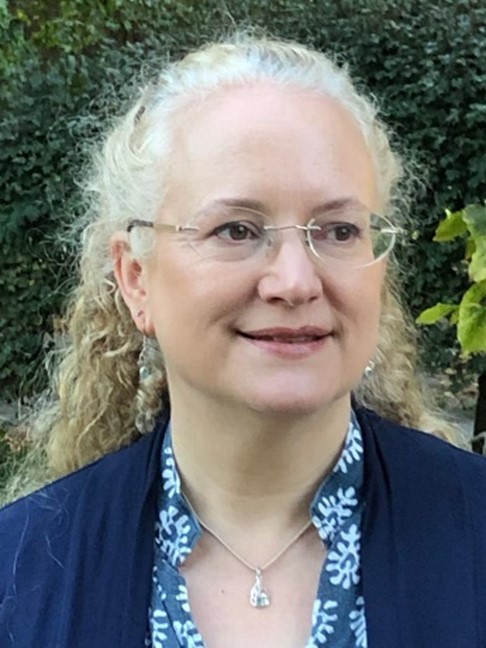
Andrea is a Fellow and College Teaching Officer in Law at St Edmund's.

Dr Peripoli studied Law at the University of Bologna, Cambridge, and at the European University Institute. Andrea's current research examines how legal discourse represents complex socio-economic realities. His work incorporates insights from cognitive sciences, game theory, and economic sociology to investigate how law (mis)understands the social world. Prior to his current role, Andrea taught EU law, Roman law, labour law, and law and economics at LSE and Cambridge.

Professor Sarah Perrett OBE, with curly blonde hair and glasses, is smiling slightly outdoors. She wears a blue patterned top, a navy cardigan, and a pendant necklace, with green foliage visible in the background.

Professor Sarah Perrett OBE

Fellow Commoner
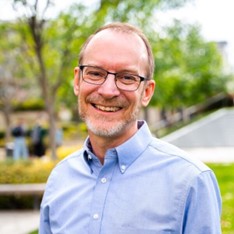
Professor Sarah Perrett OBE

Fellow Commoner

Professor Sarah Perrett  is Associate Director of The Faraday Institute, which she joined in 2020, when she was elected to Senior Membership of St Edmund’s College. She is also a Visiting Professor at the Institute of Biophysics, Chinese Academy of Sciences, where she has led a research group since 2003 and she continues to divide her time between Beijing and Cambridge. Sarah studied Natural Sciences (Chemistry) followed by a PhD in Protein Chemistry at the University of Cambridge. She then held a Research Fellowship at Sidney Sussex College, Cambridge before moving to Beijing in 2000. She was awarded an OBE for services to UK/China relations in the scientific field in the 2015 Queen’s New Year Honours List.

Sarah is Editor-in-Chief of Essays in Biochemistry (Portland Press). Her research interests include mechanisms of protein folding and amyloid formation. She has published over 100 research articles and has edited three books.

The Revd Dr Greg Peters, a smiling man with glasses and a beard, wearing a light blue button-up shirt, stands outdoors with green trees and blurred people in the background.

Rev Dr Greg Peters

Research Associate

Rev Dr Greg Peters

Research Associate

My research is on the history and theology of Christian monasticism, mainly how monastic theology is a unique theological methodology. I also research the history of monasticism and spirituality in the Anglican tradition. I actively contribute to academic, professional, and ecclesial communities.

Rev Dr Peters is Professor of Medieval and Spiritual Theology in the Torrey Honors College at Biola University, USA. He is also the Servants of Christ Research Professor of Monastic Studies and Ascetical Theology at Nashotah House Theological Seminary, USA. He is the author of "Reforming the Monastery: Protestant Theologies of the Religious Life," "The Monkhood of All Believers: The Monastic Foundation of Christian Spirituality," and "Peter of Damascus: Byzantine Monk and Spiritual Theologian," among other works. He serves on the Executive Committee of the Society of Anglican Theologians, the Executive Board of the American Benedictine Academy and is a board member of Anglican House Publishers. Professor Peters’ interest in Christian monasticism led him to pursue a Dottorato in Studi Monastici from the Pontificio Ateneo di Sant’Anselmo in Rome, the first non-monastic to earn the degree.

Though an expert on Christian monasticism, Professor Peters has also been involved in researching and writing on Anglicanism, including Edward Pusey’s support of the re-establishment of monasticism in the nineteenth-century Church of England and Anglican spirituality. To that end he has published "Anglican Spirituality: An Introduction" and several articles on Anglican monasticism. His interest in Anglicanism grew out of his appointment as Vicar of the Anglican Church of the Epiphany, La Mirada, USA.

Professor Peters is a Consulting Editor for the Journal of Spiritual Formation and Soul Care, is on the Editorial Board of Magistra: A Journal of Women’s Spirituality in History and is a regular reviewer for the American Benedictine Review. In addition to his appointment at St Edmund’s College, he is a Visiting Scholar at Wycliffe Hall, University of Oxford.

Academic Profile

Publications

  • Greg Peters, Anglican Spirituality, 2024, Cascade Books
  • Greg Peters, The Monkhood of All Believers: The Monastic Foundation of Christian Spirituality, 2018, Baker Academic
  • Greg Peters, Peter of Damascus: Byzantine Monk and Spiritual Theologian, 2011, Pontifical Institute of Mediaeval Studies
  • Greg Peters, “The ‘Reanimation Principle’ of Edward Bouverie Pusey: The Re-Establishment of Monasticism in the Church of England,” 2025, Anglican and Episcopal History


Elizabeth Phillips Headshot

Dr Elizabeth Phillips

Research Associate
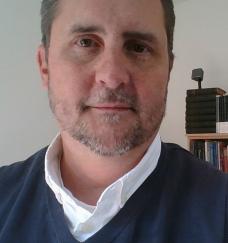
Dr Elizabeth Phillips

Research Associate

I lecture and publish in the areas of Christian moral and political theologies, interfaith relations, and conflict transformation. I have oversight of the Woolf Institute's teaching in the Cambridge Theological Federation as well as the Institute's public engagement programmes.

Dr Phillips has been at the Woolf Institute since 2022. Previously she was Lecturer in Christian Ethics and Director of Studies at Westcott House, as well as Research Fellow with the Margaret Beaufort Institute of Theology. She was a Visiting Scholar with the Institute for Criminology 2018-2019 and from 2016-2019 she co-convened and ethnographically researched a course on 'The Good Life and the Good Society' inside a high security prison. At Margaret Beaufort she completed Flourishing Inside, a project researching the intersections of Catholic social thought and prison chaplaincy. She is a Senior Fellow of the Higher Education Academy.

Academic Profile

Publications

  • Elizabeth Phillips, Apocalyptic Theopolitics: Essays and Sermons on Eschatology, Ethics, and Politics (Cascade, 2022).
  • Elizabeth Phillips, Anna Rowlands and Amy Daughton (eds), T&T Clark Reader in Political Theology ( T&T Clark, 2021).
  • Craig Hovey and Elizabeth Phillips (eds), The Cambridge Companion to Political Theology (Cambridge University Press, 2015).
  • Elizabeth Phillips, Political Theology: A Guide for the Perplexed (Continuum, 2012).
  • Elizabeth Phillips and Ferdia Stone-Davis (eds), Catholic Social Thought and Prison Ministry (2024).
Dr Jeff Phillips, a man with short hair and a trimmed beard, is wearing a white collared shirt and a dark jumper indoors, with a bookcase in the background.

Dr Jeff Phillips

Tutor, Director of Studies, Fellow

Dr Jeff Phillips

Tutor, Director of Studies, Fellow

Jeff Phillips holds a number of degrees across a range of disciplines, and his work in philosophy draws from analytic, continental, classical and medieval philosophy and reflects his interests in politics, science, philosophy of language, and theology. His PhD (Jesus College, Cambridge & Faculty of Divinity) in philosophy and theology of language, had particular reference to the works of Ludwig Wittgenstein and Thomas Aquinas. He has teaching experience across a range of subjects in the Divinity and Philosophy Faculties. One of the major themes in his current research concerns political theory, and reimagining contemporary politics. He is a member of the Faculty of Philosophy.

Helena Philips Robins

Dr Helena Phillips-Robins

Research Associate

Dr Helena Phillips-Robins

Research Associate

Helena Phillips-Robins specialises in premodern Italian literature and culture, with particular interests in Dante, women’s writing and history, theology and religious practices, music, and visual cultures. She is the author of 'Liturgical Song and Practice in Dante's Commedia' (2021) and of scholarly articles on Renaissance visual art and devotional cultures, the writings of Clare of Assisi, verse hagiography, and the history of emotions. Her current book project, Devotional Imagination and Women’s Experience: Italy, c. 1200–1550 examines intersections between literary and devotional cultures in premodern Italy, with a focus on hagiographical texts by or about women. Other current projects include a co-edited volume, with Lachlan Hughes, Literary Devotions in Late Medieval and Early Modern Italy, and a collaboration with Heather Webb, Clare of Assisi and her Affective Communities, c. 1200–1600.

Mr Graham Philpott, a man with short grey hair, a beard, and glasses, is standing in front of a wooden double door. He is wearing a black polo shirt and smiling at the camera.

Mr Graham Philpott

Bye-Fellow

Mr Graham Philpott

Bye-Fellow

I’ve been a careers professional since 2008, joining the finance school at the University of Reading just as the financial crash hit and a recession started. Quite a baptism of fire. My role broadened over the next few years to initially the Business School, and then to the wider University. I joined Cambridge as Head of Careers in the Summer of 2024, and am now happily settled in Waterbeach.

Prior to this career I was a HR professional, covering a range of roles from HR Policy, Project, and Process to Graduate Recruitment and Development.

I had an academically undistinguished time at the University of Manchester in the early ‘90s, but I really enjoyed the Madchester scene! I’m originally from a small market town in Yorkshire, which has been instrumental to my outlook on life, and has led to a passion for social mobility.

Norfolk Building and Chapel

Dr Robert Phipps

Director of Studies

Dr Robert Phipps

Director of Studies

Dr Robert Phipps is Director of Studies in History of Art.

A woman with long blonde hair and light skin looks at the camera, wearing a light grey top. She is indoors with a neutral background. This is Dr Emma Poole.

Dr Emma Poole

Bye-Fellow, Director of Studies

Dr Emma Poole

Bye-Fellow, Director of Studies

Dr Poole obtained her PhD from Cambridge University, Department of Pathology, where she studied the protein-protein interactions of Influenza A virus polymerase. After a period of time at St George’s Hospital Medical School studying immune evasion mechanism of paramyxoviruses, she returned to Cambridge University. Dr Poole then worked in the Department of Medicine at Cambridge University where she worked on Human Cytomegalovirus. In the Department of Medicine she worked as a Senior Research Associate researching the molecular mechanisms of Human Cytomegalovirus latency. In 2023 she was appointed an Associate Professor at the University of Cambridge, Department of Pathology, where she continues to study Human Cytomegalovirus latency with a view to the development of novel therapeutics.

A large brick building with multiple chimneys and dormer windows sits surrounded by lush green gardens, where flowering plants bloom under a partly cloudy sky. A curved path leads to the entrance, ready for the Master's welcome.

Mr Christopher Pratt

Fellow Commoner

Mr Christopher Pratt

Fellow Commoner
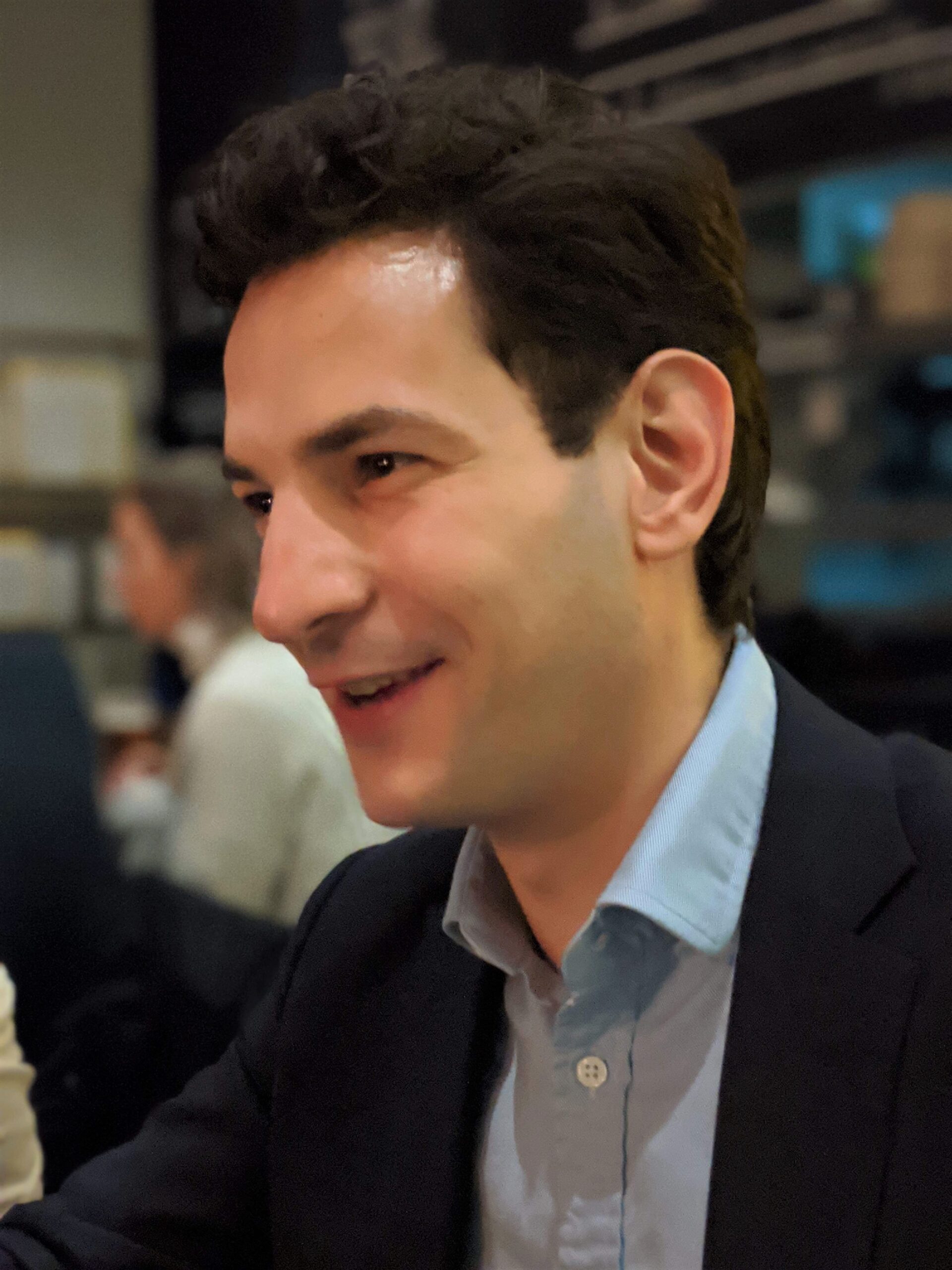
Former Acting Bursar at St Edmund's College.

Dr Matthew Psycharis, a man with short dark hair, wearing a light blue shirt and a dark blazer, is smiling whilst sitting indoors. The softly blurred background reveals other people and shelves.

Dr Matthew Psycharis

Fellow, Director of Studies

Dr Matthew Psycharis

Fellow, Director of Studies
  • Director of Studies: Law 

Matthew is a Fellow of St Edmund’s College and Director of Studies of Undergraduate Law.  He is a member of the Centre for Public Law, Cambridge.  He teaches constitutional law, and the law of trusts and equity, across a number of Cambridge colleges.  His research is in the field of constitutional law and constitutional theory.  His works on topics ranging from contemporary populism, constitutional change, referendums, and constitutional history, have been published in leading UK and Australian journals.

Matthew completed his PhD in law at Gonville & Caius College, Cambridge, supported by a WM Tapp Scholarship, on the topic of ‘Policy Referendums in the United Kingdom, New Zealand and Australia’.  In addition to his doctorate, Matthew holds a Bachelor of Arts and Juris Doctor from the University of Melbourne.  In 2015 he matriculated at St Edmund’s College, Cambridge, completing a Master of Laws.

Before Cambridge, Matthew was admitted to legal practice, and worked as an Associate at the Australian firm Allens-Linklaters, practising as a litigator.  He advised clients on a wide range of government investigations, business disputes, class actions, and cross-border disputes.  In a pro bono capacity, he instructed in constitutional proceedings concerning democratic rights, and advised peak human rights bodies on issues concerning offshore refugee detention and the drafting of anti-discrimination legislation.  Taking time out of practice, Matthew spent a year working as the Senior Judicial Assistant to a Judge of the Supreme Court of Victoria (Australia).  Before coming to the law, Matthew trained as an economist and worked, in 2012, as a policy analyst at the Department of Treasury and Finance (Australia).

His Law Faculty page, including a list of publications and research projects, is available here:  https://www.law.cam.ac.uk/people/academic/mj-psycharis/78801

Follow us

Stay up to date with our rich college life here at St Edmund's through our social media channels.