
HomeAboutOur People

Our people

Filter staff:
Norfolk Building and Chapel

Professor Sir Martin Evans FRS

Honorary Fellow

Professor Sir Martin Evans FRS

Honorary Fellow
Norfolk Building and Chapel

Dr Stuart Eves

Director of Studies

Dr Stuart Eves

Director of Studies
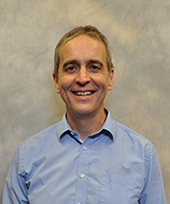
Stuart is Director of Studies in Veterinary Medicine (pre-clinical)

Dr William Farr, a man with short, light brown hair, is smiling at the camera. He is wearing a light blue collared shirt and standing in front of a neutral, mottled background.

Dr William Farr

Fellow

Dr William Farr

Fellow

I am a UTO Assistant Professor in the Faculty of Education. 

William initially worked as a primary school teacher after a degree from Sussex and UC Berkeley. Additionally, William works on the Primary PGCE and teaches on the UG Education Tripos, and has Masters and PhD students. In research, he collaborates across the University, Education and Healthcare sectors in various Chief Investigator or Co-applicant roles, mainly on the topic of assessment and diagnostic pathways for children with possible autism, or other neurodivergent conditions.

Professor Eilís Ferran, with short, straight blonde hair, smiles at the camera. She is wearing a black polo neck and a patterned blazer against a plain, light grey background.

Professor Eilís Ferran

Fellow

Professor Eilís Ferran

Fellow
Professor Eilís Ferran is a Fellow at St Edmund's College and a Professor of Company and Securities Law at the University of Cambridge.

She is also the Provost of the Gates-Cambridge Trust, which provides scholarships for postgraduate study at Cambridge funded by a major donation from the Gates Foundation. She has written extensively on UK, EU and international financial regulation, company law and corporate finance law.  Her publications include Principles of Corporate Finance Law (OUP, 3rd edn, 2023, co-authored), Brexit and Financial Services (Hart Publishing, 2017 co-authored), The Oxford Handbook of Financial Regulation (OUP, 2015, co-edited) and The Regulatory Aftermath of the Global Financial Crisis (CUP 2012, co-authored).  She is a Fellow of the British Academy and an Honorary Bencher of Middle Temple.  She is an independent director of a number of profit and not-for-profit companies, and of a charitable foundation.

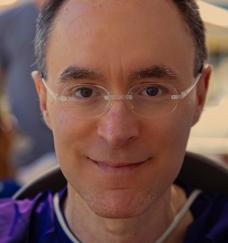
Dr David Friedman, a man with short dark hair and glasses, smiles softly at the camera. He is wearing a purple shirt and is photographed in a well-lit, possibly outdoor setting.

Dr David Friedman

Bye-Fellow, Director of Studies

Dr David Friedman

Bye-Fellow, Director of Studies
  • Director of Studies in Classics at St Edmund's
  • Affiliated Researcher in the Faculty of Classics.

Dr Friedman studies Judaism in the Greco-Roman world, with a particular focus on Josephus and ancient historiography. After receiving a BA in Mathematics (Yale) and working first at a physics lab and for many years in derivatives trading, he returned to university to earn an MA (UCL), MPhil (Oxford), and DPhil (Oxford), which explored how Josephus presented the origins of the Jews to his Roman audience. David is a Bye Fellow of Darwin College, a Bye Fellow and Director of Studies in Classics at St  Edmund's and an affiliated researcher in the Faculty of Classics.

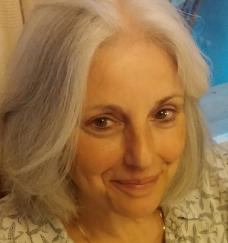
Dr Anna Gannon, a woman with shoulder-length grey hair and light skin, smiles gently at the camera. She is wearing a patterned top and is indoors, with a soft background.

Dr Anna Gannon MA PhD Cantab FSA FHEA

Emerita Fellow

Dr Anna Gannon MA PhD Cantab FSA FHEA

Emerita Fellow

Dr Anna Gannon is an Emerita Fellow of St Edmund's College.

She specialises in early medieval Insular Art. She is part of an international group working on early Irish reliquaries found in Italy, and co-edits a Medieval studies Festschrift. Current research focuses on the exegesis of evoked sacred landscapes, religious approaches to nature in the Insular world.

Her first degree was in Italy: she studied Modern Languages and specialised in German Philology at the Catholic University of Milan, where she was teaching as an ‘Assistente Ministeriale’ for four years. She subsequently read History of Art at the University of Cambridge, with a PhD on the iconography of Early Anglo-Saxon coinage, published as a monograph by Oxford University Press in 2003. She worked on coin-related projects at the Fitzwilliam Museum and then at the British Museum as a Curator in the Department of Coins and Medals and supporting the Portable Antiquities Scheme, identifying and recording ‘treasure’.

Dr Gannon began attending St Edmund’s Chapel as a student, c. 1995, but her academic connection with the College began in 2001, first as a Director of Studies, then as a Senior Member, and eventually she was elected Fellow in 2006. Her roles at St Edmund’s (as DoS (for 25 years), Tutor, Keeper of Art and serving on several other committees) were combined with and complementary to her other activities for the University. In addition to research and publications on Anglo-Saxon numismatics and art, and an academic role as affiliated lecturer in Early Medieval Art at my Department, she was single-handedly in charge of the professional development of all newly-appointed lecturers on probation across the University – something that could be described as a 'pastoral role’, but which made a huge difference orienteering many new-comers. She retired in 2019.

Her current research interests and publications deal with Insular art and culture, particularly in responses to Christianity. She is part of the international Research Project ‘Insular reliquaries in Italy: in the footsteps of Columbanus’ and is editing a collection of early medieval papers. Her interests have moved towards Theology and ecotheology: she is a regular contributor to the Visual Commentary on Scripture and is exploring the exegesis of imagined sacred landscapes through the sense of smell.

She is a committed Benedictine Oblate and attends Mass at St Edmund’s Chapel regularly. She is happy to report that she was the one behind the project of the new entrance to the Chapel, with the access ramp and the bench for St Edmund’s.

Selected publications:

  • The Iconography of Early Anglo-Saxon Coinage (6th-8th centuries), Oxford University Press 2003.
  • Sylloge of Coins of the British Isles, 63. British Museum.  Anglo-Saxon Coins. Part i. Early Anglo-Saxon Coins and Continental Silver Coins of the North Sea, c.600-760, British Museum Publications, 2013.
  • ‘The Coins of the Irish Free State, 1928: are animals good to think with?’ in Le Molte Facce di una Moneta: Saggi in Onore di Lucia Travaini, M. Baldasssari, B. Cook and S. Locatelli eds, Milano University Press, 2025, 109-26.
  • ‘Insular numismatics: the relationship between ancient British and early Anglo-Saxon coins ‘, in Barbaric Splendor: the use of image in Europe before and after Rome, T.F. Martin and W.A. Morrison eds. Archeopress Publishing 2020, 121-139.
  • ‘Guarding the Sacred: early Anglo-Saxon cylindrical containers’ Atti del convegno ’Custodire il Sacro’, Vercelli, 11-12 Gennaio 2021, "Temporis Signa. Archeologia della tarda antichità e del medioevo", Fondazione Centro italiano di Studi sull'Alto Medioevo di Spoleto, number XVI 2021, 213-233.
  • ‘Art in the round: tradition and creativity in early Anglo-Saxon coinage’, in Money and Coinage in the Middle Ages, R. Naismith ed., Brill, 2019, 289-321

Contributions to the Visual Commentary on Scripture (VCS), Ben Quash ed., King’s College, London:


Dr Philip Gardner, a middle-aged man with light skin, short grey hair, and wearing a dark suit, white shirt, and patterned tie, smiles warmly in front of a plain grey background.

Dr Philip Gardner

Life Fellow

Dr Philip Gardner

Life Fellow
Senior Lecturer in the Faculty of Education

Dr Philip Gardner was elected to the Fellowship of St Edmund’s in 1993.  Following a ten-year teaching career in West Country comprehensive schools, he was appointed to a Lectureship at the Faculty of Education in 1990 and latterly to a Senior Lectureship, specialising in the History of Education. He took his first and second degrees at the University of East Anglia, followed by a doctorate at the University of Sussex. His early research work focused on currents of informal working-class education in the nineteenth century and was the foundation for his prize-winning first book, The Lost Elementary Schools of Victorian England. His subsequent research interests, on which he has written extensively, include the history of the teaching profession, education and the British Empire in the early twentieth century, oral history, history and memory, and hermeneutical aspects of historical methodology. He was elected a Fellow of the Royal Historical Society in 2010.

Within College Philip has undertaken a number of roles over the years, successively serving as Tutor, Director of Studies in History, Director of Studies in Education and, from 2008 to 2015, Secretary of the Governing Body. Between 1994 and 2018 he also served as College Archivist and latterly Fellow Archivist.

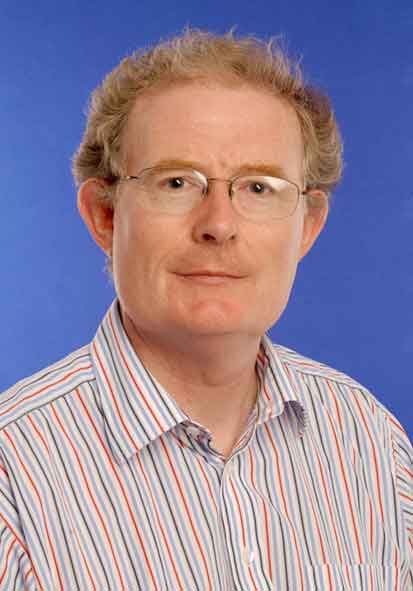
Black and white portrait of Dr Yves Gaspar, a person with wavy, medium-length hair, wearing round glasses and a neutral expression, looking directly at the camera.

Dr Yves Gaspar

Visiting Scholar

Dr Yves Gaspar

Visiting Scholar
Dr Yves Gaspar obtained in 2002 his PhD at the University of Cambridge (UK) with a thesis in the field of mathematical cosmology (supervisor Prof John D. Barrow) on the late-time behaviour of general solutions to the Einstein Field Equations.

He has been lecturer in cosmology and astrophysics at the Department of Mathematics and Physics of the Catholic University of the Sacred Heart in Brescia (Italy), where he also lectures on the complexity of natural systems for the Master courses of the Postgraduate School for Environmental Studies.

He is currently Visiting Scholar at St Edmund’s College of the University of Cambridge where he carries out research on randomness, uncomputability/philosophy and theology.

Publications

  • “The laws of nature and the problems of modern cosmology”, Foundations of Science, Springer Nature, https://doi.org/10.1007/s10699-023-09904-1, arxiv.org/abs/2308.02338, co-authored with Prof. Pawel Tambor, 2023
  • "The problems of modern cosmology, the fine tuning of constants and parameters, and the notion of time”, book chapter in Cosmology Research – addressing current problems with astrophysics, Intechopen, Eds. M. Smith and A. Oztas, 2025
Prof Hill Gaston Headshot

Professor Hill Gaston

Emeritus Fellow

Professor Hill Gaston

Emeritus Fellow

My research interests have been in the field of immunology as applied to an understanding of autoimmune and inflammatory diseases which I also managed as a clinical rheumatologist. My principal interest was in T lymphocyte responses to a variety of pathogens associated with some forms of arthritis.

Prof. Gaston read medicine at Oxford, trained in general medicine in London and Bristol, and started research in Bristol, as a CRC Fellow, on T cell responses to Epstein-Barr virus. He continued postdoctoral training at Stanford as an MRC travelling fellow, working on total lymph node irradiation as a treatment for RA, and began studies on synovial biopsies and cloning of lesional T lymphocytes. In 1985 he was invited to Birmingham by Paul Bacon, where he became a Wellcome Trust Senior Clinical Fellow and honorary consultant, continuing work on synovial T cell clones, particularly those recognizing bacterial antigens in reactive arthritis. He moved to Cambridge in 1995 as foundation professor of rheumatology, and has continued interests in immunological mechanisms in rheumatic disease, particularly spondyloarthritis and the role of HLA-B27, and interactions between infection and the immune system. Recent research in his lab has investigated the IL-23-IL-17 axis in inflammatory arthritis, and the transcriptional control of IL-23 secretion, having recently reported the influence of intracellular stress responses on IL-23 production. Such responses can be initiated by protein mis-folding (as seen with HLA-B27) or intracellular infection (e.g. by chlamydia).

He established a spondyloarthritis clinic, and was involved in clinical research as clinical director of the West Anglia comprehensive local research network. cHe haired the Arthritis Research UK’s clinical studies group in spondyloarthritis.

Prof Gaston is married to a G.P, has two grown-up children and a grandson; interests include music, science and faith issues (through Cambridge Faraday Institute), reading and travel.

Rev Dr Luigi Gioia Headshot

Rev Dr Luigi Gioia

Visiting Scholar

Rev Dr Luigi Gioia

Visiting Scholar
The Rev Dr Luigi Gioia is the Theologian in Residence at Saint Thomas Church Fifth Avenue in New York City and a Visiting Scholar at the Von Hügel Institute at the University of Cambridge (UK).

A scholar of systematic theology, he focuses particularly on the Trinity, ecclesiology, and the relationship between theology and spirituality. Working at the crossroads of academy and church, he speaks and writes for both academic and general audiences, seeking to make rigorous theological reflection accessible and pastorally grounded. He is the author of The Theological Epistemology of Augustine’s De Trinitate (OUP, 2016, with a foreword by Rowan Williams), Say It to God: In Search of Prayer, the Archbishop of Canterbury’s Lent Book 2018 (Bloomsbury, 2017), and Saint Benedict's Wisdom: Monastic Spirituality and the Life of the Church (Liturgical Press, 2020). His award-winning books have been translated into six languages.


Academic Profile

Publications 

  • Luigi Gioia, The Theological Epistemology of Augustine’s De Trinitate, 2016, OUP: Oxford. Paperback edition with a foreword by Rowan Williams.
  • Luigi Gioia, “The Threat of Death As a Test for Theological Authenticity”, 2017, in The Practice of the Presence of God: Theology As a Way of Life, Ed. Martin Laird and Sheelah Treflé Hidden, Routledge: New York, 120-9.
  • Luigi Gioia, St Benedict’s Wisdom. Monastic Spirituality and the Life of the Church, 2020, Liturgical Press: Collegeville (MN, USA), and Canterbury Press (UK)
  • Luigi Gioia, “St Benedict’s Rule as the Antidote to Regulatory Inflation”, 2021, Reviews in Religion & Theology, 28:1, 4-9.
  • Luigi Gioia, “Prayer in the Secular City”, 2024, Concilium 4, 41-50

Awards and recognitions 

  • The book Say It To God. In Search of Prayer (Bloomsbury, 2017) was chosen as the Archbishop of Canterbury Lent Book 2018.
  • The book St Benedict’s Wisdom. Monastic Spirituality and the Life of the Church (Liturgical Press, 2020) received the First Place in the category of Spirituality Award by the CMA (Catholic Media Association) in 2021.


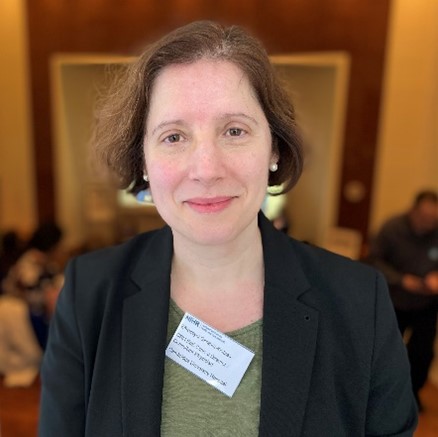
A woman with short brown hair, wearing a black blazer and green shirt, smiles softly at the camera. Dr Effrossyni Gkrania-Klotsas has a name badge on her blazer and stands in a warmly lit indoor setting with people in the blurred background.

Dr Effrossyni Gkrania-Klotsas

Bye-Fellow, Director of Studies

Dr Effrossyni Gkrania-Klotsas

Bye-Fellow, Director of Studies
Dr Gkrania-Klotsas' research focuses on the genetic causes of susceptibility to infections and the adult presentations of immune deficiency as well as the determinants of vaccine responses.

Effrossyni Gkrania-Klotsas is a Consultant in infectious diseases with an interest in primary and secondary immunodeficiencies and transplantation. She leads the Mendelian susceptibility to mycobacterial disease (MSMD) and other rare unexplained intracellular infections collaborative network. Effrossyni is also a Visiting Professor of University of Athens and University of Crete Medical Schools, Greece.

Academic Profile

Awards and recognitions

  • RCP London NIHR Consultant Research Award (shared with Prof A Comninos)/ RCP & NIHR, 2024
  • Honorary Fellow of the Royal College of Pathologists, UK, 2023
  • The Winston Churchill Memorial Foundation Award, 2019
  • Excellent Teaching Award, University of Cambridge Clinical School Students Society, 2016 & 2018
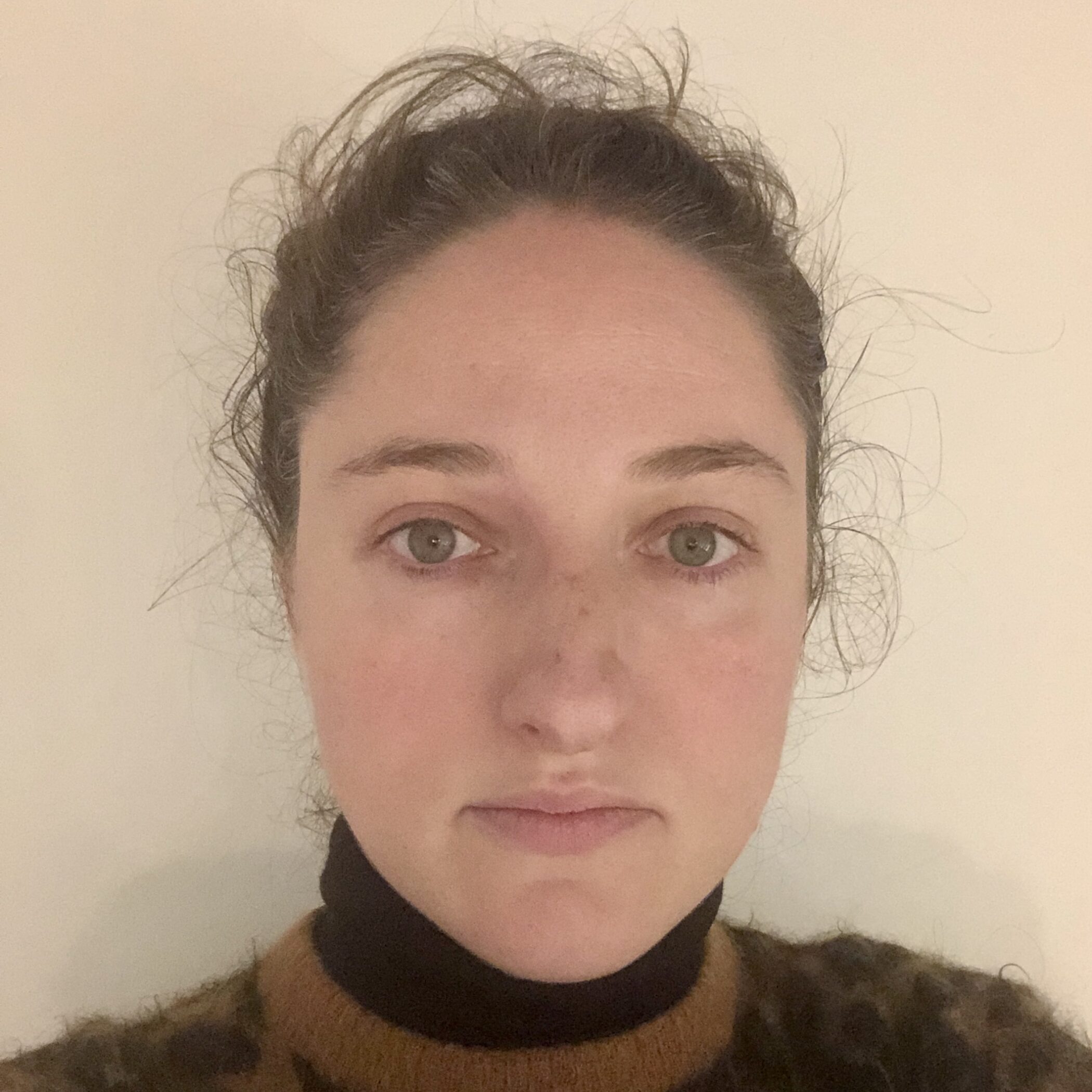
Miss Anastasia Glover, with light skin, wavy brown hair pulled back, and hazel eyes, looks directly at the camera with a neutral expression. She wears a brown and black jumper over a black polo neck against a pale background.

Miss Anastasia Glover

Bye-Fellow, Director of Studies

Miss Anastasia Glover

Bye-Fellow, Director of Studies
  • Director of Studies: Architecture

Anastasia is a British-Greek architect, tutor, soprano and linguist. She is a Design Fellow in the Architecture Faculty, teaching third year undergraduate students.

She is the director of Glover Architects, a London based studio that focuses on remodelling unusual historic properties for private clients, as well as new builds and commercial projects that embrace the elemental.  They work with local and salvaged materials, vernacular techniques, high attention to detail, layering of spaces and time’s inevitable patina. Completed projects include the remodelling of various London townhouses, a ruined 15th century castle, a rural meditation retreat in Ireland, and re-inhabitations of island ruins in Greece.

She also sings with Musarc, an avant-garde choir collective who perform all over Europe. She speaks five languages and previously worked as a Japanese and Chinese interpreter for the BBC, having lived in Tokyo, Beijing, Florida, Athens as well as a Zen Buddhist Monastery in France.

Norfolk Building and Chapel

Professor Neil T Gorman DL

Honorary Fellow

Professor Neil T Gorman DL

Honorary Fellow
Sr Gill Goulding, a woman with short brown hair and glasses, wearing a teal jumper, multicoloured scarf, and cross pin, sits against a dark background, smiling gently.

Sr Gill Goulding, CJ

Visiting Scholar

Sr Gill Goulding, CJ

Visiting Scholar

Sr Gill Goulding CJ is Professor Ordinaria of Systematic Theology at Regis College, the Jesuit Graduate School of Theology at the University of Toronto. She is currently a Bye-Fellow at St Edmund’s College and was appointed in 2021 as a member of the Theological Commission of the Secretariat of the Synod in Rome.

In Canada she was appointed by the Canadian Conference of Bishops to the Faith and Witness (Theological Commission) Commission of the Canadian Council of Churches. She is also the first theologian to have been appointed by the Bishops' Conference to the standing committee on Responsible Ministry.

Academic Profile

Prof Patrick Griffin

Professor Patrick Griffin

Bye-Fellow

Professor Patrick Griffin

Bye-Fellow

Professor Patrick Griffin is Bye-Fellow at St Edmund's College and a Madden-Hennebry Professor at the University of Notre Dame. He is an historian, trained as an early Americanist and specialising in the Atlantic world. His work ranges from the seventeenth to the nineteenth century. It brings together American, British, and Irish history.

Patrick Griffin's work explores the intersection of colonial and early national American and early modern Irish and British history. As such, it focuses on Atlantic-wide themes and dynamics. He has published work on the movement of peoples and cultures across the Atlantic Ocean, as well as the process of adaptation. He also examines the ways in which Ireland, Britain, and America were linked—and differed—during the seventeenth and eighteenth centuries. He has looked at revolution and rebellion, movement and migration, and colonization and violence in each society in comparative perspective. Much of what he does explores these themes in the context of empire. In his most recent books, he studied how empire gave way to revolution, both in America and the wider Atlantic. His latest work on the period just after the Age of Revolution has taken a global turn, charting the plight of common men and women in a modernizing world.

Publications

  • The Age of Atlantic Revolution: The Fall and Rise of a Connected World (Yale, 2023).
  • The Townshend Moment: The Making of Empire and Revolution in the Eighteenth Century (Yale, 2017).
  • America’s Revolution (Oxford, 2012).
  • American Leviathan: Empire, Nation, and Revolutionary Frontier (Hill & Wang, 2007).
  • The People with No Name: Ireland’s Ulster Scots, America’s Scots Irish (Princeton, 2001).

Awards & Recognitions

  • Harold Vyvyan Harmsworth Professor of American History, University of Oxford, 2021-22.
  • Honorary Professor, School of History, Classics, and Archaeology, University of Edinburgh, 2018-21.
  • Distinguished Fellow, Rothermere American Institute, University of Oxford
  • Honorary Member, Royal Irish Academy
  • Member, American Antiquarian Society
Dr Renan Gross Headshot

Dr Renan Gross

Post Doctoral Research Associate

Dr Renan Gross

Post Doctoral Research Associate

I study probability theory and geometry. My work often entails following random walks around and seeing what can be learned from their trajectories. I also study interactions between discrete and analytic problems, i.e. how discrete results carry over to and influence the continuous, and vice-versa.

Renan's research focuses on the intersection of probability, functional analysis, and discrete mathematics. In particular, he is interested in stochastic processes and their capacity to sample, distinguish between geometric structures, and prove and isoperimetric concentration inequalities. He is also interested in random geometric and combinatorial structures.

Academic Profile

Revd Dr Kevin Grove, a man with short light brown hair, is wearing a black clerical suit and white collar, posing in front of a plain grey background.

Revd Dr Kevin Grove

Visiting Scholar

Revd Dr Kevin Grove

Visiting Scholar

Revd Dr Kevin Grove is an Associate Professor of Theology at the University of Notre Dame.

Born and raised in Montana, USA, Kevin Grove was ordained a Holy Cross priest at Notre Dame in 2010. After doctoral studies at the University of Cambridge (Trinity College) and before joining the faculty at Notre Dame, Grove was a post-doctoral researcher at L’Institut Catholique in Paris, France and a fellow at the Notre Dame Institute for Advanced Study. In addition to his research and teaching, Grove serves at Notre Dame as an assistant faculty chaplain, Director of the Master of Divinity program, and as a pastoral resident for undergraduates in Dunne Hall.

Dr Sid Gumber

Dr Siddharth Gumber

Post Doctoral Research Associate

Dr Siddharth Gumber

Post Doctoral Research Associate

Dr Gumber is a ‘Mountain Climate Scientist’ at the British Antarctic Survey, in Cambridge. He is also a Senior Member of St Edmund’s College, Cambridge. His focus is on high-resolution regional climate modelling, with an emphasis on understanding the role and future of mountain glaciers as a water resource, particularly in the Himalayas and Alps.

Before moving to the UK, he earned undergraduate and doctoral degrees in Chemical and Mechanical Engineering (cloud microphysics) in India. His PhD led to advances in understanding the transformation of vehicle-mediated particles into cloud droplets over congested and heavily urbanised Indian cities. This involved a collaboration with the Indian Institute of Tropical Meteorology, Pune (Ministry of Earth Sciences, Government of India) under the aegis of the Cloud Aerosol Interaction and Precipitation Enhancement Experiment.

Outside research, he enjoys reading about the natural world and exploring ways to rethink our relationship with mountains and rivers as more than just landscapes.”

A smiling older man with short grey hair, wearing a navy blue jacket over a checked shirt, stands outdoors in front of a blurred background with a white canopy.

Professor Peter Guthrie OBE

Emeritus Fellow

Professor Peter Guthrie OBE

Emeritus Fellow

My research is focused on resilience of infrastructure, the assessment of large scale projects for sustainability, and energy efficiency and infection control in buildings.

Peter Guthrie was the first Professor in Engineering for Sustainable Development in the UK, taking up this post at the University of Cambridge in 2000. Prior to that he was in engineering consultancy for over 25 years. His research is focused on resilience of infrastructure, the assessment of large scale projects for sustainability, and energy efficiency and infection control in buildings. A civil engineer, Peter has worked in countries such as Nigeria, Malaysia, Lesotho, Sudan, Philippines, Ethiopia, and Botswana, and on major infrastructure projects such as London 2012, Channel Tunnel Rail Link (HS1), Conwy Tunnel, major airports, and building projects. He has recently led research consultancy for Lloyd’s Register Foundation (LRF). Peter was a Vice-President of the Royal Academy of Engineering (2020-2024), and is currently leading work on Pandemic Preparedness and on Infection Resilient Environments. Peter is founder and Vice-President of the charity RedR Engineers for Disaster Relief.

Academic Profile

Publications

  • MacAskill, Kristen, O’Hanlon, Francesca, Guthrie, Peter, Mian, Juliet, (2020). Fostering resilience-oriented thinking in engineering practice Proceedings of the Institution of Civil Engineers - Engineering Sustainability Volume 173 Issue 7, October pp. 356- 364 DOI: 10.1680/jensu.19.00049
  • George, Jennifer; Guthrie, Peter; Orr, John, (2022). "Re-Defining Shelter: Humanitarian Sheltering". July. Disasters Journal doi: 10.1111/disa.12555
  • Short, CA, Forman, T, MacAskill, KA, Soulti, E, Mutschler, R, Mohareb, E, Solanki, J, Britnell, J, Georgiadou, MC, Brady-Patel, B, Guthrie, P, (2020). NHS Estate: Energy Efficiency and Practice. Journal of Building Engineering. Submitted for review, May.
  • Zhou, W., Reiner, D., Moncaster, A., Guthrie, P., (2022) Modelling future trends of annual embodied energy of urban residential building stock in China. Energy Policy Vol 165, June doi.org/10.1016/j.enpol.2022.112932
  • Blom CM and Guthrie PM, 2019. Strategic intent .... Proc ICE – Engg Sustainability 172(4): 167–183

Awards & Recognitions

  • CBE 2024
  • FREng 1997
  • OBE1993

Follow us

Stay up to date with our rich college life here at St Edmund's through our social media channels.