
HomeAboutOur People

Our people

Filter staff:
Dr Dunya Habash, with long brown hair, wearing a white floral top, dark scarf, and glasses on her head, sits at a table smiling with her arms folded. Papers, a cup, and a phone are laid out in front of her.

Dr Dunya Habash

Post Doctoral Research Associate

Dr Dunya Habash

Post Doctoral Research Associate

Dunya Habash is a Postdoctoral Research Associate at the Faculty of Education, University of Cambridge.

Her interdisciplinary research explores the intersection of aesthetics, the arts, forced migration, integration, and education in post-conflict settings. She completed a PhD in Ethnomusicology at the University of Cambridge in 2023. Through a Woolf Institute Cambridge Scholarship and under the supervision of Dr Matthew Machin-Autenrieth, her ethnographic research with Syrian musicians and artists in Türkiye examined the effects of ‘integration’ on performance practices and cultural education among Syrian communities post-displacement. Before and during her PhD studies, Dunya worked as a Public Engagement Coordinator and Outreach Officer at the Woolf Institute. Through these roles she developed and disseminated an interfaith workshop programme based on the institute's Living in Harmony research project alongside a series of teacher resources for RE educators. She is also a Teaching Fellow at CRASSH’s Global History Lab and an affiliated researcher at the Woolf Institute. Her research has been supported by the British Forum for Ethnomusicology, the Royal Musical Association, the Music & Letters Trust, and the Cambridge Trust.

Kat Hageman

Ms Kat Hageman

Bye-Fellow

Ms Kat Hageman

Bye-Fellow

As Campaign Director for University Development and Alumni Relations, Kat provides strategic leadership for the planning and delivery of the next comprehensive campaign for collegiate Cambridge.

Prior to this, she worked for the NHS as Director for the Cambridge Children’s Hospital £100m capital campaign, working across multiple campaign and project partners as well as a dedicated Campaign Board.

Kat also spent six years at UCL as Executive Head of Campaign and Supporter Engagement, overseeing campaign projects and propositions, donor relations, communications and events throughout the £600m It’s All Academic Campaign.

Before entering the higher education sector, Kat held fundraising, engagement and governance roles at organisations including The Place2Be, The Royal Institution, the London Philharmonic Orchestra and Foundation for FutureLondon.

Norfolk Building and Chapel

Dr Susan Haines

Director of Studies

Dr Susan Haines

Director of Studies
Susan is Director of Studies in Natural Sciences (Physical Sciences)

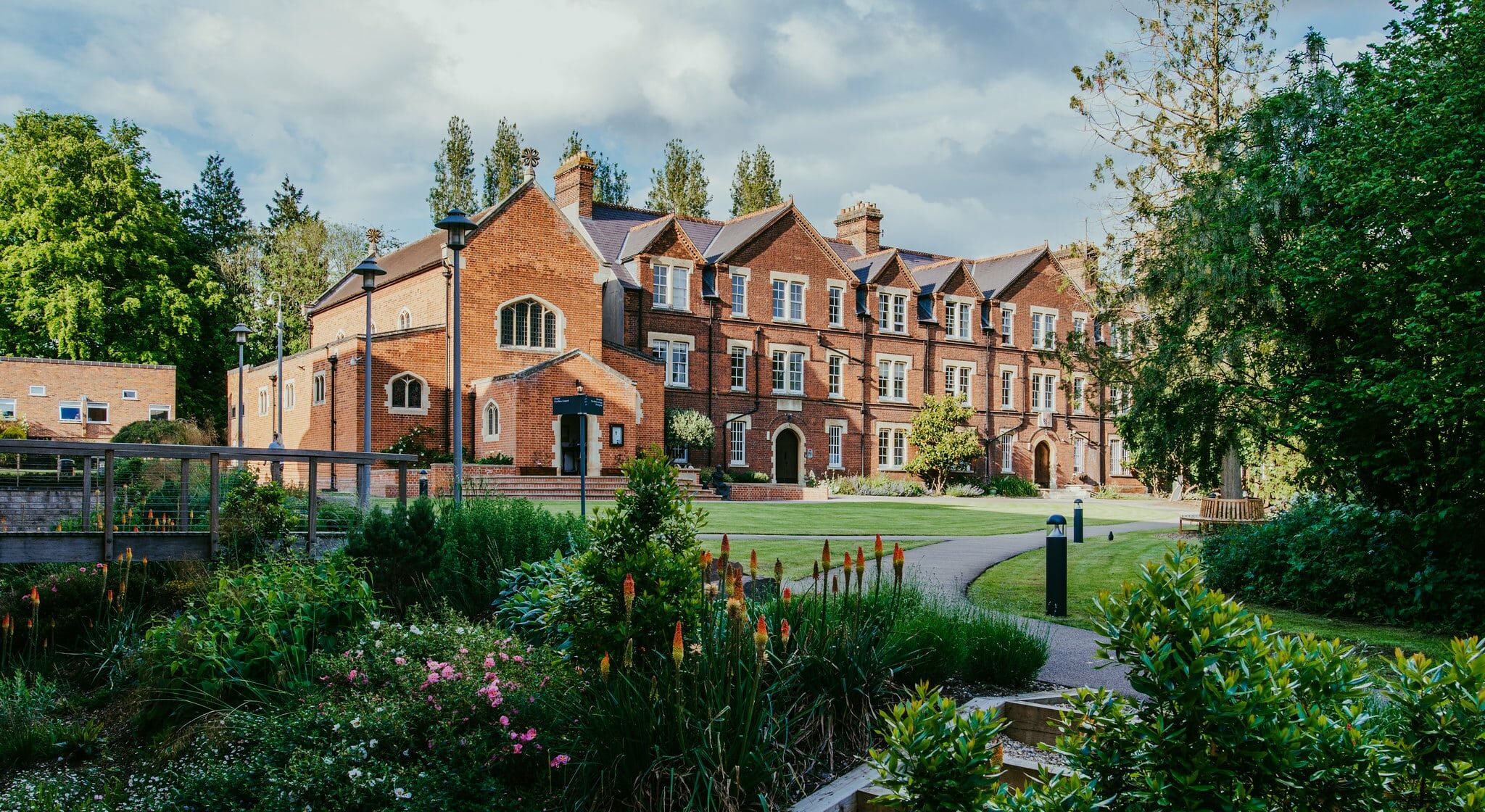
A large brick building with multiple chimneys and dormer windows sits surrounded by lush green gardens, where flowering plants bloom under a partly cloudy sky. A curved path leads to the entrance, ready for the Master's welcome.

Miss Farhana Hamid Butt

College Teaching Associate, Bye-Fellow

Miss Farhana Hamid Butt

College Teaching Associate, Bye-Fellow
Farhana’s research explores the intersection of private law and technology. Her doctoral thesis examines the challenges posed to normative legal frameworks by blockchain technology and cryptoassets, with a particular focus on the transmission of digital assets on death.  Prior to coming to Cambridge, Farhana completed an LLB at the University of Warwick and went on to read for the BCL and MPhil in Law at the University of Oxford. In 2021, she was called to the Bar of England and Wales. At Cambridge, she is affiliated with the Cambridge Private Law Centre and the Cambridge Family Law Centre.  She also contributes to policy discussions on succession law and digital assets.

Farhana supervises undergraduates in Land Law and is committed to making legal education accessible and inclusive.

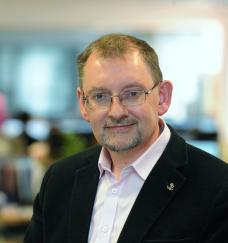
Dr Andy Harter, CBE, a middle-aged man with glasses, short hair, and a beard, wearing a dark jacket and light-coloured shirt, stands in an office setting with blurred people and computers in the background.

Dr Andy Harter CBE DL FREng

Fellow

Dr Andy Harter CBE DL FREng

Fellow
Fellow, Computer Laboratory; Chair, Cambridge Network; Vice President, The Institution of Engineering and Technology

Dr Andy Harter CBE, DL, FREng, CEng, FIET, FBCS, CITP, FLCM, FRSA, read Mathematics and Computer Science at Fitzwilliam College. As a graduate student at Corpus Christi and the Computer Laboratory, he investigated designs for three-dimensional integrated circuits. His doctoral thesis was published by Cambridge University Press and is still available having been recently reprinted!

Since then he has been engaged in industrial research and development for communications systems, and was director of research and engineering of the AT&T Cambridge Laboratory. He has contributed extensively and significantly in the fields of distributed systems, ubiquitous and context aware computing, user-interface design and thin-client systems most notably VNC, a system that lets one person take over another person’s computer screen to help them fix problems. The software is now on over a billion devices, on more different kinds of computer than any other application and is even an official part of the internet. The software is also embedded in Intel Chips, Apple Desktops, Google Software, mobile phones and cars.

Andy is a Fellow of the Computer Laboratory involved with graduate student research programmes, and lectures to final year undergraduates. He is the founder and CEO of RealVNC, a highly successful Cambridge software company which in 2013 won its third Queen’s Awards for Enterprise in three years. He is a Chartered Engineer, a Fellow of the Institution of Engineering and Technology, a Fellow of the British Computer Society and a Fellow of the Royal Academy of Engineering. In 2010, he received the Academy’s Silver Medal, and in 2013 the MacRobert Award, the most prestigious UK prize for engineering and commercialisation. In 2016 he was awarded the Faraday Medal, the highest honour of the Institution of Engineering and Technology and gave the 2018 Turing Lecture. He is a trustee of the Royal Academy of Engineering, the Institution of Engineering and Technology, The Computer History Museum and Britten Sinfonia. He is a Chair of Cambridge Network and a Fellow of the Royal Society of Arts. He was awarded a CBE in the 2017 Queen's Birthday Honours.  He is a Deputy Lieutenant of the County and was appointed by HM The Queen as the High Sheriff of Cambridgeshire for 2018-19.

At St Edmund's Andy has been a Tutor, Director of Studies in Computer Science, Senior Treasurer of the May Ball and Family officer. He is married to Lily and they are kept busy with their young family. Other interests include golf, rowing, gardening and music, particularly the piano and organ, for which Andy is a Fellow of the London College of Music. He also enjoys travel, and has ventured in a single-engined light aircraft to Iceland, Greenland, Northern Canada (to within a few hundred miles of the North Pole), North and South America (crossing the Andes, rounding Cape Horn and visiting the Falkland Islands).

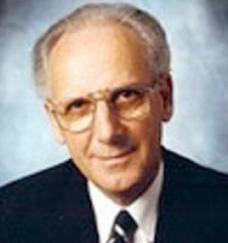
Smiling older man with grey hair, Dr Hermann Hauser, wearing a navy suit, white shirt, and a dark patterned scarf around his neck, standing indoors with a blurred background.

Dr Hermann Hauser KBE CBE FRS FREng

Honorary Fellow

Dr Hermann Hauser KBE CBE FRS FREng

Honorary Fellow
Dr Hermann Hauser KBE CBE FRS FREng is an Entrepreneur, Venture Capitalist and Honorary Fellow at St Edmund's College.

In his long and successful career as an entrepreneur and venture capitalist, Hermann has founded or co-founded companies in a wide range of technology sectors. These include Acorn Computers (where he helped spin our ARM), Active Book Company, Virata, Net Products, NetChannel and Cambridge Network Limited.

Hermann holds an MA in Physics from Vienna University and a PhD in Physics from the University of Cambridge.  He is a Fellow of the Institute of Physics and of the Royal Academy of Engineering and holds an Honorary Doctorate from several other universities.  Dr Hauser was awarded a CBE in 2001 for ‘innovate service to the UK enterprise sector’.  In 2012 he became a Fellow of the Royal Society and in 2015 he received a Honorary Knight Commander of the Most Excellent Order of the British Empire (KBE) for services to engineering and industry.

CBE FRS professor Brian Heap, an older man with grey hair and glasses, wearing a dark suit, white shirt, and patterned tie, poses against a softly blurred blue and grey background.

Professor Sir Brian Heap CBE FRS

Honorary Fellow

Professor Sir Brian Heap CBE FRS

Honorary Fellow
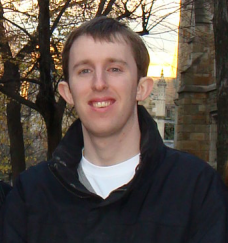
Former Master of St Edmund's College

Sir Brian Heap has doctorates from the Universities of Nottingham and Cambridge in animal physiology, and has published on endocrine physiology, biotechnology, sustainable consumption and production, and science advice for policy makers. He was University Demonstrator at the University of Cambridge, staff member of the Institute of Animal Physiology, Babraham, Cambridge, Director of the Institute of Animal Physiology and Genetics Research (Cambridge and Edinburgh), and Director of Research at the Biotechnology and Biological Sciences Research Council, Swindon. He was President of the Institute of Biology, UK Representative on the European Science Foundation, Strasbourg, UK Representative on the NATO Science Committee, member of the Scientific Advisory Panel for Emergency Responses (SAPER), Chief Scientist’s Office, Cabinet Office, and member of the Advisory Board of the Templeton Foundation. Elected a Fellow of the Royal Society in 1989, he became a member of Council, and Foreign Secretary and Vice-President from 1996 to 2001. In 1994 he was awarded CBE and in 2001 knighted for contributions to international science.

Sir Brian was President of the European Academies Science Advisory Council, Honorary Professor at the University of Nottingham, and is Chief Scientific Advisor to the Malaysian Commonwealth Study Centre and the Cambridge Malaysian Education and Development Trust, and is a Trustee of the Cambridge China Development Trust. He was Master of St Edmund’s College, Cambridge, and is Honorary Fellow at St Edmund’s College, Cambridge and formerly at Green Templeton College, Oxford. He was Editor of the Philosophical Transactions of the Royal Society, Series B, Chair of the Advisory Panel on Sustainable Consumption and Production at the Department of the Environment Food and Rural Affairs, and Specialist Advisor to the Parliamentary Select Committee on Putting Science and Engineering at the Heart of Government Policy.

With the UK’s Nuffield Council on Bioethics, the Department of Health’s Expert Group on Cloning, the EU President’s Advisory Group on Biotechnology, and the UK-China Forum he has been engaged in issues of population growth, environment and biotechnology. He is Senior Adviser of the Smart Villages Initiative in Africa, Asia and Latin America, International Adviser, Global Food Security, University of Cambridge, and previously project co-leader of Biosciences for Farming in Africa. He was scientific consultant for Merck, Sharp and Dohme, Johnson and Johnson, and Ligand Pharmaceuticals in the USA, and Principal Scientific Adviser for ZyGEM Co Ltd, New Zealand.

A young man with short brown hair is smiling outdoors in front of trees and a stone building, wearing a black jacket over a white shirt—resembling Dr Chris Heath in a relaxed moment.

Dr Chris Heath

Bye-Fellow, Director of Studies
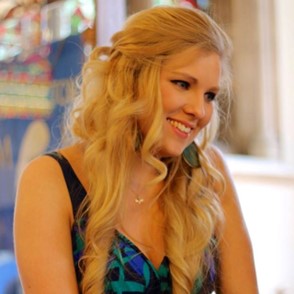
Dr Chris Heath

Bye-Fellow, Director of Studies
Director of Studies, PBS

Following training in experimental psychology and behavioural neuroscience as a post-doctoral research associate in the Department of Psychology, University of Cambridge, Dr. Chris Heath was recruited as a Lecturer in Health Sciences in the School of Life, Health and Chemical Sciences at The Open University.

At the OU he leads the Translational Neuroscience Research Group, a major objective of which is to utilise touchscreen-based assessment techniques to evaluate a wide variety of psychological constructs across laboratory models and both non-clinical and clinical populations. Recent work has focused on the development of touchscreen-based assessments for motivation, cost-benefit decision making and emotional state regulation and their application to both disease-related and non-disease related areas.

At Cambridge, Dr Heath has been the Director of Studies in the Psychological and Behavioural Sciences (PBS) Tripos at St. Edmund’s College and has supervised and given lectures on various PBS courses.

Mrs Lizzie Henderson, a young woman with long, wavy blonde hair, smiles whilst sitting indoors. She wears a colourful sleeveless top and large earrings, framed by a softly lit background.

Mrs Lizzie Henderson

Research Associate

Mrs Lizzie Henderson

Research Associate

Lizzie Henderson is Co-Director of The Faraday Institute’s Youth and Schools Programme. Through workshops, books, resources, and educational research Lizzie and the team work to enable young people and their influencers to confidently explore big questions – specifically those regarding science-faith interactions.

Lizzie holds a degree in Natural Sciences from the University of Cambridge, specialising in Evolutionary and Behavioural Biology, Geology and the History and Philosophy of Science. She has long held a strong interest in the communication and public understanding of the interactions of science and faith and has worked with children and young people in a variety of contexts for many years.

Lizzie has been building the Faraday Institute’s Youth and Schools Programme since 2013 and has seen many thousands of students respond enthusiastically to the combination of hands-on science with honest, dynamic and thought-provoking discussion about science, faith and their interactions. She also consults and advises on several collaborative projects working to develop new, inter-disciplinary approaches to education.

Professor Michael Herrtage

Professor Michael Herrtage

Life Fellow

Professor Michael Herrtage

Life Fellow

My clinical interests include all aspects of small animal medicine and diagnostic imaging. I was the former Vice-Master of St Edmund’s College and the former Dean of the Veterinary School. 

Mike Herrtage graduated in Veterinary Medicine from the Liverpool University in 1975. He is currently Emeritus Professor of Small Animal Medicine in the Department of Veterinary Medicine. He became a Fellow of St. Edmund’s College in 1990. He oversaw the small animal medicine and diagnostic imaging services at the Queen’s Veterinary School Hospital until his retirement and still works part-time in the Hospital. His clinical interests include all aspects of small animal medicine and diagnostic imaging, but he has a particular interest in endocrine and metabolic disorders. He has spoken at many international meetings and published over 200 articles in refereed journals. He was awarded the British Small Animal Veterinary Association (B.S.A.V.A.) Woodrow Award in 1986 for outstanding contributions in the field of small animal veterinary medicine and the B.S.A.V.A. Blaine Award for outstanding contributions to the advancement of small animal medicine in 2000. In 2014, he was awarded the World Small Animal Veterinary Association International Award for Scientific Achievement for outstanding contributions by a veterinarian, who has had a significant impact on the advancement of knowledge concerning the cause, detection, cure and/or control of disorders of companion animals.

He received the B.S.A.V.A. Bourglet Award for really outstanding international contributions to the fields of small animal practice and science in 2019, the British Veterinary Association’s Dalrymple-Champneys Cup and Medal for outstanding services to the advancement of veterinary medicine and science in 2021 and the Queen’s Medal, the highest honour the Royal College of Veterinary Surgeons can bestow on an individual in recognition of a highly distinguished career with sustained and outstanding achievements, in 2022.He has been President of the British Veterinary Radiology Association, President of the British Small Animal Veterinary Association, President of the European Society of Veterinary Internal Medicine and the first President of the European Board of Veterinary Specialisation, which was instrumental in promoting and co-ordinating the development of veterinary specialisation in Europe. He is a Diplomate of both the European College of Veterinary Internal Medicine and of the European College of Veterinary Diagnostic Imaging and is a Past President of the European College of Veterinary Internal Medicine.

Norfolk Building and Chapel

Professor Seamus Higson

Bye-Fellow, Director of Studies

Professor Seamus Higson

Bye-Fellow, Director of Studies

Seamus is Director of Studies for our Chemical Engineering and Biotechnology degree.

Philipa Hird picture

Ms Philippa Hird

Title D Fellow

Ms Philippa Hird

Title D Fellow
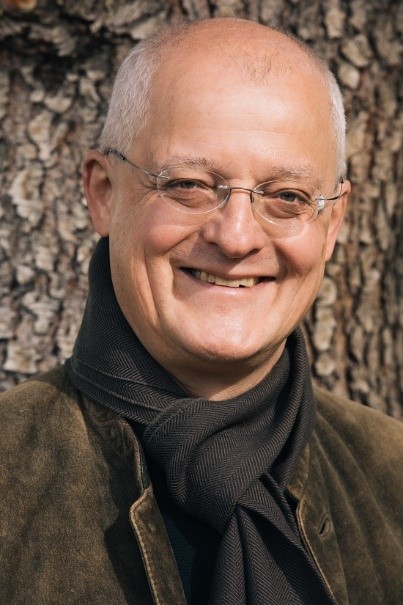
Philippa is currently the Chair and Pro Chancellor of the University of Manchester, the Senior Independent Director of Ordnance Survey and of Cambridge University Hospitals Trust and a Non-Executive Director of Cyber and Specialist Operations Command.

As Group Human Resources Director of ITV Plc until 2009, Philippa shaped the consolidation of the regional ITV companies. Prior to that she held general management and then HR roles in Granada Group Plc. She began her career in marketing with ICI and has an MA in Politics, Philosophy and Economics from The Queen's College Oxford.

Professor Johannes Hoff, a smiling older man with glasses, a bald head, and a dark scarf, wearing a brown jacket, stands in front of a tree trunk.

Professor Johannes Hoff

VHI Affiliate Member
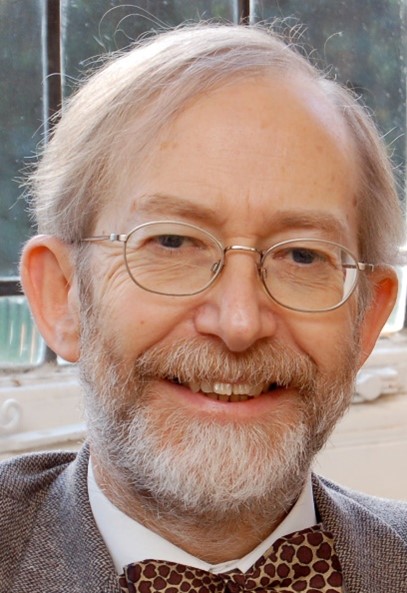
Professor Johannes Hoff

VHI Affiliate Member

My research focuses on anthropology in the age of artificial intelligence, the spiritual resources of human intelligence, and the pre-modern tradition of Christian orthodoxy. I am the director of the research project "Embodiment in Theological Anthropology", funded by the Austrian Science Fund.

Johannes Hoff is VHI Senior Research Associate and Full Professor at the Institute of Systematic Theology of the University of Innsbruck (Austria), succeeding Karl Rahner. Prior to this he was Professor of Philosophical Theology at Heythrop College, University of London, St David’s University of Wales (previously University of Wales, Lampeter), and Assistant Professor at the Faculty of Catholic Theology at the Eberhard Karls University of Tübingen. His first academic monograph was on the theological implications of the work of Jürgen Habermas, Jacques Derrida, Michel Foucault and Michel de Certeau, his second on Nicholas of Cusa (1401-1464). His first English-language monograph, The Analogical Turn: Rethinking Modernity with Nicholas of Cusa (2013), brought together these areas of research. It shows how Cusa developed a critical response to the celebration of mathematically generated 'images of the world' in early modern art and science, and the related narcissistic fascination with immersive virtual spaces. In his German monograph Defence of the Sacred. Anthropology of the Digital Transformation (2021), Hoff presents a first synthesis of his recent research on anthropology in the age of artificial intelligence. According to Hoff, the digital transformation has caused an economically accelerated devastation of spiritual diversity that has provoked one of the greatest civilizational ruptures since the Axal Age, in which the religious and philosophical traditions of world history originated (around 500 BC). This challenge, Hoff argues, requires us to revise the theological underpinnings that have made our modern view of humanity plausible in the wake of the media-technological innovations of the Renaissance. Moreover, it requires us to recover the spiritual potentials that distinguish humans from computing machines and mark them as intellectually gifted, personal beings. His research on a Trinitarian anthropology of technology, building on Augustine and Cusa, is a first response to this challenge. Against this background, the Austrian Science Fund (FWF) granted the research project "4e Cognition in Theological Anthropology" proposed by Johannes Hoff in collaboration with Enrico Grube, which started in September 2023. The project explores the significance of the body/living body problem for Christian doctrine from a historical and systematic perspective, with particular emphasis on the doctrine of salvation and the patristic doctrine of the deification of man (theosis). The findings of contemporary phenomenology of the body and the neurobiological concept of embodied intelligence are hypothesised to facilitate a reorientation of Christian anthropology in the context of its historical sources. Part of this research is Hoff's research cooperation with the "Institute for Information Systems & Society" at the Vienna University of Economics and Business Administration.

Revd Dr Rodney Holder, an older man with fair hair and a beard, smiles at the camera. He is wearing glasses, a grey jacket, a white shirt, and a patterned bow tie whilst seated near a window with metal framing.

Revd Dr Rodney Holder

Fellow Commoner

Revd Dr Rodney Holder

Fellow Commoner

My interests lie in the relationship between science and theology. Topics include: (i) the fine-tunings of natural law necessary for the universe to evolve life; (ii) Karl Barth’s rejection of natural theology; and (iii) ‘ramified natural theology’, i.e. the defence of specifically Christian claims.

The Revd Dr Rodney Holder read mathematics at Trinity College, Cambridge (MA, MMath), and spent two years teaching mathematics at The Manchester Grammar School. In 1974 he returned to academia to research for a D.Phil. in astrophysics at Christ Church, Oxford, following this with a two-year post-doctoral fellowship in the Department of Astrophysics in Oxford. His research was on accretion of intergalactic gas by the galaxy. Dr Holder then spent fourteen years with EDS (formerly Scicon) as an operational research consultant to UK Ministry of Defence clients. This involved mathematical modelling and decision analysis applied to defence procurement, and led to several published papers. His first book on science and religion (Nothing But Atoms and Molecules? Probing the Limits of Science) was published in 1993. In 1994 Dr Holder returned to Oxford, taking a first class degree in theology, and a Diploma in Ministry. Following ordination in the Church of England, Dr Holder served in parish ministry in South Warwickshire, Heidelberg, and Buckinghamshire. During this time he published several papers and his second book, God, the Multiverse, and Everything: Modern Cosmology and the Argument from Design.

Dr Holder was Course Director of The Faraday Institute for Science and Religion, Cambridge, from its inception in January 2006 until 31 January 2013. He has remained active academically since then. His research focus has largely been in three areas: (i) utilizing Bayesian confirmation theory to assess the metaphysical significance of the fine-tunings of natural law necessary for the universe to be capable of evolving life; (ii) challenging Karl Barth’s rejection of natural theology through dialogue with major theologians who have succeeded him; and (iii) describing and utilizing ‘ramified natural theology’, which adopts the same Bayesian approach used to argue for the existence of God in natural theology, to defend specifically Christian claims about God’s acting in history in the person of Jesus Christ. Dr Holder has supervised undergraduates and postgraduate diploma students for ten colleges, including St Edmund’s, for the ‘Theology and Science’ paper in Part IIB of the Cambridge Theological and Religious Studies Tripos, 2007-2016. He has (2019 – 2025) taught overseas students on a Faraday Institute enrichment course and has given many lectures at Faraday Institute courses and more widely, here and overseas. Dr Holder’s further books include The Heavens Declare: Natural Theology and the Legacy of Karl Barth; Ramified Natural Theology in Science and Religion; and, co-edited with Simon Mitton, Georges Lemaître: Life, Science and Legacy. He was Reviews Editor of Science and Christian Belief and on the national committee of Christians in Science from 2006-2017. He is a Fellow of the International Society for Science and Religion, a member of the Society of Ordained Scientists and of the Science and Religion Forum, and a trustee of The Faraday Institute.

Academic Profile

Publications 

  • Rodney D. Holder, Ramified Natural Theology in Science and Religion: Moving on from Natural Theology, 2021, Abingdon, Oxon, and New York, NY: Routledge.
  • Rodney D. Holder, God, the Multiverse, and Everything: Modern Cosmology and the Argument from Design, 2016 [2004], Abingdon, Oxon, and New York, NY: Routledge.
  • R. D. Holder, The Heavens Declare: Natural Theology and the Legacy of Karl Barth, 2012, West Conshohocken: Templeton Press.
  • Rodney Holder, ‘Georges Lemaître and Fred Hoyle: Contrasting Characters in Science and Religion’, in Rodney Holder and Simon Mitton (eds), Georges Lemaître: Life, Science and Legacy, 2012, Heidelberg: Royal Astronomical Society-Springer, 39-53.
  • R. D. Holder, ‘Hume on Miracles’, 1998, British Journal for the Philosophy of Science, 49, 49-65.

Awards & Recognitions

  • Fellow of the Institute of Mathematics and Its Applications
  • Fellow of the Royal Astronomical Society
  • Fellow of the International Society for Science and Religion
  • Templeton Foundation Prize for Exemplary Papers in Humility Theology (1998)


Lindsay Hooper

Mrs Lindsay Hooper

Bye-Fellow

Mrs Lindsay Hooper

Bye-Fellow

Lindsay is the CEO of the Cambridge Institute for Sustainability Leadership. She has over 25 years’ experience of working with senior leaders from multinational businesses, financial institutions and influential organisations to accelerate progress to a sustainable economy. Prior to stepping into the CEO role, she built CISL’s portfolio of international education programmes which now have over 40,000 alumni, developing senior level understanding of the need to transform economic structures and markets. She has led CISL’s contribution to evolving international debates on business leadership and strategic responses to sustainability challenges. She speaks on global trends and the commercial implications for business – most recently on the need to align competitiveness, resilience and sustainability. Other areas of focus include the implications of geopolitics and AI, the imperative to take action on nature and the relationship between business and society

Norfolk Building and Chapel

Rt Revd Alan Hopes

Honorary Fellow

Rt Revd Alan Hopes

Honorary Fellow
Richard B. Horne, FRS, a middle-aged man with short light brown hair, wearing a light pink collared shirt, smiles at the camera against a blue marbled background.

Professor Richard B. Horne FRS

Honorary Fellow

Professor Richard B. Horne FRS

Honorary Fellow

Richard was elected Honorary Fellow of St Edmunds College in 2023 after being a Fellow since 2014.  He is Head of Space Weather at the British Antarctic Survey where he holds an individual merit promotion reserved for world-leading scientists.   He is also a member of the Executive Team and Visiting Professor at the University of Sheffield.

Richard has published over 250 research papers on wave-particle interactions, wave propagation and space weather.  He is known for his work showing that plasma waves accelerate charged particles to very high energies and play a major role in the formation of the radiation belts at Earth, Jupiter, and Saturn.  Working with the commercial sector, Richard led two EU projects to turn this basic research into a forecasting system that is now used by the European Space Agency, satellite operators and insurance underwriters to help maintain the safe and reliable operation of satellites.

Richard was awarded the Gold Medal from the Royal Astronomical Society in 2022, the NERC Impact Award for Economic Impact in 2023, the International Kristian Birkeland Medal from the Norwegian Academy of Sciences in 2020, the Appleton Prize from the International Union of Radio Science (URSI) in 2020, and the Lloyds Science of Risk Prize in 2014.  He was awarded Sc.D. from the University of Cambridge in 2020 for distinguished research.

Richard was elected Fellow of the Royal Society in 2021 and Academia Europaea in 2023.  He is also Fellow of the American Geophysical Union, Fellow of the International Union of Radio Science (URSI), and Fellow and former Vice President of the Royal Astronomical Society.

Richard is Chair of the Space Environment Impacts Expert Group that advises the Government on space weather.  He also serves on other Government and UKRI committees.

Dr Caleb Howard, a man with short brown hair and a beard, wearing a dark suit, light blue shirt, and striped tie, smiles at the camera against a plain black background.

Dr Caleb Howard

Associate Tutor, Bye-Fellow

Dr Caleb Howard

Associate Tutor, Bye-Fellow

I am an Assyriologist based at Tyndale House, Cambridge, researching scribal practices and onomastics (personal names) in ancient Mesopotamia and the Levant. At St Edmund’s I am a Bye-Fellow and Associate Tutor.

Dr J. Caleb Howard is an Assyriologist who studies the languages, texts, and history of ancient Mesopotamia and the Levant. He is a Research Fellow in Old Testament and Ancient Near East at Tyndale House, Cambridge, where he spends most of his time. He is also editor of Tyndale’s academic journal, Tyndale Bulletin. At St Edmund’s College, he is Bye-Fellow and Associate Tutor.

Dr Howard’s research focuses on two periods of ancient history and their textual corpora. First, he researches scribal practices in the Neo-Assyrian state, which flourished in northern Iraq, ca. 1000-600 B.C. His current book project investigates the mechanics of scribal production of Neo-Assyrian royal inscriptions, the propaganda of the Assyrian state. The basis of this project is first-hand collation and photography of royal inscriptions of the king Ashurnasirpal II (883-859 B.C.) in various museum collections.

A part of Dr Howard’s research on the Neo-Assyrian empire is carried out within the framework of the Cambridge-LMU Strategic Partnership, one aim of which is to publish up-to-date editions of Assyrian royal inscriptions, both online and in print publications. In cooperation with Dr Jamie Novotny (LMU) and Professor A. Kirk Grayson (University of Toronto), Dr Howard is preparing an updated edition of the royal inscriptions of Ashurnasirpal II. Transcriptions and translations of these inscriptions will be made available to scholars and the public via an online repository of cuneiform texts called Oracc (Open Richly Annotated Cuneiform Corpus).

Dr Howard’s second major research focus is personal names in the Levant in the second and first millennia B.C. At Tyndale House, Cambridge, he is part of a team of researchers collecting personal names from relevant primary sources and analysing them, to see what they tell us about the linguistic and social history of the region. This work will be documented in an open-access database and in a set of print publications. Dr Howard’s main research contribution to the project is a study of the personal names in about five hundred cuneiform tablets from the ancient city of Alalakh (Tell Atchana) in southern Turkey. These texts contain thousands of personal names, mainly derived from one or more West Semitic languages and from the Hurrian language. These names reveal aspects of language, religion, and culture which would otherwise be inaccessible to modern research.

Academic Profile


Sarah Irving-Stonebraker

Sarah Irving-Stonebraker

Associate Professor of History at Australian Catholic University

Sarah Irving-Stonebraker

Associate Professor of History at Australian Catholic University

Sarah Irving-Stonebraker is Associate Professor of History at Australian Catholic University.

She is an intellectual historian of early modern Britain with a particular interest in the intersections of theology, natural philosophy, and historical writing. She was awarded her BA with First Class Honours and the University Medal from the University of Sydney, and her PhD in History from the University of Cambridge, where she was a Commonwealth Scholar at King’s College. She then held a Junior Research Fellowship in History at Wolfson College, Oxford University. Her first book, Natural Science and the Origins of the British Empire (London: 2008) won the Royal Society of Literature and Jerwood Foundation Award for Non-fiction. Her most recent book is Priests of History: Stewarding the Past in an Ahistoric Age (Zondervan/HarperCollins, 2024), which was awarded The Gospel Coalition’s 2024 Book of the Year (Culture Category) and shortlisted for Australian Christian Book of the Year.

Follow us

Stay up to date with our rich college life here at St Edmund's through our social media channels.