
Home→About→Our People

Our people

Filter staff:
Norfolk Building and Chapel

Rt Revd Alan Hopes

Honorary Fellow

Rt Revd Alan Hopes

Honorary Fellow
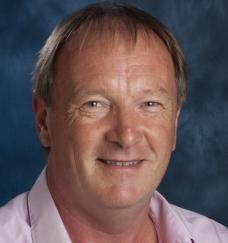
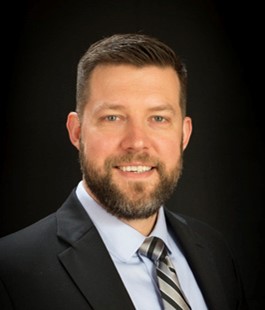
Richard B. Horne, FRS, a middle-aged man with short light brown hair, wearing a light pink collared shirt, smiles at the camera against a blue marbled background.

Professor Richard B. Horne FRS

Honorary Fellow
Professor Richard B. Horne FRS

Honorary Fellow

Richard was elected Honorary Fellow of St Edmunds College in 2023 after being a Fellow since 2014.  He is Head of Space Weather at the British Antarctic Survey where he holds an individual merit promotion reserved for world-leading scientists.   He is also a member of the Executive Team and Visiting Professor at the University of Sheffield.

Richard has published over 250 research papers on wave-particle interactions, wave propagation and space weather.  He is known for his work showing that plasma waves accelerate charged particles to very high energies and play a major role in the formation of the radiation belts at Earth, Jupiter, and Saturn.  Working with the commercial sector, Richard led two EU projects to turn this basic research into a forecasting system that is now used by the European Space Agency, satellite operators and insurance underwriters to help maintain the safe and reliable operation of satellites.

Richard was awarded the Gold Medal from the Royal Astronomical Society in 2022, the NERC Impact Award for Economic Impact in 2023, the International Kristian Birkeland Medal from the Norwegian Academy of Sciences in 2020, the Appleton Prize from the International Union of Radio Science (URSI) in 2020, and the Lloyds Science of Risk Prize in 2014.  He was awarded Sc.D. from the University of Cambridge in 2020 for distinguished research.

Richard was elected Fellow of the Royal Society in 2021 and Academia Europaea in 2023.  He is also Fellow of the American Geophysical Union, Fellow of the International Union of Radio Science (URSI), and Fellow and former Vice President of the Royal Astronomical Society.

Richard is Chair of the Space Environment Impacts Expert Group that advises the Government on space weather.  He also serves on other Government and UKRI committees.

Dr Caleb Howard, a man with short brown hair and a beard, wearing a dark suit, light blue shirt, and striped tie, smiles at the camera against a plain black background.

Dr Caleb Howard

Associate Tutor, Bye-Fellow

Dr Caleb Howard

Associate Tutor, Bye-Fellow

I am an Assyriologist based at Tyndale House, Cambridge, researching scribal practices and onomastics (personal names) in ancient Mesopotamia and the Levant. At St Edmund’s I am a Bye-Fellow and Associate Tutor.

Dr J. Caleb Howard is an Assyriologist who studies the languages, texts, and history of ancient Mesopotamia and the Levant. He is a Research Fellow in Old Testament and Ancient Near East at Tyndale House, Cambridge, where he spends most of his time. He is also editor of Tyndale’s academic journal, Tyndale Bulletin. At St Edmund’s College, he is Bye-Fellow and Associate Tutor.

Dr Howard’s research focuses on two periods of ancient history and their textual corpora. First, he researches scribal practices in the Neo-Assyrian state, which flourished in northern Iraq, ca. 1000-600 B.C. His current book project investigates the mechanics of scribal production of Neo-Assyrian royal inscriptions, the propaganda of the Assyrian state. The basis of this project is first-hand collation and photography of royal inscriptions of the king Ashurnasirpal II (883-859 B.C.) in various museum collections.

A part of Dr Howard’s research on the Neo-Assyrian empire is carried out within the framework of the Cambridge-LMU Strategic Partnership, one aim of which is to publish up-to-date editions of Assyrian royal inscriptions, both online and in print publications. In cooperation with Dr Jamie Novotny (LMU) and Professor A. Kirk Grayson (University of Toronto), Dr Howard is preparing an updated edition of the royal inscriptions of Ashurnasirpal II. Transcriptions and translations of these inscriptions will be made available to scholars and the public via an online repository of cuneiform texts called Oracc (Open Richly Annotated Cuneiform Corpus).

Dr Howard’s second major research focus is personal names in the Levant in the second and first millennia B.C. At Tyndale House, Cambridge, he is part of a team of researchers collecting personal names from relevant primary sources and analysing them, to see what they tell us about the linguistic and social history of the region. This work will be documented in an open-access database and in a set of print publications. Dr Howard’s main research contribution to the project is a study of the personal names in about five hundred cuneiform tablets from the ancient city of Alalakh (Tell Atchana) in southern Turkey. These texts contain thousands of personal names, mainly derived from one or more West Semitic languages and from the Hurrian language. These names reveal aspects of language, religion, and culture which would otherwise be inaccessible to modern research.

Academic Profile


Sarah Irving-Stonebraker

Sarah Irving-Stonebraker

Associate Professor of History at Australian Catholic University

Sarah Irving-Stonebraker

Associate Professor of History at Australian Catholic University
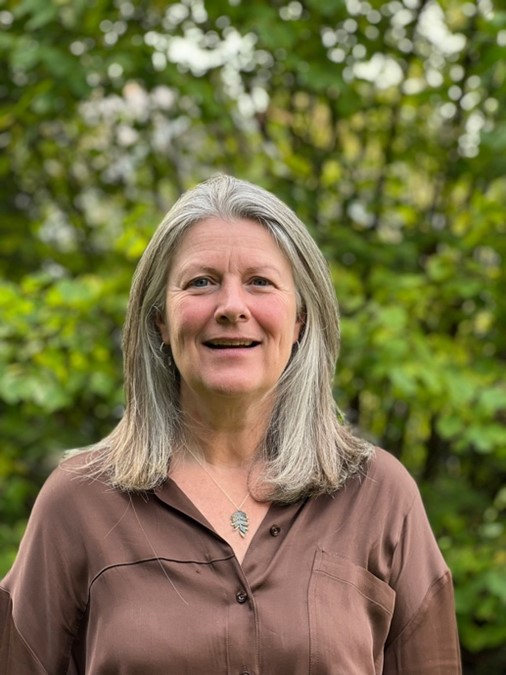
Sarah Irving-Stonebraker is Associate Professor of History at Australian Catholic University.

She is an intellectual historian of early modern Britain with a particular interest in the intersections of theology, natural philosophy, and historical writing. She was awarded her BA with First Class Honours and the University Medal from the University of Sydney, and her PhD in History from the University of Cambridge, where she was a Commonwealth Scholar at King’s College. She then held a Junior Research Fellowship in History at Wolfson College, Oxford University. Her first book, Natural Science and the Origins of the British Empire (London: 2008) won the Royal Society of Literature and Jerwood Foundation Award for Non-fiction. Her most recent book is Priests of History: Stewarding the Past in an Ahistoric Age (Zondervan/HarperCollins, 2024), which was awarded The Gospel Coalition’s 2024 Book of the Year (Culture Category) and shortlisted for Australian Christian Book of the Year.

Revd Dr Carole Irwin, a woman with shoulder-length grey hair, wearing a brown button-up shirt and a leaf-shaped necklace, smiles whilst standing outdoors in front of green foliage.

Revd Dr Carole Irwin

Research Associate

Revd Dr Carole Irwin

Research Associate

My research is in theology, intellectual disability and Christian community. My current work uses a participative approach, investigating belonging to a Christian community of differing intellectual abilities with members of the community.

Carole received her PhD from the University of Durham, where she worked on Rowan Williams’ concept of difficulty as a tool for negotiating difference between religious and secular life and commitment in the public square. She was a member of the academic staff of Wesley House in the Cambridge Theological Federation from 2015 to 2021, and Director of Studies from 2017, teaching political theology and leading the MA programme on Pastoral Care and Chaplaincy. Carole is currently project leader for Growing in Friendship, a participative theological action research project of the University of Aberdeen’s Centre for Spirituality, Health and Disability and Lyn’s House Cambridge. Lyn’s House is a Christian community of friendship for people with and without intellectual disabilities. The Growing in Friendship project is the first instance of participative research using a theological action research approach with a community of differing intellectual abilities. She is also a member of the Von Hügel Institute’s research project Disability and Knowledge in collaboration with the University of Notre Dame’s Rome Global Gateway and L’Arche Italy. She is ordained in the British Methodist Church, has served on its Faith and Order Committee, and is currently a member of the British Methodist-Roman Catholic Dialogue Commission. She studied in Cambridge (King’s College) for her first degree in Modern Languages (French and Italian).

Academic Profile

A portrait of an older man with short, light grey hair and blue eyes, reminiscent of Andrew Jackson, wearing a blue and white checked shirt, looking directly at the camera with a neutral expression against a light background.

Dr Andrew Jackson

Research Associate

Dr Andrew Jackson

Research Associate

After taking a BA(MA) in Zoology at Oxford University (under Richard Dawkins) and a PhD in bioengineering at Reading University, Andrew Jackson pursued a 30-year career in biotech R&D, working for a major blue-chip company and two of the Cambridge-based technology consultancies. He then joined the Faraday Institute as their Director for External Affairs before taking early retirement to fulfil a lifelong ambition to study academic theology.

He sat the University of Cambridge postgraduate Diploma and MPhil degree in theology (both awarded with distinction and the Divinity Faculty prize) followed by a PhD at the University of Nottingham resulting in a monograph published with Routledge, entitled ‘Maximus the Confessor and Evolutionary Biology: The Phylogenetic Logoi.’ Andrew recently returned to the Faraday Institute as Academic Lead for its Tutorial Programme in Science and Religion. His theological research interests include the theology of evolutionary biology, Eastern Patristics, and the theology of technology.

Mr Scott Jackson, a man with short brown hair, a trimmed beard, and blue eyes, wears a navy blazer over a light pink dress shirt. He looks directly at the camera with a neutral expression against a dark background.

Mr Scott Jackson

Research Associate

Mr Scott Jackson

Research Associate

Scott Jackson has served as the Mary Irene Ryan Family Executive Director of Shakespeare at Notre Dame since the position was created in 2007, providing oversight for the many Shakespeare-related programs housed at the University of Notre Dame, with a particular focus on engaging the local community through the works of William Shakespeare.

Previously he served as executive director for the Fairbanks Shakespeare Theatre (FST) in Fairbanks, Alaska. At FST he produced and performed in outdoor Shakespeare productions staged under the midnight sun at venues throughout Alaska and around the globe (most notably at the VIII World Shakespeare Congress in Brisbane, Australia, and the Edinburgh Festival Fringe in Scotland). From 2000–2003, Scott was the business and legal affairs coordinator for Brighter Pictures, Ltd (now a part of Endemol Shine UK), one of the United Kingdom’s most successful independent television and film production companies.
He holds a dual BA in theatre and history from Indiana University Bloomington, an MFA (distinction) in Actor Training and Coaching from the Royal Central School of Speech and Drama (University of London), and is a certified Kundalini yoga teacher (CKYT-200) under acclaimed practitioner Maya Fiennes. He has produced, directed, and performed in over 175 theatrical productions.

Scott currently serves as the vice president/president-elect for the Shakespeare Theatre Association, where he also served as treasurer from 2013-2017. He has taught acting process at the Royal Central School of Speech and Drama, the University of Notre Dame, Holy Cross College, and Indiana University South Bend. Since 2018 he has taught Meisner acting technique and Mindfulness for the Artist for the Prague Shakespeare Company’s Summer Shakespeare Intensive.

A firm believer in the power of Shakespeare and the theatre arts to affect positive social change, he is a co-founder of the Shakespeare in Prisons Network. He teaches a Shakespeare in performance course and leads the kundalini yoga club at the Westville Correctional Facility, Indiana’s largest state prison.

Additionally, he has developed an anti-harm approach to actor training called Foundationing and presented this research at the annual meetings of the European Society of Criminology, the British Shakespeare Association, the Shakespeare Theatre Association, the Shakespeare Association of America, Theatre Communications Group, and the World Shakespeare Congress.

He is the recipient of the Shakespeare Association of America’s Publics Award for the production of the 4th International Shakespeare in Prisons Conference in 2020-21, the Robinson Community Learning Center’s Arthur Quigley, PhD award for community service, and the Fairbanks, Alaska Downtown Association’s Golden Heart award.

Dr Lydia Jaeger

Dr Lydia Jaeger

Research Associate

Dr Lydia Jaeger

Research Associate

My current research interests concern the epistemological and ethical implications of the doctrine of creation and the articulation between philosophy, the sciences and theology. In 2024, I was involved in setting up the Centre d'études et de recherche interdisciplinaire évangélique (CERIE).

After completing postgraduate studies in physics and mathematics at the University of Cologne (Germany) and in theology at the Seminary for Evangelical Theology in Vaux-sur-Seine (France), Lydia Jaeger obtained her Ph.D. in philosophy at the Sorbonne on the possible links between the concept of law of nature and religious presuppositions. She holds a permanent lectureship and is academic advisor and international relations officer at the Institut Biblique de Nogent-sur-Marne (France), and academic director of the Centre d’enseignement et de recherche interdisciplinaire évangélique en sciences, culture et théologie (CERIE). She is a research associate of St. Edmund’s College, University of Cambridge, a Faraday Associate of the Faraday Institute for Science and Religion and a KLC Research Fellow at the Kirby Laing Centre for Public Theology (all based in Cambridge, UK). Lydia Jaeger is the author of seven books and numerous articles on the relation between Christianity and the natural sciences. She has edited (or co-edited) nine collective volumes; among them is Lire la Bible aujourd’hui : Perspectives croisées sur les défis contemporains (Bibli’O, 2022 – English translation Zondervan Academic, 2024). Her book Ordinary Splendor: Living in God’s Creation was listed as a finalist in the 2024 Christianity Today Book Awards in the Theology (popular) category.

Academic Profile

Publications

  • Lydia Jaeger, Einstein, Polanyi and the Laws of Nature, West Conshohocken (PA): Templeton Foundation Press, 2010
  • Lydia Jaeger, What the Heavens Declare: Science in the Light of Creation, transl. Jonathan Vaughan, Eugene (OR), Wipf and Stock, 2012
  • Lydia Jaeger, Ordinary Splendor: Living in God's Creation, Bellingham [WA], Lexham Press, 2023
John Jenkins

Rev John I Jenkins, C.S.C

Honorary Fellow

Rev John I Jenkins, C.S.C

Honorary Fellow

University of Notre Dame President Rev John I Jenkins, C.S.C. is an Honorary Fellow of St Edmund’s College.

He was elected in recognition of his significant contributions to higher education, as well as for his role in developing the partnership between St Edmund’s and Notre Dame.

Fr Jenkins, a priest of the Congregation of Holy Cross, was elected the 17th president of the University of Notre Dame in 2005. As president of Notre Dame, Fr Jenkins has contributed significantly to wider debates in higher education and society, especially in civil discourse. His achievements are characterised by a strong commitment to building common ground against increasingly widespread polarisation.

Professor Stephen Jenkins, a middle-aged man with short curly hair, glasses, and a checked shirt, smiles at the camera against a plain grey background.

Professor Stephen Jenkins

Fellow

Professor Stephen Jenkins

Fellow
Reader in Physical Chemistry, Department of Chemistry

Stephen Jenkins leads the Surface Science Group in the Department of Chemistry, directing research that explores the interaction of industrially and environmentally important molecules with reactive metals. Having gained his BSc and PhD in theoretical physics from the University of Exeter (1991 and 1995 respectively) Stephen held a Royal Society University Research Fellowship at Cambridge (2001-09) prior to his appointment as a University Lecturer in 2009 and promotion to Reader in 2014. He is currently Treasurer of the Royal Society of Chemistry Solid Surfaces Group and Rooms Tutor at St Edmund's College.  Author of nearly 150 peer-reviewed papers, Stephen's book on `Chirality at Solid Surfaces' was published by Wiley in 2018.

Dr Richard Jennings, a middle-aged man with short grey hair, wears a grey suit jacket, light blue shirt, and striped tie, smiling at the camera against a plain background.

Dr Richard Jennings

Emeritus Fellow

Dr Richard Jennings

Emeritus Fellow
Former Deputy Director of Cambridge Enterprise

Dr Richard Jennings BSc DPhil is the Former Deputy Director of Cambridge Enterprise Ltd. the University’s wholly owned technology transfer company and a board member of both Cambridge Enterprise and Cambridge University Technical Services (CUTS). He is also a non-executive director of Ifm Education and Consultancy Services Ltd, the Institute for Manufacturing's knowledge transfer company.

Formerly, Richard was Head of Chemical Research at Napp Research Centre on the Cambridge Science Park. He joined the University as Assistant Director for Industrial Cooperation of the Wolfson Cambridge Industrial Unit, with responsibility for biomedical projects, in 1988. In 1994, he became Director and also joined the board of the University's technology transfer company, now called Cambridge Enterprise. Richard was appointed Director of Research Policy in 2000 and joined Cambridge Enterprise in 2005 to establish its consultancy business.

Richard has a very extensive track record of establishing mutually beneficial university-industry collaborations and commercialising University-derived intellectual property through consultancy, licensing and over a hundred spin-off companies.

He has a D. Phil in Chemistry from the University of Sussex, a DIC from Imperial College and is a non-executive director of Granta Design Ltd., a spin-off from the Engineering Department.

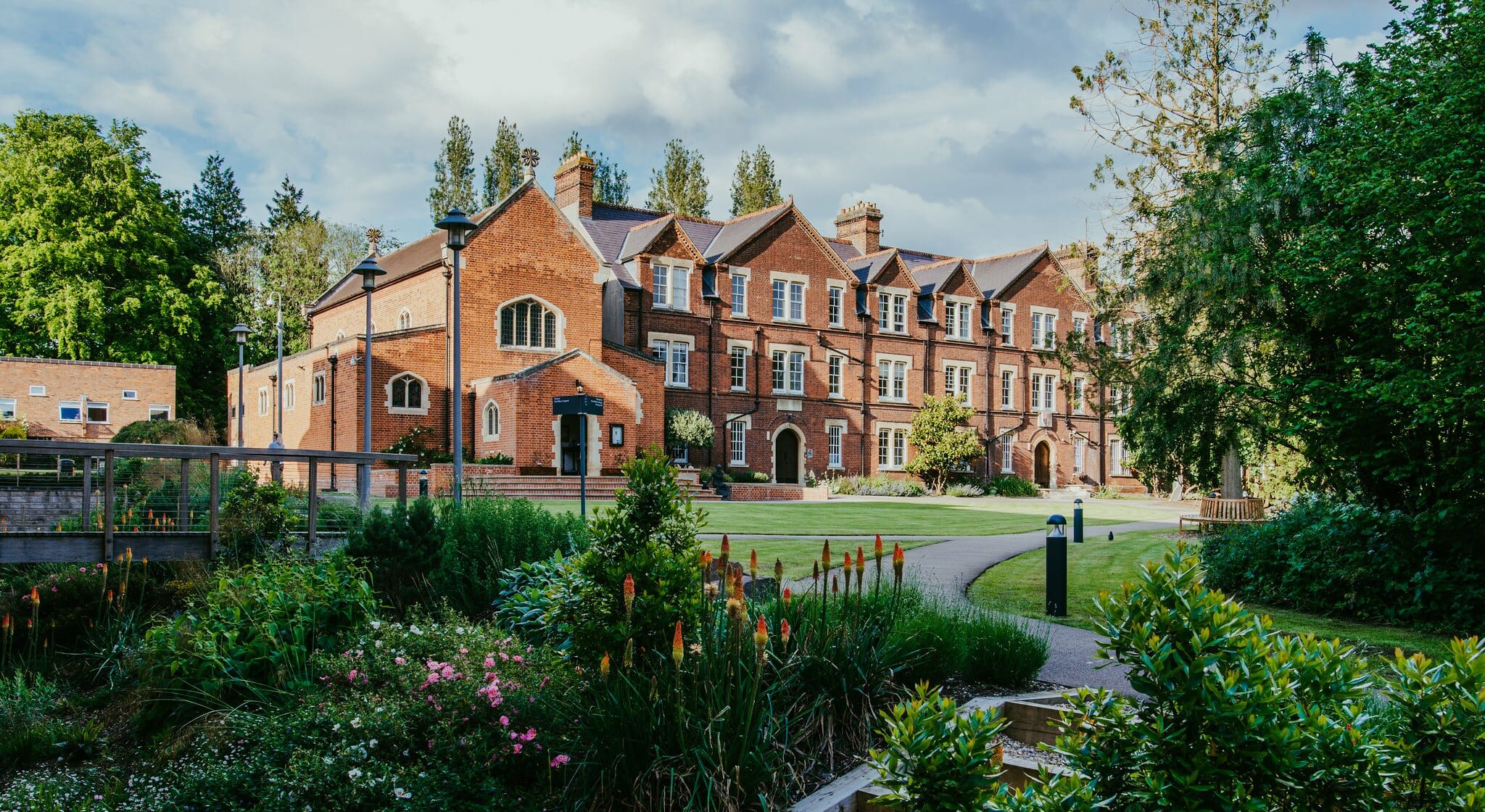
A large brick building with multiple chimneys and dormer windows sits surrounded by lush green gardens, where flowering plants bloom under a partly cloudy sky. A curved path leads to the entrance, ready for the Master's welcome.

Dr Yuyan Jiang

Post Doctoral Research Associate
Dr Yuyan Jiang

Post Doctoral Research Associate

My work focuses on inequalities in education, intergenerational income mobility, and policies to narrow the socio-economic gap in education and the labour market. I am currently working on evaluating the My Village programme delivered by the People’s Action for Learning (PAL) Network.

Yuyan is a Research Associate at the Faculty of Education, working on the evaluation of the My Village programme. Yuyan’s research interests include educational inequalities, social mobility, and policy interventions to reduce socio-economic disparities in education and the labour market. She is an ONS Accredited Researcher, proficient in analysing large longitudinal datasets. Her PhD research focused on intergenerational income mobility in England, exploring the impacts of educational achievement, bursaries, and the COVID-19 pandemic on social mobility.

Academic Profile

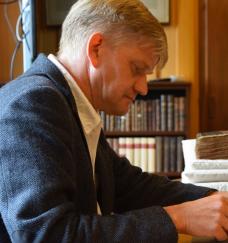
Dr Dirk Jongkind, a man with blond hair, wearing a grey blazer and white shirt, sits at a desk writing. Behind him are shelves filled with books in what appears to be a library or study room.

Dr Dirk Jongkind

Fellow

Dr Dirk Jongkind

Fellow
Academic Vice Principal of Tyndale House

Dirk Jongkind has a business background in the horticultural sector in the Netherlands before he returned to academic study. In his doctoral work he studied the Codex Sinaiticus, an extremely old manuscript of the Greek Bible. After his doctorate in 2005 he was employed by the British Library in London in order to prepare the curatorial side of the Codex Sinaiticus Digitisation project. His specialisation is in the area of the Greek philology of the first century AD, including areas such as the study of inscriptions, papyri, and archaeology. He is the editor of a critical edition of the Greek New Testament which appeared in 2017.

He is keen to show that the language of the New Testament shows all the signs of being produced and used in a world that was just as dynamic and complex as ours. Though he has no problem supporting the English cricket and rugby teams, he cannot forget his Dutch roots when it comes to football. As an affiliated lecturer he teaches textual criticism and manuscripts in the Faculty of Divinity

Dr Pavlína Kašparová, a woman in a white habit and black veil, wearing glasses, stands in front of bookshelves filled with books, looking directly at the camera with a neutral expression.

Dr Pavlína Kašparová

Post Doctoral Research Associate

Dr Pavlína Kašparová

Post Doctoral Research Associate

Dr Pavlína Kašparová researches how visual art mediates Christian faith, identity, and the divine. Her work spans theology, fine art, and perception, exploring art practice as a method of theological scholarship. She publishes and exhibits on topics such as visual arts and healing, female identity, symbolism, and the role of imagination in faith.

Pavlína Kašparová, also known as Sr Marie OP, is an artist and theologian and has been a member of the Czech Congregation of Dominican Sisters since 2006. She holds a PhD in Fine Art and Theology from Anglia Ruskin University. Currently, she serves as the Director of Studies and a Research Associate at The Faraday Institute for Science and Religion, where she actively engages in academic discussions and promotes interdisciplinary connections. Additionally, Dr Kašparová has been a Psychology Cross-training Workshop Fellow at the University of Birmingham since July 2023, where she continues her exploration of visual language in theology.

She is a Post-doctoral Research Associate at St Edmund's College, University of Cambridge, a member of the Cambridge Interfaith Research Forum at the Faculty of Divinity at the University of Cambridge and a Research Associate at the Margaret Beaufort Institute of Theology. Her research centres on the material and concrete expressions of religious identity as reflected in bodily appearance. Her interdisciplinary projects span across theology, with an emphasis on spirituality and soteriology, fine art incorporating photography and moving images, and psychology exploring perception and self-awareness.

Since 2020, she has served as a Council Member of the Czech Congregation of Dominican Sisters and was a Coordinator for Central and Eastern Europe for the Dominican Sisters International Confederation for four years (2019-2023). Previously, Dr Kašparová held the position of Director of Studies at The Cambridge Centre for Christianity Worldwide, where she lectured on Spirituality and the Arts. Her academic foundation includes two Master’s degrees in Catholic Theology and Art History, along with a Bachelor’s degree in Design, earned at Palacky University in Olomouc and University Hradec Kralove, the Czech Republic.

Academic Profile 

Publications

  • Kašparová, P. (2022). Perception of Visual Art in Christian Churches. In: H. Alford, ed., Preaching and the Arts / Predicazione e Arte. Communitas 2021. Rome: Angelicum University Press, pp.33–42.
  • Kašparová, P. (under review). Look! This Is My Faith: Healing Narratives in the Work of Christian Artists.
  • Watanabe, S., Kašparová, P., Łazarewicz-Wyrzykowska, E., Perez, J., Tanton, T., & Waite, H. (under review). Voices in the (interdisciplinary) wilderness: Reflections from a psychology cross-training project for theologians.

Honours & Awards 

  • Funding for 2-year research project Organisational development process of the Dominican Sisters in Central and Eastern Europe, 2024, Renovabis
  • Funding for 1-year research project Material Rendering of Imagery of 'Divine' and 'Faith' of Practicing Christian Adults with Artistic Skills, 2023, John Templeton Foundation
  • Funding for art research project The Women of the Book, 2020, Spalding Trust
  • First Prize Presentation Award, 2019, Anglia Ruskin University
  • Full-time PhD scholarship for 3.5 years, 2017, Renovabis
  • Exceptional MA dissertation in Theology, 2015, Palacky University Olomouc
Revd Dr Isidoros Katsos, a man with a beard and glasses dressed in a dark robe, sits at a wooden desk with his hands clasped. He is indoors, framed by a window and wooden panelling in the background.

The Revd Dr Isidoros Katsos

Visiting Scholar
The Revd Dr Isidoros Katsos

Visiting Scholar

Isidoros (né Charalampos) Katsos is Assistant Professor of Theological Epistemology and Philosophy at the Divinity Faculty, National University of Athens. He holds a PhD in Human Rights, Ecology, and Cultural Heritage Law (Freie Universität Berlin, 2009); and a PhD in Philosophy and Theology (University of Cambridge, 2019), under the supervision of Rowan Williams. He has studied law in Athens, Paris and Berlin; and philosophy and theology in Athens and Cambridge. Previous appointments include a British Academy Postdoctoral Fellowship at the University of Oxford; a Junior Research Fellowship at Campion Hall, Oxford; and a Postdoctoral Fellowship at the Center for the Study of Christianity, Hebrew University of Jerusalem. Αuthor of The Metaphysics of Light in the Hexaemeral Literature: From Philo of Alexandria to Gregory of Nyssa (Oxford: Oxford University Press, 2023); and – as Charalampos Katsos – of Nachhaltiger Schutz des kulturellen Erbes: Zur ökologischen Dimension des Kulturgüterschutzes (Baden-Baden: Nomos ; Zürich: Dike ; Wien: Facultas, 2011). His teaching and research interests focus on ‘Christian Philosophy’, largely defined, and the intersection of theology, ecology, and human rights in the age of A.I.

Professor Mihaela Kelemen, with short blonde hair, red-framed glasses, and a black top, smiles at the camera against a plain beige background. She wears a necklace with a striking red pendant.

Professor Mihaela Kelemen

Senior Research Associate

Professor Mihaela Kelemen

Senior Research Associate
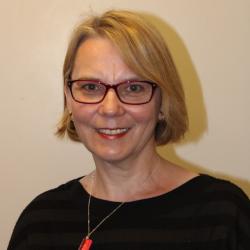
Professor Mihaela Kelemen is Chair in Business and Society at Nottingham University Business School, UK where she is also Director of Professional Practice and Acting Associate Dean for Research and Knowledge Exchange. She has developed a creative methodology of stakeholder engagement and knowledge co-production entitled Cultural Animation which underpins a variety of participatory research projects funded by the AHRC, GCRF, ESRC, EPSRC, MRC and HEFCE on topics including community sustainability, food poverty, health inequalities, and post-disaster reconstruction. Her most recent projects focus on hardly reached communities and the importance of their voice and agency in building trust with relevant institutions in order to address health inequalities. Her most recent international project explored the relationship between hope, futurity and agency from the point of view of marginalised women from conflict affected areas in the Philippines and Pakistan.

Her research has been disseminated in top academic journals as well as via books, podcasts, interviews, virtual games, documentary dramas and community based exhibitions curated jointly with the award winning New Vic Theatre. She is an expert at the University of Nottingham Rights Lab, a fellow of the RSA and a member of the UKRI Future Leaders Fellowships Peer Review College and of the AHRC Peer Review College.

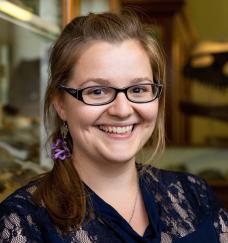
Dr Charlotte Kenchington, a smiling woman with glasses and brown hair tied to the side, wearing a dark lace top and a purple hair bobble, stands indoors with display cases and blurred objects in the background.

Dr Charlotte Kenchington

Fellow, Director of Studies, Tutor, Deputy Praelector

Dr Charlotte Kenchington

Fellow, Director of Studies, Tutor, Deputy Praelector
Leverhulme Trust Early Career Fellow, Department of Earth Sciences

Charlotte is a palaeobiologist based at the Department of Earth Sciences in Cambridge. Her research focuses on the ecology and diversity of the first large, complex macro-organisms – the Ediacaran Biota – which include fossils of some of the earliest animals. Charlotte’s field areas include southern Namibia, central England, and Newfoundland (Canada). She is currently funded by a Leverhulme Early Career Research Fellowship and the Isaac Newton Trust. She is actively engaged in undergraduate teaching in the Department, and especially loves teaching on field courses.

Charlotte was a Postdoctoral Research Fellow at Memorial University of Newfoundland in 2016-2018, researching the ecology of marine meiofauna under mentorship of Prof. Duncan McIlroy. She completed her PhD at the Department of Earth Sciences in Cambridge under supervision of Prof. Nick Butterfield and Philip Wilby (British Geological Society), awarded in 2016. Before that, she gained her BA(Mod) in Geology from Trinity College Dublin, Ireland, graduating with a Gold Medal and high first class honours degree in 2011.

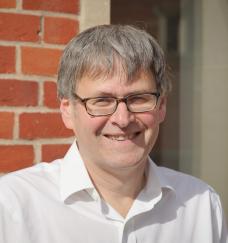
Dr Edward Kessler, with short grey hair and glasses, is smiling while standing outside near a brick wall. He is wearing a white shirt.

Dr Edward Kessler MBE

Fellow

Dr Edward Kessler MBE

Fellow

I research into interfaith relations, primarily between Jews, Christians and Muslims. Much of my academic work explores the significance of sharing sacred texts and narratives. I also work with local actors in the Middle East to agree measures to safeguard Jerusalem's holy places.

Dr Edward Kessler, MBE is Founder President of the Woolf Institute and a leading thinker in interfaith relations, primarily, Jewish-Christian-Muslim Relations.
He was described by The Times Higher Education Supplement as 'probably the most prolific interfaith figure in British academia' and was awarded an MBE for services to interfaith relations. He has written or edited 13 books, including An Introduction to Jewish-Christian Relations (Cambridge, 2010), Jews, Christians and Muslims in Encounter (SCM, 2013) and Jesus (The History Press, 2016). His Documentary History of Jewish-Christian Relations was published by Cambridge in 2024. In 2024 he was awarded the Seelisberg Prize for his contribution to fostering Jewish-Christian relations. He was Vice-Chair of the Commission on Religion and Belief in British Public Life (2013-15), Principal Investigator of the Woolf Diversity Study, a study of diversity in England and Wales (2017-19), and Chair of the Commission on the Integration of Refugees (2022-25). In 2023 he was appointed Chair of the Advisory Board overseeing the unification of Reform and Liberal Judaism. Kessler regularly appears in the media commenting on religion and belief issues of the day, such as the impact of October 7th 2023 attacks on Israel and the Gaza War on the Leading Podcast, and hosted the weekly podcast Naked Reflections (2020-23).

He also presented the series, Covid-19 Chronicles (2020), on the impact of the coronavirus on religion and belief. He wrote and presented two A-Z podcasts (2018-20), An A-Z of Believing: From Atheism to Zealotry and An A-Z of the Holy Land: From Arab to Zion. Much of his academic work has been examining Scripture and exploring the significance of sharing a sacred text. In recent writings, he has focused on the encounter with Islam and contemporary relations between the three Abrahamic faiths. Kessler proposes positive approaches for managing difference, which he argues, is vital in forming a constructive identity as well as for sustaining communities, in the UK and Overseas. Since 2015, he has been working with local actors in Israel, Palestine and Jordan to agree measures to safeguard Jerusalem's holy places.Kessler also explores the tensions, positive as well as negative, between religion and civil society.

At a lecture at the Brookings Institution in 2014, he argued that diplomats and policymakers need to be better trained in religion and belief, describing the contemporary religious landscape as a 'post-interfaith' world. In 2019, at an annual lecture for the Council for Religious and Life Stance Communities in Oslo, he argued that because religious monopolies are in decline, belonging to a minority is the norm. In his 2024 address upon receiving the Seelisberg Prize, he called for a redoubling of efforts to pursue genuine dialogue at a time of increasing polarisation.

Academic Profile

Dr Saussan Khalil

Dr Saussan Khalil

Bye-Fellow, Director of Studies

Dr Saussan Khalil

Bye-Fellow, Director of Studies

Dr Saussan Khalil is both a Bye-Fellow and Director of Studies in Asian and Middle Eastern Studies at St Edmund's College.

Her research focuses on teaching Arabic as a foreign language and Arabic sociolinguistics, in particular the intersection between the standard and spoken forms of Arabic.

Dr Saussan Khalil has published research on teaching Arabic as a foreign language, and the interplay between Standard and Spoken forms of Arabic (particularly the Cairene dialect) in print and online.

Academic Profile 

Publications

  • Khalil, S, Arabic Writing in the Digital Age, Routledge, https://doi.org/10.4324/9781003044321
  • Oxford Arabic Dictionary, https://premium.oxforddictionaries.com/arabic/
  • Kalamna Phonics Toolkit, https://kalamna.org/resources/

Awards and recognitions 

  • Humanities Innovation Week Competition 2nd place prize, 2021
  • Cambridge University Arts and Humanities Impact Fund, 2020
  • Cambridgeshire Prestige Awards, 2020
  • iStudy Guide Best in Arabic Language Courses, 2019-20
  • Loveday Memorial Award, 2012


Dr Linda King Headshot

Dr Linda King

Fellow, Tutor, Director of Studies

Dr Linda King

Fellow, Tutor, Director of Studies

Dr King is a physiologist by training. Her research previously focused on changes in cardiac metabolism in ischaemia and diabetes. She is now working on a new area looking at ancient DNA as a reflection of environmental change in Egypt, Sudan and the Fenlands.

Dr King completed her undergraduate degree at the University of Witwatersrand, and MSc and PhD in Cape Town, in South Africa. She then undertook post-doctoral research at the Department of Biochemistry at the University of Oxford, followed by a period at Pharmacology at Imperial College. She has taught for many years at the University of Cambridge and Anglia Ruskin University, and has extensive experience in teaching of physiology, biochemistry, cell and developmental biology, and genetics. She is an associate professor and was Deputy Head of the School of Life Sciences in charge of student experience, curriculum development, learning and teaching, and apprenticeship delivery for nine years. Her current focus is on teaching, research and pastoral support of students. She is working in collaboration with colleagues at Cambridge, UCL, Manchester and in Luxor.

LinkedIn profile

Follow us

Stay up to date with our rich college life here at St Edmund's through our social media channels.